Spandex is a high-performance stretch fabric widely used for swimwear, activewear, sportswear, dancewear, and fashion garments. Known for its exceptional elasticity, comfort, and body-hugging fit, spandex has become an essential material for modern performance apparel.
With advanced textile technology, spandex fabric printing allows designers, sportswear brands, and manufacturers to create customized stretch fabrics featuring original patterns, colors, logos, and personalized designs.
Unlike traditional woven fabrics, spandex contains elastic fibers that require specialized printing methods to maintain:
- Stretch performance
- Color durability
- Fabric softness
- Print flexibility
For businesses exploring custom textile production, our Custom Fabric Printing Guide explains the complete process from fabric selection to finished products.
This guide covers what spandex fabric is, different spandex blends, suitable printing methods, applications, artwork preparation, durability, and how brands can order custom printed spandex fabrics.
Table of Contents:Spandex Fabric Printing
What Is Spandex Fabric?
Spandex, also known as elastane or Lycra®, is a synthetic fiber known for its exceptional elasticity.
A small percentage of spandex can significantly improve a fabric’s:
- Stretchability
- Recovery ability
- Comfort
- Fit performance
Spandex is usually blended with other fibers, including:
- Polyester
- Nylon
- Cotton
- Rayon
Common blends include:
- Polyester spandex
- Nylon spandex
- Cotton spandex
Key Characteristics of Spandex Fabric
1. Excellent Stretch and Recovery
The most important feature of spandex is elasticity.
It can stretch significantly and return to its original shape.
This makes it ideal for:
- Swimwear
- Leggings
- Sportswear
- Yoga clothing
2. Comfortable Fit
Spandex fabrics provide:
- Body flexibility
- Freedom of movement
- Comfortable wear
This is why many performance garments include spandex blends.
3. Smooth Surface for Printing
Many spandex fabrics have a smooth surface that allows:
- Detailed patterns
- Bright colors
- Custom graphics
4. Performance Properties
Depending on the blend, spandex fabrics may provide:
- Moisture management
- Quick drying
- Chlorine resistance
- UV protection
These properties make spandex popular for technical apparel.
What Types of Spandex Fabric Can Be Printed?
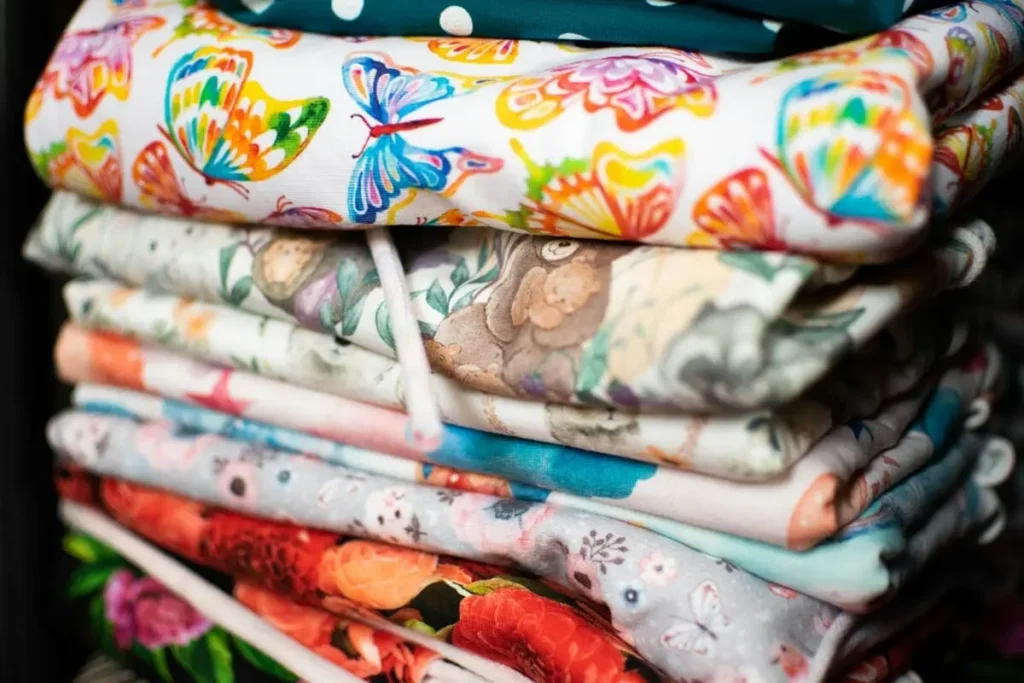
Different spandex blends are selected based on product requirements.
1. Nylon Spandex Fabric
Nylon spandex is widely used for swimwear and activewear.
Advantages:
- Soft hand feel
- Excellent stretch
- Comfortable against skin
- Good recovery
Common applications:
- Swimsuits
- Dancewear
- Sportswear
2. Polyester Spandex Fabric
Polyester spandex is commonly used for performance clothing.
Advantages:
- Durable
- Good color performance
- Suitable for sublimation printing
Applications:
- Sports uniforms
- Fitness clothing
- Activewear
3. Cotton Spandex Fabric
Cotton spandex combines natural fiber comfort with stretch performance.
Benefits:
- Soft touch
- Breathability
- Flexible fit
Applications:
- T-shirts
- Casual clothing
- Baby apparel
4. Swimwear Spandex Fabric
Swimwear fabrics often contain:
- Nylon
- Polyester
- Spandex
Important properties:
- Stretch recovery
- Chlorine resistance
- UV protection
JCWTextile offers custom printed stretch fabrics suitable for swimwear and performance applications.
Is Spandex Fabric Good for Printing?
Yes. Spandex can be successfully printed when the correct printing technology and production process are selected.
However, stretch fabrics require special attention because printing must maintain:
- Elasticity
- Color stability
- Fabric softness
- Surface flexibility
Important factors include:
- Fiber composition
- Spandex percentage
- Printing method
- Heat control
- Finishing process
What Printing Methods Are Used for Spandex Fabric?
1. Digital Fabric Printing
Digital textile printing is suitable for customized spandex fabrics.
Advantages:
- Unlimited design options
- Detailed artwork reproduction
- Flexible production quantities
- Personalized patterns
Suitable for:
- Fashion brands
- Swimwear designers
- Sportswear companies
Learn more:
2. Dye Sublimation Printing
Dye sublimation is commonly used for polyester spandex fabrics.
The process:
- Artwork is printed onto transfer paper
- Heat transfers dye into polyester fibers
- The design becomes part of the fabric
Advantages:
- Bright colors
- Excellent pattern detail
- Good durability
3. Heat Transfer Printing
Heat transfer printing can be used for selected stretch fabrics.
It is suitable for:
- Logos
- Small custom designs
- Promotional apparel
Spandex Fabric Printing Process
The custom printing workflow includes several important steps.
Step 1: Artwork Preparation
The design file is prepared according to textile printing requirements.
Recommended:
- High-resolution artwork
- 300 DPI
- Correct color settings
- Suitable pattern repeat
Learn:
Step 2: Spandex Fabric Selection
The correct fabric depends on the final product.
Examples:
Swimwear:
- Nylon spandex
Sportswear:
- Polyester spandex
Casual apparel:
- Cotton spandex
Step 3: Fabric Preparation
Before printing:
- Fabric inspection
- Surface preparation
- Stretch testing
help improve production consistency.
Step 4: Digital Printing
The custom design is printed onto the stretch fabric.
Digital printing enables:
- Custom patterns
- Small collections
- Brand-specific designs
Step 5: Color Fixation
Fixation improves:
- Color durability
- Washing performance
- Print stability
Step 6: Stretch and Quality Testing
Because spandex fabrics are elastic, quality checks may include:
- Stretch recovery
- Color performance
- Fabric appearance
Applications of Custom Printed Spandex Fabric
Spandex is widely used in performance and fashion industries.
Swimwear
Printed spandex fabric is one of the most popular choices for:
- Swimsuits
- Bikinis
- Rash guards
- Surfwear
Important requirements:
- Stretch
- Comfort
- Chlorine resistance
- UV performance
Activewear and Sportswear

Custom printed spandex is used for:
- Yoga pants
- Leggings
- Sports tops
- Fitness clothing
Brands use customized patterns to create unique collections.
For apparel brands:
Dancewear and Performance Clothing
Stretch fabrics are essential for:
- Dance costumes
- Gymnastics clothing
- Stage outfits
Custom printing allows:
- Team designs
- Unique patterns
- Performance costumes
Fashion Apparel
Spandex blends are used for:
- Dresses
- Fitted garments
- Fashion collections
Designers choose spandex because it combines:
- Comfort
- Flexibility
- Style
Baby and Children's Clothing
Cotton spandex and soft stretch fabrics are commonly used for:
- Baby clothing
- Children’s leggings
- Comfortable garments
For apparel products made with stretch fabrics, brands may consider textile safety certifications such as OEKO-TEX STANDARD 100 when evaluating material safety requirements.
How to Choose Spandex Fabric for Printing
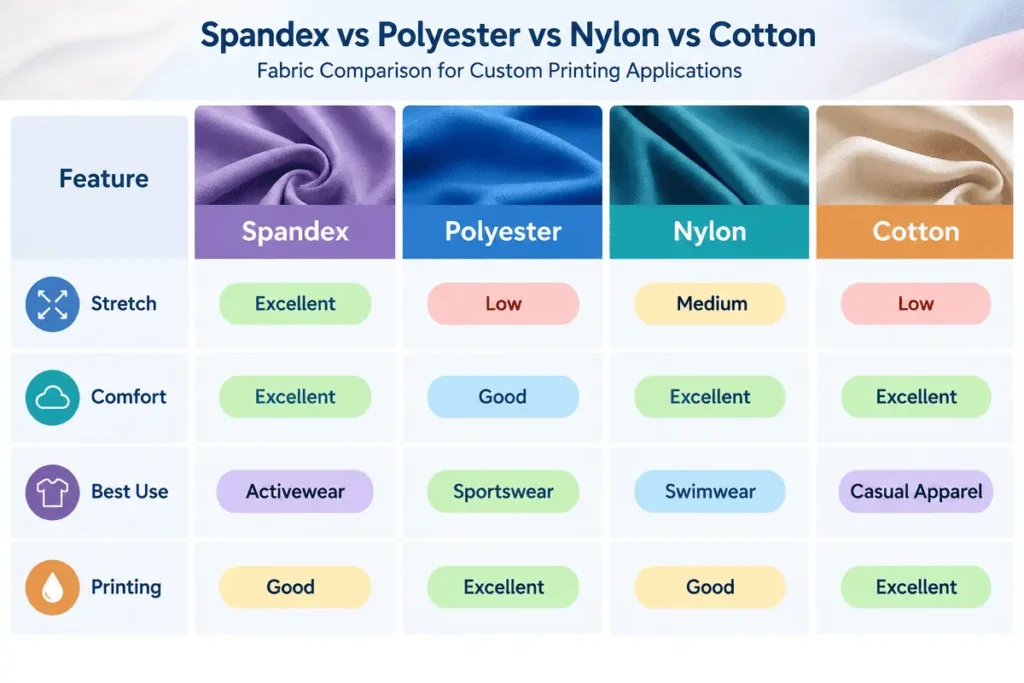
For Swimwear
Consider:
- Chlorine resistance
- UV performance
- Stretch recovery
For Sportswear
Consider:
- Moisture management
- Breathability
- Durability
For Fashion Clothing
Consider:
- Hand feel
- Stretch percentage
- Appearance
How to Prepare Artwork for Spandex Fabric Printing
Consider Fabric Stretch
Stretch fabrics may affect pattern appearance.
Designers should consider:
- Stretch direction
- Pattern placement
- Garment construction
Use High Resolution Files
Recommended:
- 300 DPI
- Clear edges
- Correct color profile
Test Before Production
Sample testing helps evaluate:
- Color appearance
- Stretch performance
- Final garment appearance
Is Printed Spandex Fabric Durable?
Yes. Properly produced printed spandex fabrics can provide excellent performance.
Durability depends on:
- Fiber blend
- Printing method
- Finishing process
- Care instructions
For swimwear and sportswear, testing is especially important because fabrics experience:
- Stretching
- Washing
- Sun exposure
Testing organizations such as AATCC provide standardized methods for evaluating textile properties including colorfastness and performance.
Can Small Businesses Order Custom Printed Spandex Fabric?
Yes.
Digital printing makes custom spandex production suitable for:
- Independent designers
- Swimwear startups
- Sportswear brands
- Small fashion companies
Benefits include:
- Flexible quantities
- Custom designs
- Reduced inventory risk
For smaller production:
How Much Does Spandex Fabric Printing Cost?
Pricing depends on:
- Fabric composition
- Spandex percentage
- Printing technology
- Quantity
- Design complexity
Factors include:
- Nylon vs polyester spandex
- Fabric weight
- Special finishes
Learn more:
How to Order Custom Printed Spandex Fabric from JCWTextile
Step 1
Choose your stretch fabric.
Step 2
Upload your artwork.
Step 3
Confirm printing requirements.
Step 4
Review samples.
Step 5
Start production.
JCWTextile provides custom printed fabric solutions for:
- Swimwear brands
- Sportswear companies
- Fashion designers
- Textile businesses
worldwide.
Conclusion
Spandex fabric printing provides brands with the ability to create unique stretch textiles for swimwear, sportswear, fashion, and performance products.
Because spandex combines:
- Elasticity
- Comfort
- Flexibility
- Performance
it remains one of the most important fabrics in modern apparel manufacturing.
Successful custom printed spandex fabric production depends on:
- Choosing the correct fabric blend
- Selecting suitable printing technology
- Preparing artwork properly
- Testing stretch performance
With modern digital textile printing, businesses can create personalized spandex fabrics for innovative clothing collections and performance products.
📚 FAQ About Spandex Fabric Printing
1. What is spandex fabric printing?
Spandex fabric printing is the process of applying custom designs, patterns, logos, or artwork onto stretch fabrics containing spandex fibers.
2. Can spandex fabric be digitally printed?
Yes. Digital printing can be used for many spandex blends, especially polyester spandex fabrics, allowing customized patterns and flexible production.
3. What products use printed spandex fabric?
Printed spandex fabric is commonly used for swimwear, activewear, sportswear, leggings, dancewear, and fashion garments.
4. Is spandex fabric good for swimwear printing?
Yes. Spandex blends are widely used for swimwear because they provide stretch, comfort, and shape recovery.
5. Can I order small quantities of custom printed spandex fabric?
Yes. Digital fabric printing allows small-batch production suitable for designers, startups, and emerging brands.