Jersey is one of the most widely used knit fabrics for apparel because of its softness, flexibility, and comfortable drape. From everyday T-shirts and dresses to baby clothing, loungewear, and fashion collections, jersey fabric provides a versatile surface for custom textile designs.
Jersey fabric printing allows brands, designers, manufacturers, quilters, and independent creators to turn original artwork, repeating patterns, illustrations, logos, and photographs into personalized knit textiles.
Jersey is a knitted fabric rather than a woven fabric. CottonWorks describes jersey as a plain knit structure made on a single set of knitting needles, with the technical face and back having visibly different stitch appearances.
Because jersey can be made from cotton, polyester, blends, and stretch fibers, the most suitable printing technology depends on the exact fiber composition, fabric construction, color, weight, and intended product.
For a broader overview of fabric selection, printing methods, production steps, and ordering considerations, see our Custom Fabric Printing Guide.
This guide explains what jersey fabric is, which jersey fabrics can be printed, how different printing methods work, which products are suitable for printed jersey, how to prepare artwork, and what to consider before ordering custom printed jersey fabric.
What Is Jersey Fabric?
Jersey is a knit fabric characterized by its looped construction and comfortable stretch. Unlike woven fabrics, which are formed by interlacing warp and weft yarns, knitted fabrics are formed by interconnected loops.
CottonWorks defines jersey as a plain knit fabric made on a single set of knitting needles. Its face and back have different visual structures because the knitted loops are arranged differently on the two sides.
Jersey is available in many fiber compositions and fabric weights. Common examples include cotton jersey, polyester jersey, cotton-polyester jersey, rayon or viscose jersey, and stretch jersey containing elastane or spandex.
This variety makes jersey suitable for products ranging from lightweight T-shirts to dresses, children’s clothing, activewear, and other soft apparel.
Key Characteristics of Jersey Fabric
The exact characteristics of jersey depend on the yarn, knitting construction, weight, finishing, and fiber content, but jersey fabrics commonly provide several useful properties.
Soft Hand Feel
Jersey is often selected when comfort is important. Cotton-rich jersey can provide a soft natural hand, while synthetic or blended versions may be developed for specific performance requirements.
Natural Stretch
Knit construction gives jersey a degree of mechanical stretch. Some jersey fabrics also include elastane or spandex to increase stretch and recovery.
Comfortable Drape
Jersey generally drapes differently from structured woven fabrics. Lightweight jersey can create a softer, flowing silhouette, which is useful for dresses, tops, and casual apparel.
Apparel Versatility
Jersey can be used for everyday clothing as well as specialty products. Its combination of flexibility and comfort makes it particularly relevant to garments worn close to the body.
Suitable for Custom Designs
Depending on the fiber composition and printing technology, jersey can provide a suitable surface for detailed graphics, repeating patterns, branding, illustrations, and photographic artwork.
What Types of Jersey Fabric Can Be Printed?
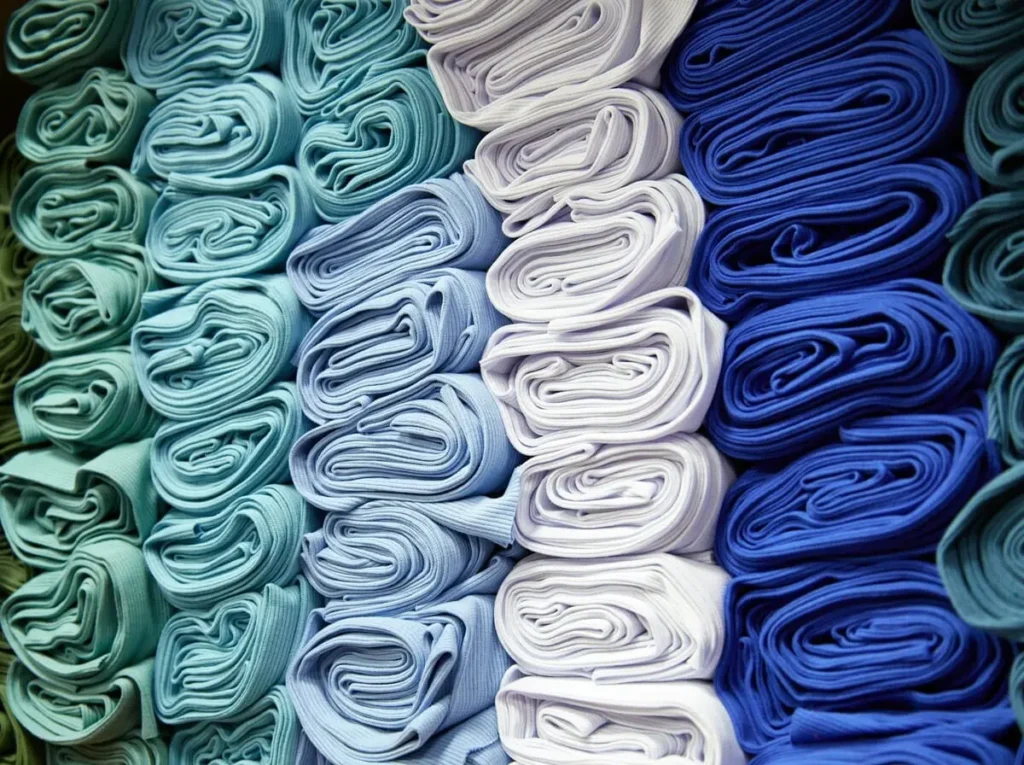
There is no single type of jersey fabric. The printing process should be chosen according to the composition and construction of the exact fabric.
1. Cotton Jersey
Cotton jersey is widely used for T-shirts, children’s apparel, casual clothing, underwear, and other comfort-focused products.
Cotton-based jersey can be printed using textile printing methods suitable for cellulose fibers. The final result depends on the dye or ink system, pretreatment, fixation, and fabric finishing.
For more information about cotton textile printing, see our guide to cotton fabric printing.
2. Polyester Jersey
Polyester jersey is commonly used in sportswear, activewear, performance clothing, and other applications where synthetic fibers are preferred.
Polyester jersey can work particularly well with sublimation and other polyester-compatible digital printing technologies.
For a more detailed look at printing polyester textiles, see our guide to polyester fabric printing
3. Cotton-Polyester Jersey
Blended jersey combines characteristics from more than one fiber type. However, printing a blend is not necessarily the same as printing 100% cotton or 100% polyester.
The selected printing process must be compatible with the fiber composition. When a blend is being considered for a commercial product, a sample print can help confirm color, coverage, hand feel, and dimensional behavior.
4. Stretch Jersey
Stretch jersey may contain elastane or spandex to provide additional elasticity and recovery.
It is frequently used for:
- Leggings
- Fitted dresses
- Dancewear
- Activewear
- Baby clothing
- Stretch tops
- Fashion garments
When printing stretch jersey, it is important to consider how the printed design behaves when the fabric is stretched.
5. Lightweight Jersey
Lightweight jersey can be useful for:
- T-shirts
- Tops
- Baby clothing
- Lightweight dresses
- Summer apparel
Because lightweight fabrics can be more sensitive to distortion and tension, sample testing is particularly useful for detailed or large repeat patterns.
6. Double Jersey and Other Knit Structures
Jersey is part of a much broader family of knit constructions. CottonWorks notes that changes in knit design can significantly affect fabric properties and appearance.
This means that two knit fabrics may both be described as jersey-related materials while behaving differently during printing and sewing.
Is Jersey Fabric Good for Printing?
Yes, jersey can be a good substrate for custom printing, but the printing method must match the fiber composition and construction.
Several factors affect the result:
- Fiber content
- Fabric weight
- Knit structure
- Surface texture
- Stretch
- Fabric color
- Ink or dye system
- Pretreatment
- Fixation
- Finishing
A smooth, stable jersey may produce a different visual result from a lightweight, highly elastic jersey even when the same artwork is used.
For this reason, fabric selection and printing technology should be treated as one decision rather than two completely separate choices.
What Printing Methods Are Used for Jersey Fabric?
Different jersey fabrics require different printing approaches. The appropriate process depends heavily on the fiber.
1. Digital Fabric Printing
Digital textile printing can be used to reproduce detailed artwork, repeating patterns, photographs, and graphics without requiring traditional rotary screens for each individual color separation.
The advantages of digital printing can include flexible design changes, detailed graphics, and economical customization for certain quantities.
You can learn more about the overall technology in our guide to digital fabric printing.
2. Reactive Printing for Suitable Cotton Jersey
Reactive dye systems are commonly associated with cellulose-based fibers such as cotton. When used appropriately, reactive printing can provide strong color integration and a soft fabric feel.
The exact process typically involves pretreatment, printing, fixation, washing, and finishing stages.
For cotton jersey, the suitability of reactive printing depends on the exact fabric and production system.
3. Sublimation Printing for Polyester Jersey
Polyester jersey can be suitable for dye sublimation, particularly when the fabric is white or light-colored and the printing system is designed for polyester.
Sublimation transfers dye to the polyester through heat, making it a widely used approach for customized polyester apparel.
The method is especially relevant to:
- Sports jerseys
- Performance apparel
- Swimwear
- Activewear
- Polyester fashion garments
For a comparison of major textile printing technologies, see our guide to fabric printing methods.
4. Pigment Printing
Pigment printing uses colorants that are fixed to the textile using a binder system. It can be used on various fabric types when the specific ink, pretreatment, curing process, and fabric are compatible.
Pigment printing can be relevant when a production system needs a versatile printing approach across different fiber compositions.
Because hand feel and durability can depend strongly on the binder and curing system, sample evaluation remains important.
Jersey Fabric Printing Process
Although the exact workflow varies by fiber and printing technology, a typical jersey fabric printing process includes several stages.
Step 1: Artwork Preparation
Start with a high-resolution design that matches the intended print dimensions.
The file should be checked for:
- Resolution
- Color mode
- Repeat dimensions
- Bleed
- Seam placement
- Pattern scale
- Fine details
For repeating textile artwork, the left, right, top, and bottom edges should be tested to make sure the pattern connects correctly.
See our guide to preparing artwork for fabric printing for more information.
Step 2: Select the Jersey Fabric
Choose the fabric according to the final product rather than simply choosing the cheapest available material.
Consider:
- Fiber composition
- GSM
- Width
- Stretch
- Recovery
- Surface
- Drape
- Intended garment
Step 3: Confirm Printing Compatibility
The printer should confirm which ink or dye technology is appropriate for the selected jersey.
This is particularly important for blends, stretch materials, dark fabrics, and fabrics with special finishing.
Step 4: Fabric Preparation
Depending on the printing system, fabric preparation may include pretreatment, drying, stabilization, or other preparation stages.
Step 5: Digital Printing
The artwork is transferred to the fabric using the selected printing system.
The production settings need to take into account fabric tension, stretch, surface structure, ink penetration, and required print density.
Step 6: Color Fixation
After printing, the color may require heat, steam, curing, or another fixation process, depending on the ink technology and fiber type.
Step 7: Finishing and Inspection
The fabric may then be washed, dried, heat-set, inspected, rolled, or otherwise finished before shipment.
What Are the Benefits of Custom Printed Jersey Fabric?
Original Designs
Designers can turn their own artwork into customized textile surfaces rather than relying exclusively on stock fabrics.
Flexible Pattern Development
Jersey is particularly useful for fashion products that require patterns across garments rather than isolated graphic placements.
Suitable for Small Collections
Custom printing can allow independent designers and emerging brands to develop limited collections without needing to manufacture a large inventory of pre-printed fabric.
Detailed Artwork
Digital printing can reproduce complex illustrations, photographs, gradients, and repeating patterns when the selected technology and fabric are appropriate.
Brand Customization
Clothing brands can use custom printed jersey to create signature patterns, seasonal graphics, logos, and branded textile collections.
What Products Can Be Made with Printed Jersey Fabric?
Jersey is closely associated with apparel, making it an important option for custom fashion textile production.
T-Shirts
Printed jersey is widely suited to T-shirts and casual tops.
Designers can create all-over patterns, repeat motifs, photographic graphics, abstract artwork, or branded designs.
Dresses
Soft and flexible jersey fabrics can be used for casual dresses, fashion dresses, and other garments where drape is important.
Tops
Printed jersey can be used for:
- Tank tops
- Blouses
- Casual tops
- Long-sleeve shirts
- Fashion tops
Baby and Children's Clothing
Cotton and cotton-rich jersey are commonly used for soft children’s apparel and baby clothing.
When creating children’s textile products, fabric composition, finishing, testing, and applicable product safety requirements should be evaluated separately from the printing process itself.
Explore our guide to custom fabric printing for baby products for additional application ideas.
Sportswear and Activewear
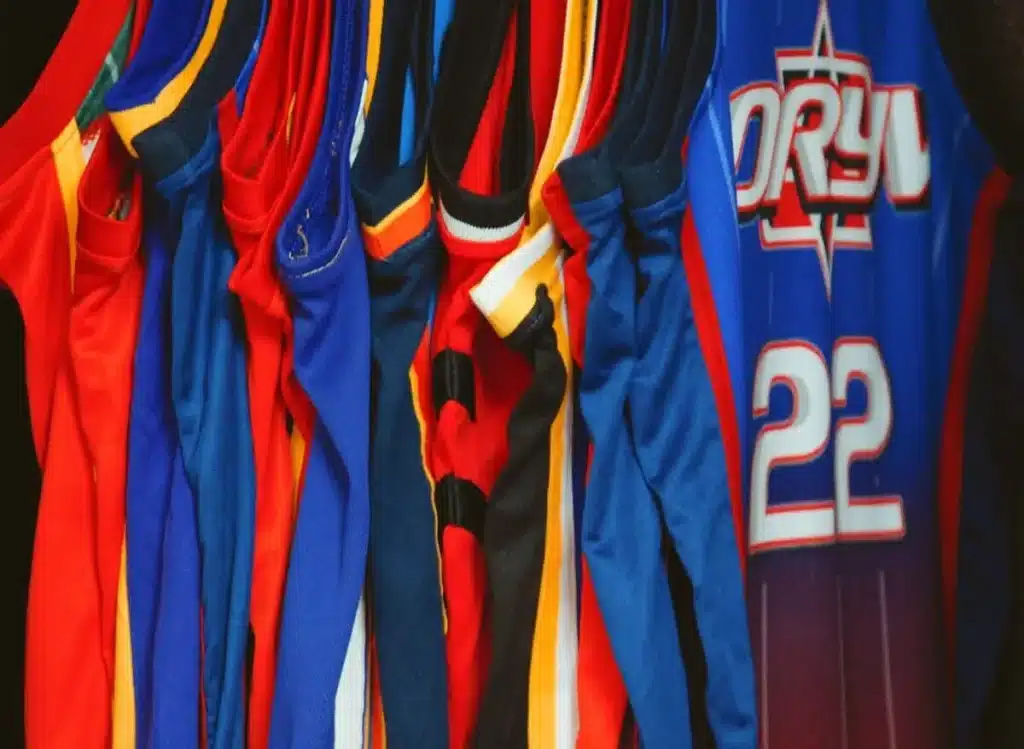
Polyester or polyester-blend jersey can be useful for sports and performance garments.
The exact material should be selected according to stretch, moisture management, durability, care requirements, and the intended sport or activity.
Loungewear
Soft printed jersey can be used for:
- Pajamas
- Lounge sets
- Casual clothing
- Homewear
Fashion Collections
Independent designers and clothing brands can use custom printed jersey to produce distinctive seasonal collections.
For a broader discussion of apparel applications, see custom fabric printing for clothing brands.
Jersey Fabric Printing for Fashion Designers and Clothing Brands
Jersey is particularly relevant to apparel brands because the fabric and the print can be developed together as part of one collection.
A designer can determine:
- Pattern scale
- Color palette
- Repeat structure
- Placement
- Fabric weight
- Stretch level
- Garment silhouette
before production begins.
This is especially useful for brands creating original prints rather than purchasing pre-designed textile patterns.
CottonWorks also recommends beginning knit product development by understanding the intended end use, such as outerwear, intimate apparel, activewear, or sportswear, before making fabric design decisions.
How to Choose the Right Jersey Fabric for Printing
Choosing the right jersey fabric starts with the finished product.
For T-Shirts
Consider:
- Cotton jersey
- Cotton-rich blends
- Lightweight to medium weights
- Comfortable hand feel
For Dresses
Consider:
- Soft drape
- Appropriate weight
- Stretch
- Surface smoothness
For Sportswear
Consider:
- Polyester or suitable blends
- Stretch and recovery
- Moisture management
- Durability
- Printing compatibility
For Baby Clothing
Consider:
- Soft hand feel
- Appropriate fiber content
- Fabric weight
- Applicable safety requirements
- Care performance
For High-Stretch Garments
Consider:
- Elastane percentage
- Stretch in both directions
- Recovery
- Print behavior under tension
Does Jersey Stretch After Printing?
Printing itself does not create the basic stretch characteristics of jersey. The stretch comes primarily from the knit construction and, where applicable, elastane or spandex content.
However, the printing and finishing process can influence the final dimensional behavior of the fabric.
Heat, tension, washing, curing, and finishing conditions can affect the final dimensions and appearance of a textile.
Therefore, when stretch performance is important, evaluate the actual printed and finished fabric rather than relying only on the specification of the unprinted material.
How to Prepare Artwork for Jersey Fabric Printing
Artwork preparation is particularly important when working with stretch knit fabrics.
Use High-Resolution Files
Start with sufficiently detailed artwork for the final print size.
Avoid enlarging low-resolution images excessively.
Test the Repeat
A seamless repeat should connect correctly on all sides.
Test:
- Horizontal repeat
- Vertical repeat
- Motif spacing
- Scale
- Alignment
Consider Stretch
A design can look different when a fabric is stretched.
Large motifs, thin lines, small typography, and tightly spaced details should therefore be evaluated on the actual fabric.
Avoid Unintended Distortion
If the jersey is highly elastic, consider how the artwork will appear when the finished garment is worn.
Check Color
Screen colors do not always translate identically to physical textiles.
A sample print can help confirm:
- Color
- Contrast
- Print scale
- Detail
- Hand feel
- Surface appearance
How Durable Is Printed Jersey Fabric?
Durability depends on the fabric, printing technology, fixation, finishing, and end use.
Important performance considerations can include:
- Colorfastness to laundering
- Colorfastness to perspiration
- Crocking
- Light exposure
- Dimensional change
- Surface appearance
AATCC maintains textile test methods for several of these areas, including crocking, perspiration, laundering, lightfastness, and dimensional changes after home laundering.
For sportswear, children’s apparel, or products that will be washed frequently, performance requirements should be discussed before production rather than assumed from the fabric name alone.
Jersey Fabric Printing vs Woven Fabric Printing
Jersey and woven fabrics differ fundamentally in construction.
| Feature | Jersey Fabric | Woven Fabric |
|---|---|---|
| Construction | Knitted loops | Interlaced warp and weft |
| Stretch | Often has natural mechanical stretch | Usually less stretch unless engineered |
| Drape | Often soft and flexible | Can range from fluid to structured |
| Common Uses | T-shirts, dresses, baby clothing, activewear | Shirts, curtains, bags, bedding, structured apparel |
| Printing Considerations | Stretch and knit structure matter | Weave, surface, and dimensional stability matter |
Neither structure is universally better for printing. The right choice depends on the product and the performance requirements.
Jersey vs Cotton Fabric for Custom Printing
It is important to remember that jersey describes a knit structure, while cotton describes a fiber.
A cotton jersey is therefore both cotton and jersey.
This distinction helps explain why “jersey vs cotton” is not a direct comparison. A more useful comparison is often:
Cotton jersey vs woven cotton
or:
Polyester jersey vs cotton jersey
The final product should determine which material is appropriate.
Can Small Businesses Order Custom Printed Jersey Fabric?
Yes. Custom printed jersey can be practical for independent designers, startups, small fashion brands, children’s clothing businesses, and creators developing limited collections.
Small-batch production can help reduce excess inventory when testing new patterns, developing samples, or launching a limited product range.
For businesses looking to order smaller quantities, see our guide to low MOQ custom fabric printing.
How Much Does Jersey Fabric Printing Cost?
The cost of custom jersey fabric printing depends on more than the fabric name.
Major factors can include:
- Jersey fiber composition
- Fabric GSM
- Fabric width
- Printing technology
- Artwork
- Print coverage
- Quantity
- Pretreatment
- Finishing
- Cutting or sewing requirements
- Shipping
Small orders may have a higher cost per meter because setup and handling costs are spread across fewer meters.
For a more detailed overview of textile pricing factors, see our guide to custom fabric printing cost.
How to Order Custom Printed Jersey Fabric from JCWTextile
1. Choose the Intended Product
Decide whether the fabric will be used for T-shirts, dresses, baby clothing, sportswear, loungewear, or another product.
2. Select the Jersey Fabric
Consider fiber content, weight, width, stretch, surface, and drape.
3. Prepare Your Artwork
Provide a high-resolution design or repeating pattern.
4. Confirm Printing Compatibility
The printing method should match the fiber composition and fabric construction.
5. Request a Sample
A sample can help confirm the appearance of the design and the feel of the printed fabric before larger production.
6. Confirm Production Details
Discuss quantity, width, GSM, print scale, repeat size, finishing, and delivery requirements.
7. Start Custom Production
Once the material and artwork are approved, the custom printed jersey fabric can move into production.
Final Thoughts on Jersey Fabric Printing
Jersey fabric printing combines the flexibility of knit textiles with the creative possibilities of custom textile design.
Because jersey can be made from cotton, polyester, blends, and stretch constructions, there is no single printing method or fabric specification that works for every project.
The most important decisions are the intended product, fiber composition, knit structure, fabric weight, stretch, printing technology, artwork, and required performance.
For fashion brands, independent designers, sportswear companies, baby product businesses, and small textile brands, custom printed jersey can provide a practical way to develop original textile collections without relying entirely on stock patterns.
The best approach is to select the fabric and printing technology together, test the actual material when necessary, and confirm color and performance requirements before bulk production.
📚 Frequently Asked Questions About Jersey Fabric Printing
1. What is jersey fabric printing?
Jersey fabric printing is the process of applying custom designs, patterns, photographs, graphics, or branding to knitted jersey fabrics using a printing technology suitable for the fabric’s fiber composition and construction.
2. Is jersey fabric good for digital printing?
Yes. Jersey can be suitable for digital textile printing when the printing technology, ink system, and fabric construction are compatible. Cotton, polyester, and blended jersey may require different printing processes.
3. Can cotton jersey be custom printed?
Yes. Cotton jersey can be custom printed using textile printing systems designed for cotton and other cellulose-based fibers. The appropriate process depends on the exact fabric and required performance.
4. Can polyester jersey be sublimation printed?
Yes. Polyester jersey can be suitable for dye sublimation, especially when using white or light-colored polyester designed for the process.
5. What is the best jersey fabric for printing?
There is no single best jersey fabric for every project. The right choice depends on the intended product, fiber content, weight, stretch, surface, color, and printing technology.
6. Can jersey fabric be used for T-shirts?
Yes. Jersey is widely used for T-shirts and other casual apparel because of its soft feel, flexibility, and comfortable drape.
7. Can custom printed jersey fabric be used for baby clothing?
Yes. Suitable cotton or cotton-rich jersey can be used for baby clothing, provided the fabric, dyes or inks, finishing, and finished product meet the applicable requirements for the intended market.
8. Does jersey fabric stretch after printing?
Jersey’s stretch primarily comes from its knit construction and, when present, elastane or spandex. Printing and finishing can affect the final dimensional behavior, so highly stretchable products should be evaluated using the actual printed fabric.
9. Can I order small quantities of custom printed jersey fabric?
Small-batch production may be available depending on the fabric, printing method, and supplier. Confirm the minimum order quantity before production.
10. What artwork files are needed for jersey fabric printing?
Artwork requirements depend on the printer and printing method, but high-resolution files with correct dimensions, color settings, and repeat information are generally recommended for custom textile printing.