Introduction
Choosing the right fabric printing methods is one of the most important decisions when creating custom printed textiles.
Different fabrics require different printing technologies to achieve the best results in terms of:
- Color quality
- Fabric feel
- Durability
- Wash resistance
- Production flexibility
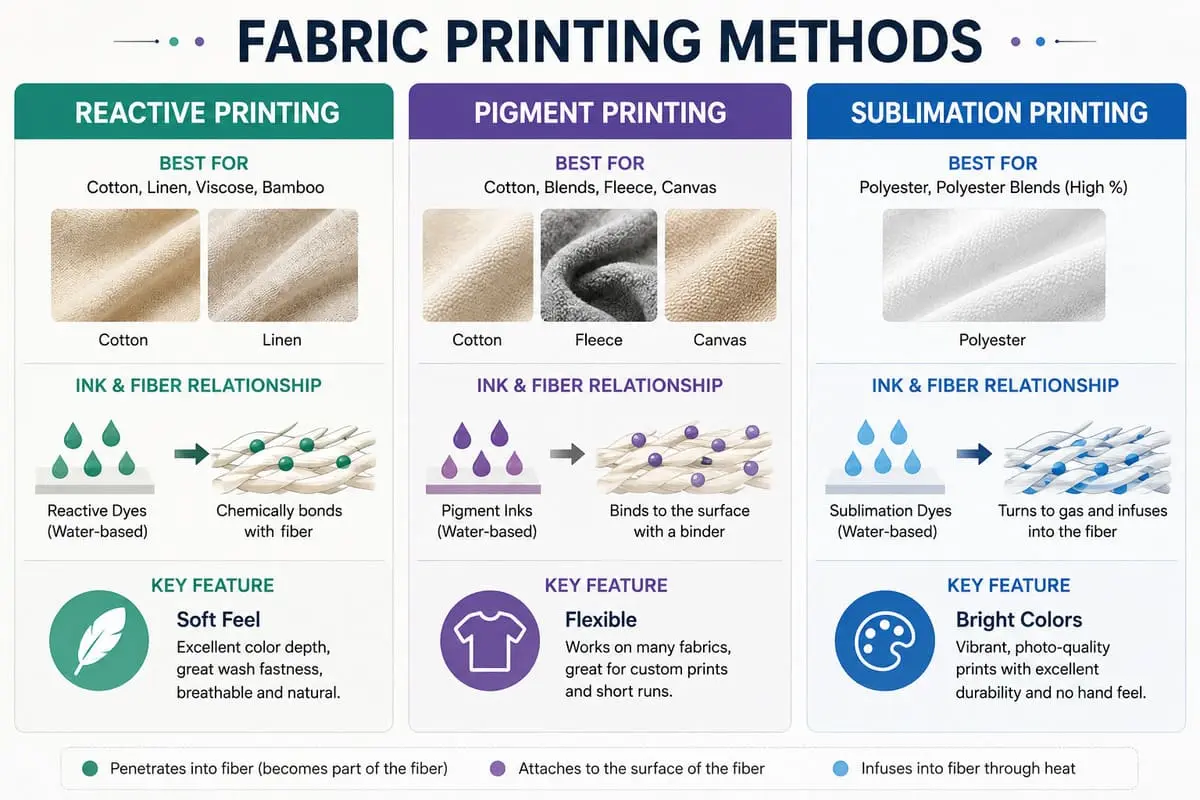
Today, modern textile printing provides many options, including reactive printing, pigment printing, sublimation printing, and digital fabric printing.
Each method has unique advantages.
For example:
- Reactive printing is widely used for natural fabrics such as cotton and linen.
- Sublimation printing delivers bright and durable colors on polyester fabrics.
- Pigment printing provides flexible application across many fabric types.
Choosing the wrong printing method can result in:
- Poor color performance
- Reduced durability
- Unsuitable fabric texture
- Higher production costs
This guide explains the most popular fabric printing methods, how they work, and how to choose the best solution for your custom textile project.
For a complete overview of custom textile production, explore our:
Table of Contents:Fabric Printing Methods
What Are Fabric Printing Methods?
Fabric printing methods are technologies used to apply colors, patterns, images, or artwork onto textile materials.
Unlike fabric dyeing, which colors the entire textile, printing creates specific designs on selected areas of the fabric.
Modern textile printing methods allow manufacturers to produce:
- Custom patterns
- Digital artwork
- Logos
- Photographic images
- Fashion designs
- Home textile prints
The best printing method depends on:
1. Fabric Fiber Type
Different fibers react differently to inks and dyes.
Examples:
| Fabric | Common Printing Method |
|---|---|
| Cotton | Reactive / Pigment |
| Linen | Reactive |
| Polyester | Sublimation |
| Blended Fabric | Pigment |
2. Final Application
The intended product also affects printing choices.
Examples:
| Application | Recommended Method |
|---|---|
| Fashion apparel | Reactive |
| Sportswear | Sublimation |
| Home décor | Reactive / Pigment |
| Promotional textiles | Sublimation |
3. Required Print Quality
Consider:
- Color brightness
- Image detail
- Soft hand feel
- Wash durability
Different printing methods provide different advantages.
Main Types of Fabric Printing Methods
The most common modern textile printing methods include:
1. Reactive Printing
2. Pigment Printing
3. Sublimation Printing
4. Digital Fabric Printing
Each method has different applications.
Reactive Printing Explained
What Is Reactive Printing?
Reactive printing is a textile printing method that uses reactive dyes to chemically bond with fabric fibers.
It is mainly used for natural cellulose fibers such as:
- Cotton
- Linen
- Bamboo
- Rayon
Reactive dyes create a strong bond with fibers, producing excellent color durability and a soft fabric feel.
How Reactive Printing Works
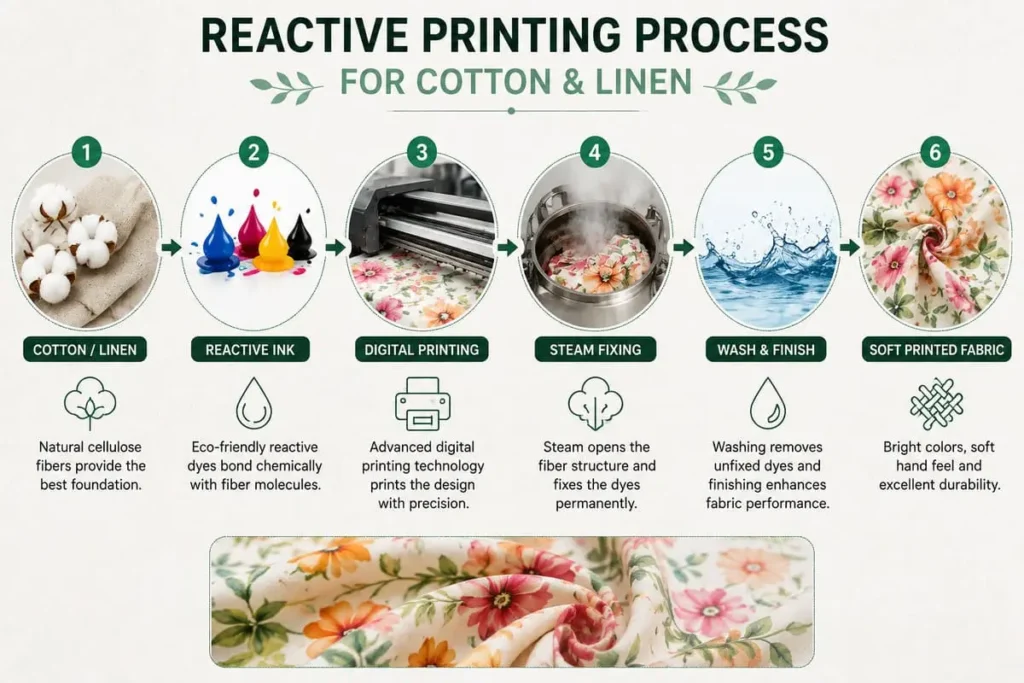
The basic process includes:
Step 1: Fabric Preparation
The fabric is treated to improve dye absorption.
Step 2: Digital Printing
Reactive ink is applied directly onto the fabric.
Step 3: Steam Fixation
Steam allows the dye molecules to bond with the fibers.
Step 4: Washing and Finishing
Excess dye is removed, leaving stable colors.
Advantages of Reactive Printing
Excellent Color Quality
Reactive printing provides:
- Deep colors
- Smooth gradients
- Fine details
It is especially suitable for photographic designs.
Soft Fabric Feel
Because the dye becomes part of the fiber, the fabric maintains its original softness.
This makes reactive printing ideal for:
- Clothing
- Bedding
- Baby products
High Wash Durability
Reactive printing can provide excellent color durability when the fabric and printing process are properly matched. Textile performance is commonly evaluated through standardized tests such as colorfastness to laundering, light, and crocking. AATCC textile testing standards provide established methods for evaluating these and other textile performance properties.
Best Fabrics for Reactive Printing
Reactive printing is commonly used for:
- Cotton fabric
- Linen fabric
- Bamboo fabric
- Viscose fabric
Understanding cotton fiber properties can help designers and manufacturers select appropriate fabrics for printing and end-use applications. CottonWorks provides technical resources covering cotton fiber characteristics, quality, and textile performance.
If you need natural fabrics with a premium hand feel, reactive printing is often the preferred choice.
Pigment Printing Explained
What Is Pigment Printing?
Pigment printing uses colored pigments that attach to the surface of the fabric through a binder system.
Unlike reactive dyes, pigments do not chemically bond with the fiber.
Instead, they remain on the fabric surface after curing.
Pigment printing is popular because it can be applied to many different fabric types.
How Pigment Printing Works
The process includes:
Step 1
Pigment ink is printed onto fabric.
Step 2
A binder helps attach pigments to the surface.
Step 3
Heat curing fixes the print.
Advantages of Pigment Printing
Flexible Fabric Compatibility
Pigment printing can work with:
- Cotton
- Polyester blends
- Canvas
- Decorative fabrics
Simple Production Process
Compared with reactive printing, pigment printing generally requires fewer processing steps.
Suitable for Small Production Runs
Because of its flexibility, pigment printing is often suitable for:
- Custom projects
- Samples
- Short runs
Limitations of Pigment Printing
Compared with reactive printing:
- Fabric hand feel may be slightly different
- Dark fabrics may require special treatment
- Color depth can vary depending on fabric
Best Fabrics for Pigment Printing
Common choices include:
- Cotton
- Cotton blends
- Canvas
- Home textile fabrics
Sublimation Printing Explained
What Is Sublimation Printing?
Sublimation printing is a printing technology where dye turns into gas under heat and bonds with polyester fibers.
It is mainly used for polyester fabrics.
The dye becomes part of the fiber structure, creating durable prints with excellent color performance.
How Sublimation Printing Works
The process:
Step 1
Design is printed onto transfer paper.
Step 2
Heat and pressure transfer the dye.
Step 3
The dye penetrates polyester fibers.
Step 4
The fabric becomes permanently printed.
Advantages of Sublimation Printing
Bright Colors
Sublimation produces:
- Vibrant colors
- Sharp details
- Photo-quality images
Excellent Durability
Because the dye becomes part of the polyester fiber:
- Prints resist fading
- No peeling occurs
- Fabric texture remains unchanged
Ideal for Performance Fabrics
Common applications:
- Sportswear
- Activewear
- Flags
- Polyester textiles
Best Fabrics for Sublimation Printing
Sublimation works best with:
- Polyester fabric
- Polyester blends with high polyester content
It is not suitable for pure cotton fabrics.
Digital Fabric Printing Explained
What Is Digital Fabric Printing?
Digital fabric printing uses advanced textile printers to apply designs directly onto fabric.
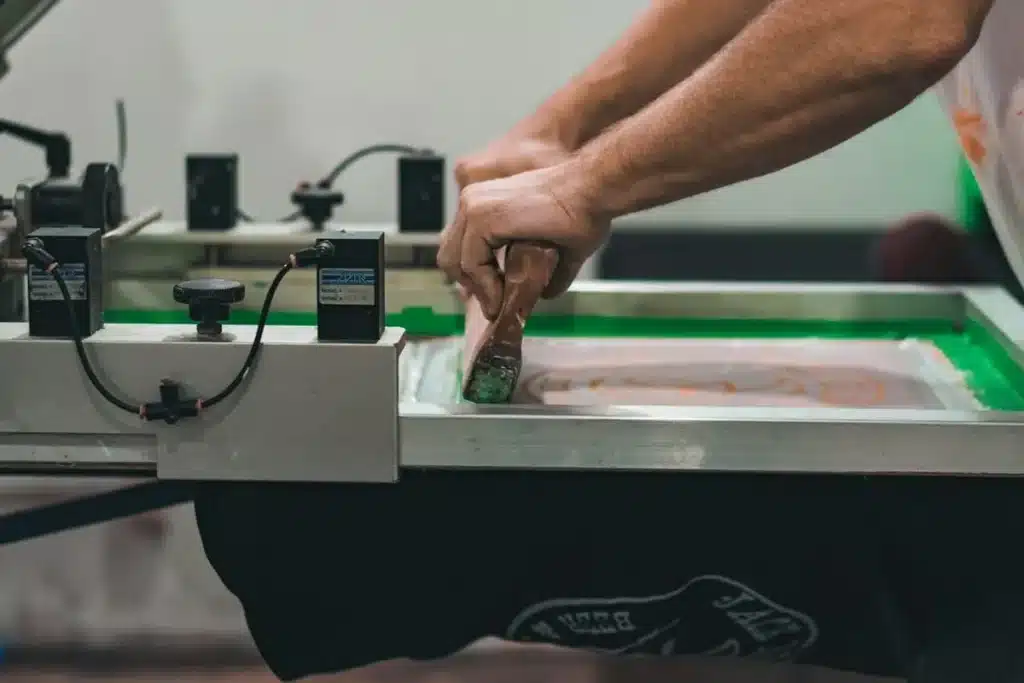
Unlike traditional printing methods, digital printing does not require creating separate screens.
This makes it suitable for:
- Custom designs
- Small quantities
- Personalized fabrics
Digital textile printing includes technologies such as reactive, pigment, and sublimation depending on the fabric and ink system.
Reactive vs Pigment vs Sublimation Printing Comparison
| Feature | Reactive Printing | Pigment Printing | Sublimation Printing |
|---|---|---|---|
| Best Fabric | Cotton / Linen | Various fabrics | Polyester |
| Color Quality | Excellent | Good | Excellent |
| Soft Feel | ★★★★★ | ★★★★ | ★★★★★ |
| Durability | ★★★★★ | ★★★★ | ★★★★★ |
| Photo Printing | Excellent | Good | Excellent |
| Small Batch | Good | Excellent | Excellent |
Which Fabric Printing Method Should You Choose?
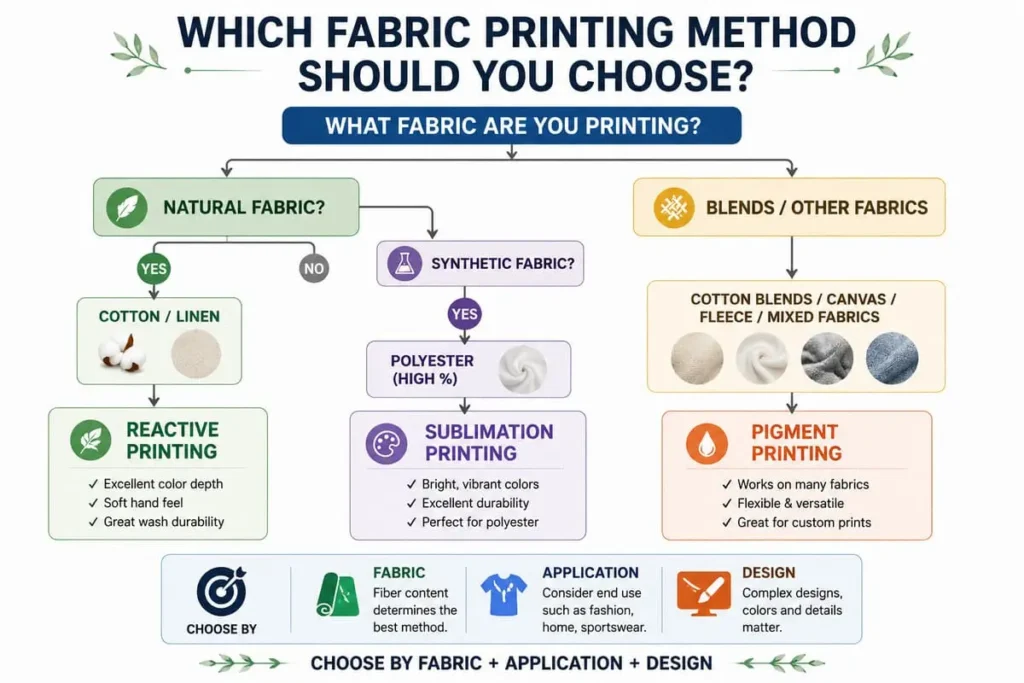
For Cotton Fabric
Recommended:
Reactive Printing
Why:
- Soft hand feel
- Natural appearance
- Excellent color penetration
For Polyester Fabric
Why:
- Bright colors
- Durable prints
- Sportswear friendly
Sublimation Printing
Recommended:
For Mixed Fabrics
Why:
- Flexible application
- Suitable for blends
Pigment Printing
Recommended:
For Custom Photo Fabric
Recommended:
Reactive or sublimation depending on fabric type.
Example:
Cotton photo fabric:
→ Reactive printing
Polyester photo fabric:
→ Sublimation printing
Fabric Printing Methods for Different Applications
Fashion Clothing
Recommended:
- Reactive printing
- Sublimation printing
Used for:
- Dresses
- Shirts
- Scarves
Home Textiles
Recommended:
- Reactive
- Pigment
Used for:
- Curtains
- Cushion covers
- Bedding
Sportswear
Recommended:
- Sublimation
Used for:
- Jerseys
- Activewear
- Performance clothing
Handmade and Craft Projects
Recommended:
- Pigment printing
- Digital fabric printing
How JCWTextile Selects the Right Printing Method
At JCWTextile, we match printing technology with:
- Fabric composition
- Design requirements
- Product application
- Customer expectations
Our process:
1. Choose Fabric
Select from multiple textile options.
2. Upload Design
Provide your artwork or image.
3. Select Printing Method
We recommend the most suitable technology.
4. Produce Custom Printed Fabric
Conclusion
Choosing the correct fabric printing method is essential for achieving high-quality custom textiles.
There is no single best printing technology for every project.
The right choice depends on:
- Fabric type
- Design requirements
- Application
- Expected performance
Reactive printing is ideal for cotton and natural fabrics.
Pigment printing provides flexibility across different materials.
Sublimation printing delivers vibrant and durable results on polyester.
By understanding the differences between these technologies, designers and businesses can create better custom printed fabrics with improved quality and performance.
📚 Frequently Asked Questions About Fabric Printing Methods
1. What is the best fabric printing method?
The best fabric printing method depends on the fabric type, design, and final application. Reactive printing is commonly used for cotton and other natural fabrics, sublimation printing is ideal for polyester, while pigment printing offers flexible application across different fabric types.
2. What is the difference between reactive and sublimation printing?
Reactive printing is mainly used for natural fibers such as cotton and linen, while sublimation printing is designed primarily for polyester fabrics. Reactive printing provides a soft hand feel, while sublimation printing is known for bright and durable colors.
3. Which printing method is best for cotton fabric?
Reactive printing is commonly one of the best fabric printing methods for cotton because it provides excellent color depth, good wash durability, and a soft fabric feel. Pigment printing can also be suitable for certain cotton applications.
4. Is sublimation printing suitable for cotton?
Sublimation printing is generally not suitable for pure cotton because sublimation dyes bond most effectively with polyester fibers. Polyester and high-polyester fabrics are usually better choices for sublimation printing.
5. What is pigment printing used for?
Pigment printing is used on a range of textile materials, including cotton, blends, canvas, and some other fabrics. It is valued for its flexible fabric compatibility and can be used for many custom textile applications.
6. Which fabric printing method is best for photos?
For photo printing, reactive printing can provide excellent results on cotton and other suitable natural fabrics, while sublimation printing is commonly used for polyester. The best choice depends on the fabric and the desired image quality.
7. What is the difference between digital fabric printing and screen printing?
Digital fabric printing uses digital artwork files and specialized textile printers, while screen printing uses physical screens to apply ink. Digital printing is well suited to custom designs, detailed artwork, and smaller production quantities, while screen printing can be economical for larger production runs.
8. Which fabric printing method is best for custom fabric printing?
There is no single best method for every custom fabric printing project. The right method depends on the fabric composition, design requirements, order quantity, and final product. Reactive, pigment, and sublimation printing each offer different advantages for different textile applications.
For a broader comparison of fabric selection, printing technologies, production steps, and ordering considerations, explore our Custom Fabric Printing Guide.