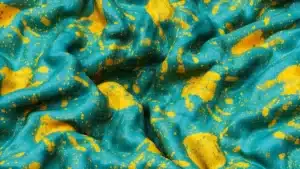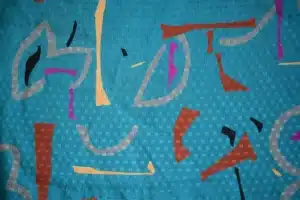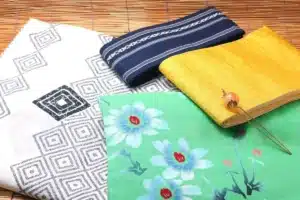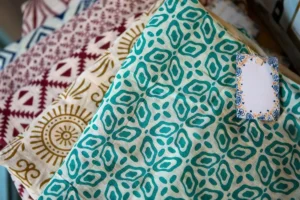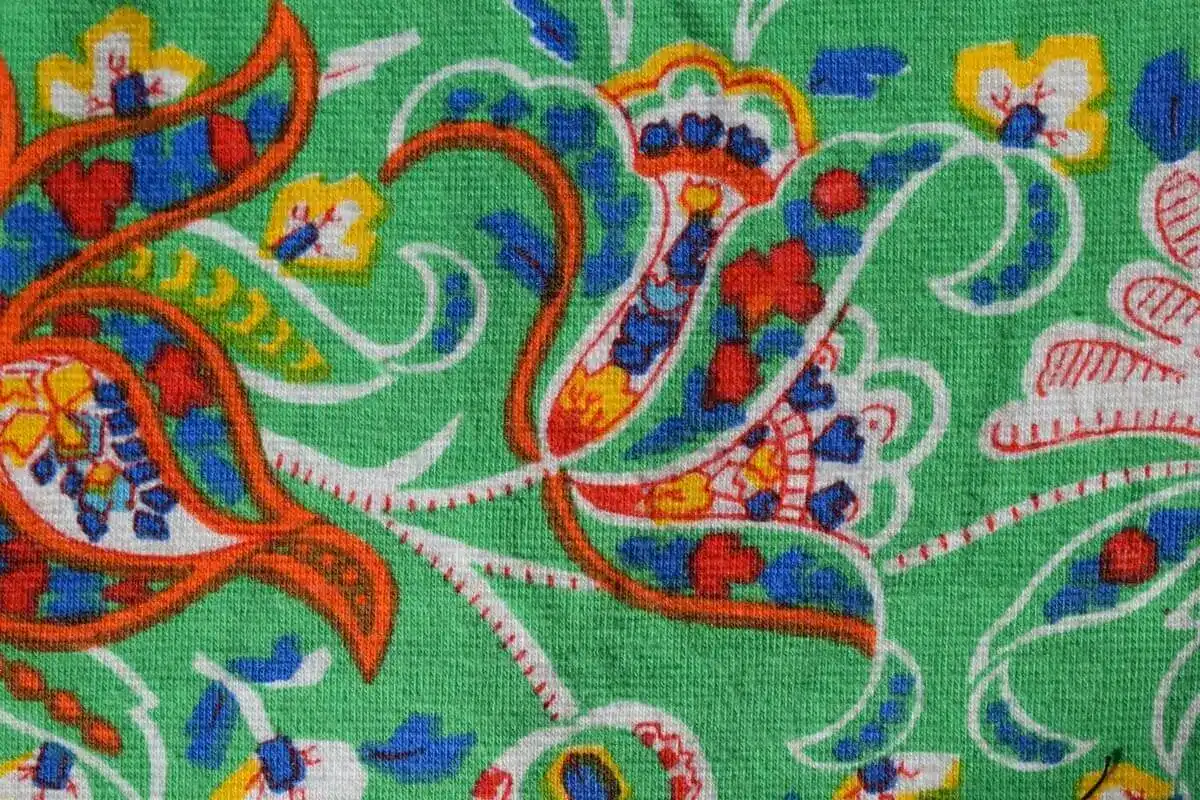
Canvas is a strong, structured woven fabric widely used for bags, home textiles, accessories, apparel, art materials, and other products where a stable textile surface is important. Modern canvas can be made from cotton, linen, polyester, or blends, so its exact characteristics depend on the fiber content, yarn construction, weight, weave density, surface, and finishing.
Canvas fabric printing allows designers, brands, manufacturers, artists, and small businesses to customize this versatile textile with original patterns, illustrations, photographs, logos, artwork, and repeating designs.
Unlike lightweight apparel fabrics, canvas generally has a more substantial hand and a stable woven structure. This makes fabric selection particularly important because a canvas intended for a tote bag may have very different requirements from one used for apparel, wall decoration, or a decorative home textile.
For a broader overview of fabric selection, printing technologies, production steps, and ordering considerations, see our Custom Fabric Printing Guide.
This guide explains what canvas fabric is, which canvas fabrics can be printed, how different printing methods work, what products can be made with printed canvas, how to prepare artwork, and what to consider before ordering custom printed canvas fabric.
Table of Contents:Canvas Fabric Printing
What Is Canvas Fabric?
Canvas is generally a firm woven textile associated with a closely constructed surface and substantial hand. Canvas is commonly made from cotton, although other fibers and blends can also be used.
The term “canvas” describes a broad fabric category rather than one single standardized textile. Two canvas fabrics may have different fiber compositions, weights, yarn sizes, surface textures, coatings, and finishing processes.
Weaving itself creates fabric by interlacing warp and weft yarns on a loom. The U.S. National Park Service explains that plain weave is the simplest basic weaving structure, in which the weft passes over and under successive warp yarns.
Canvas is commonly associated with plain-weave construction. Textile Heritage Museum listings also classify canvas within plain-weave woven fabrics.
This construction contributes to the firm, stable character that makes canvas suitable for many demanding textile applications.
Key Characteristics of Canvas Fabric
The exact properties of canvas vary according to construction and fiber, but several characteristics commonly make canvas attractive for customized textile production.
Strong and Structured
Canvas is generally more structured than lightweight apparel fabrics. This makes it useful for products that need to maintain their shape.
Common examples include:
- Tote bags
- Backpacks
- Pouches
- Storage products
- Upholstery components
- Wall decor
- Structured fashion accessories
Stable Woven Construction
Compared with many knitted fabrics, canvas generally has limited mechanical stretch unless it has been specifically engineered with stretch fibers or construction.
This stability can be useful when printing repeating patterns or constructing products that require relatively predictable dimensions.
Distinctive Surface Texture
Canvas may have a visible woven texture. Heavy canvas often produces a more pronounced textile character than smooth lightweight fabrics.
That texture can become part of the visual appearance of a printed design.
Wide Range of Weights
Canvas is available in different weights and constructions.
Lightweight canvas may work for:
- Apparel
- Lightweight bags
- Decorative products
Heavier canvas may be used for:
- Tote bags
- Backpacks
- Upholstery
- Equipment bags
- Structured accessories
Therefore, weight should always be considered together with the intended product rather than treated as an isolated specification.
What Types of Canvas Fabric Can Be Printed?
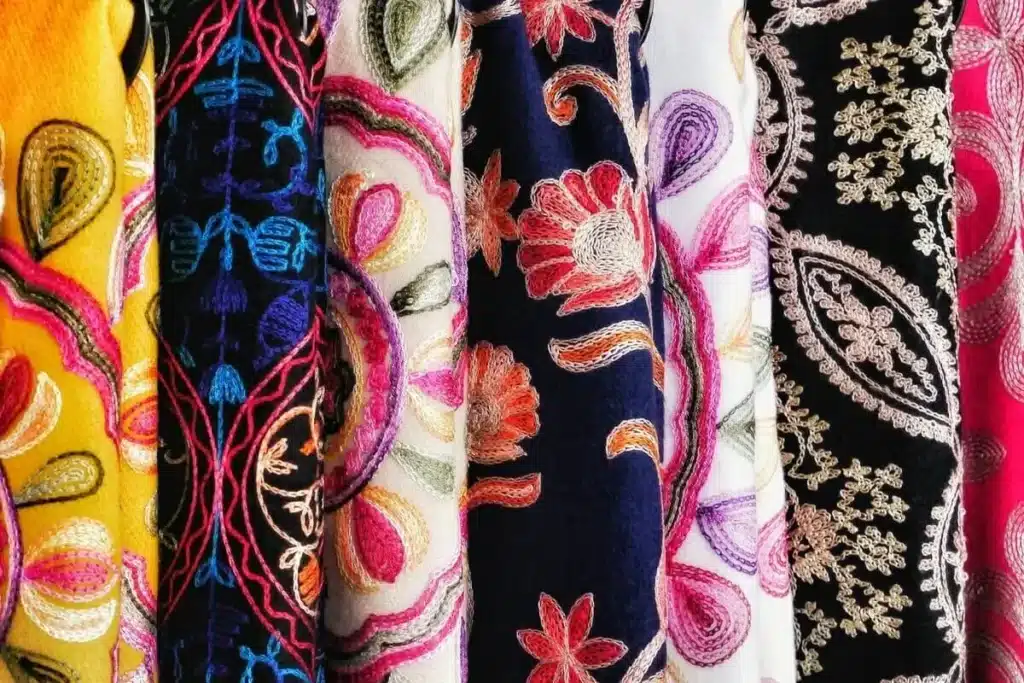
Not all canvas fabrics have the same printing requirements. Fiber composition and finishing can significantly influence the appropriate printing technology.
1. Cotton Canvas
Cotton canvas is one of the most commonly encountered canvas varieties.
It can be used for:
- Tote bags
- Pouches
- Backpacks
- Apparel
- Home textiles
- Decorative products
- Craft products
For cotton canvas, the printing system should be compatible with cellulose-based fibers.
Our guide to cotton fabric printing provides more information about customized cotton textiles and their printing considerations.
2. Linen Canvas
Linen canvas is made using flax-based fibers and has a distinct natural appearance.
It can be used for:
- Home decor
- Decorative panels
- Art-related products
- Fashion accessories
- Premium textile products
Linen canvas can have a more pronounced natural texture than some cotton canvas constructions, so the final print appearance should be evaluated on the actual fabric.
3. Polyester Canvas
Polyester canvas provides a synthetic alternative for applications that require specific performance characteristics.
Depending on the fabric construction and printing system, polyester canvas may be used for:
- Bags
- Outdoor products
- Displays
- Decorative textiles
- Promotional products
The printing process should be selected according to the exact polyester construction, surface treatment, and intended use.
4. Cotton-Polyester Canvas
Blended canvas can combine characteristics from both fibers.
However, blends require careful consideration because the fibers may respond differently to particular dyes and printing processes.
CottonWorks explains that dye selection is fiber-specific, while pigment systems can be used across some different fiber compositions when the relevant binder and process are appropriate.
For commercial production, testing the actual fabric can help verify:
- Color
- Coverage
- Hand feel
- Surface appearance
- Wash performance
- Dimensional stability
5. Recycled and Specialty Canvas
Some canvas products can be made using recycled or blended fibers.
When choosing recycled canvas, brands should evaluate not only the recycled-content claim but also:
- Fiber composition
- Certification
- Fabric performance
- Printing compatibility
- Finishing
- Intended product lifespan
A sustainable material choice should be considered together with durability and the actual requirements of the finished product.
Is Canvas Fabric Good for Printing?
Yes. Canvas can be an excellent material for custom textile printing when the printing method is matched to the fabric.
Its relatively stable woven structure can be useful for detailed patterns, logos, illustrations, and repeating designs.
However, several factors influence the final result:
- Fiber composition
- Fabric weight
- Yarn density
- Surface texture
- Fabric color
- Pretreatment
- Ink or dye system
- Fixation
- Finishing
A smooth lightweight cotton canvas and a heavyweight textured canvas may produce noticeably different results from the same artwork.
Therefore, a fabric sample or print test is particularly useful when visual consistency is important.
What Printing Methods Are Used for Canvas Fabric?
Canvas can be printed using different technologies depending on the fiber and final application.
1. Digital Fabric Printing
Digital printing applies controlled ink droplets directly onto a textile substrate.
CottonWorks describes digital printing as a non-contact textile printing process in which printheads deposit ink droplets according to a digital image file. The technology can support detailed imagery, flexible design changes, large repeats, sampling, and customized textile production.
For a broader introduction, see our guide to digital fabric printing.
Digital printing can be particularly useful when a project requires:
- Complex artwork
- Photographic images
- Multiple colors
- Large repeats
- Custom designs
- Small or medium production runs
- Frequent design changes
2. Reactive Printing for Cotton Canvas
Reactive printing can be used for suitable cotton-based fabrics.
Reactive dyes are designed to bond with cellulose fibers under the appropriate chemical conditions. CottonWorks notes that reactive printing generally involves specific preparation and post-printing treatment to achieve the required result.
For cotton canvas, the actual printing recipe depends on the fabric construction and finishing.
3. Pigment Printing
Pigment printing uses colorants that are held to the textile using a binder.
One advantage of pigment systems is that pigments are not limited to a single fiber category in the same way as fiber-specific dyes. CottonWorks notes that pigment systems can be used on cotton and certain fiber blends when the appropriate binder and process are used.
Pigment printing may therefore be considered for certain canvas constructions, particularly where versatility across fiber blends is important.
4. Transfer Printing
Some canvas products may be suitable for transfer printing depending on the fiber, coating, and transfer technology.
The basic concept is:
Artwork → Transfer Medium → Heat or Transfer Process → Canvas Fabric
Transfer printing should not be assumed to work identically on every canvas fabric. The fabric and transfer system should be tested together.
5. Traditional Screen Printing
Screen printing remains useful for some canvas products, particularly when relatively simple graphic designs are produced in larger quantities.
It can be suitable for:
- Logos
- Bold graphics
- Limited-color artwork
- Promotional bags
- Repeated production
However, complex photographic artwork and frequently changing designs may be more convenient for digital printing.
For a broader comparison of textile printing technologies, see our guide to fabric printing methods.
Canvas Fabric Printing vs Digital Printing
Canvas is the fabric, while digital printing is a printing technology.
These two terms should not be treated as alternatives.
A project can use:
Cotton Canvas + Digital Printing
or:
Polyester Canvas + Suitable Digital Printing
The printer must determine whether the specific ink system, pretreatment, and fixation process are compatible with the canvas.
This distinction is important when comparing fabrics and printing methods. The right combination depends on the finished product rather than on the fabric name alone.
How Does Canvas Fabric Printing Work?
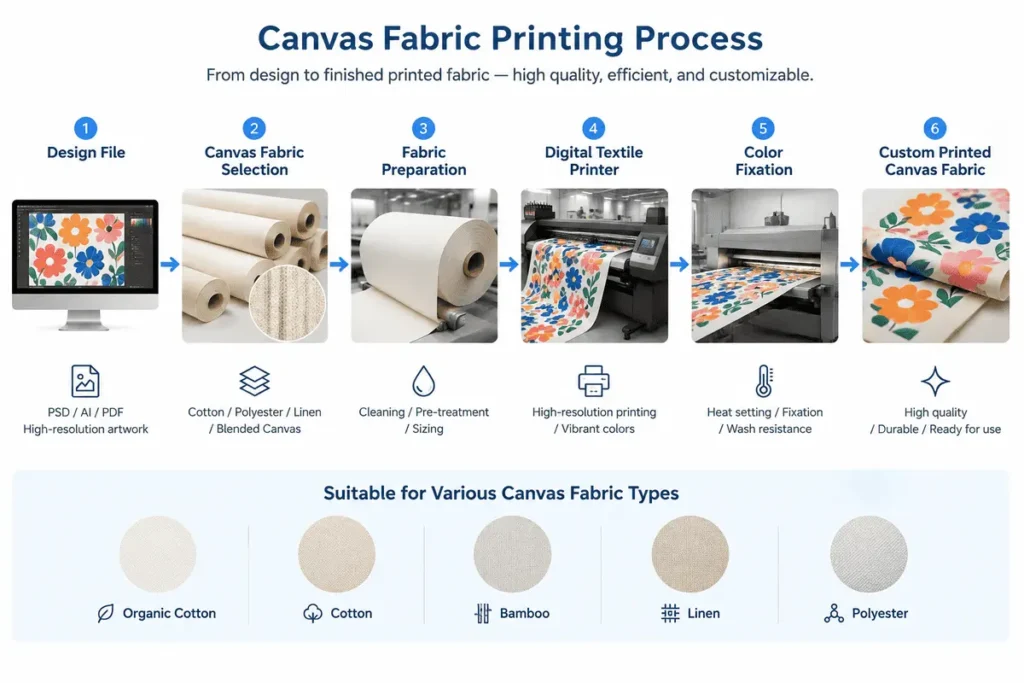
The exact manufacturing process varies according to the fiber and printing technology, but a typical workflow follows several stages.
Step 1: Prepare the Artwork
Start with a high-resolution design appropriate for the final print size.
Check:
- File resolution
- Color mode
- Final dimensions
- Pattern repeat
- Bleed
- Seam placement
- Image sharpness
For professional textile production, artwork should be prepared according to the printer’s technical specifications.
For more detailed advice, see how to prepare artwork for fabric printing.
Step 2: Select the Canvas Fabric
Choose canvas according to the finished product.
Consider:
- Fiber content
- Fabric weight
- Width
- Thickness
- Surface texture
- Flexibility
- Coating
- Intended application
A canvas for a tote bag may require very different specifications from a lightweight canvas intended for apparel.
Step 3: Test Printing Compatibility
Before production, confirm that the printing method and colorant system work with the selected canvas.
This is particularly important for:
- Blended fabrics
- Coated canvas
- Dark canvas
- Specialty finishes
- Recycled fiber blends
Step 4: Fabric Preparation
Depending on the printing method, the fabric may require:
- Cleaning
- Pretreatment
- Drying
- Stabilization
- Tension control
CottonWorks notes that consistent and repeatable fabric preparation is important because variability in preparation can contribute to printing defects.
Step 5: Printing
The digital or conventional printing process applies the selected colorants according to the artwork.
For digital printing, the design is converted into instructions for the printer’s printheads.
Step 6: Color Fixation
The color must be properly fixed according to the selected printing system.
Depending on the technology, this may involve:
- Heat
- Steam
- Curing
- Heat transfer
- Other fixation processes
The exact parameters depend on the colorant and fabric.
Step 7: Finishing
After printing and fixation, the textile may undergo:
- Washing
- Drying
- Heat setting
- Inspection
- Rolling
- Cutting
- Other finishing treatments
The finished canvas is then ready for sewing or final product manufacturing.
What Are the Benefits of Custom Printed Canvas Fabric?
1. Strong Visual Impact
Canvas provides a substantial textile surface that can give printed graphics a distinctive appearance.
Large floral designs, geometric patterns, illustrations, logos, and artwork can all be used depending on the printing process.
2. Excellent for Branded Products
Canvas is especially useful for businesses creating branded physical products.
Examples include:
- Branded tote bags
- Promotional bags
- Pouches
- Packaging
- Event merchandise
- Lifestyle accessories
3. Suitable for Repeating Patterns
Canvas works well for custom patterns that cover an entire fabric roll.
Designers can create:
- Botanical prints
- Geometric patterns
- Abstract designs
- Brand motifs
- Illustrations
- Photography
- Artistic patterns
4. Versatile End Uses
Canvas can be used in fashion, accessories, home decor, art, retail packaging, and other industries.
This makes it an adaptable substrate for custom fabric production.
What Products Can Be Made with Printed Canvas Fabric?
Canvas has an unusually broad application range.
Tote Bags
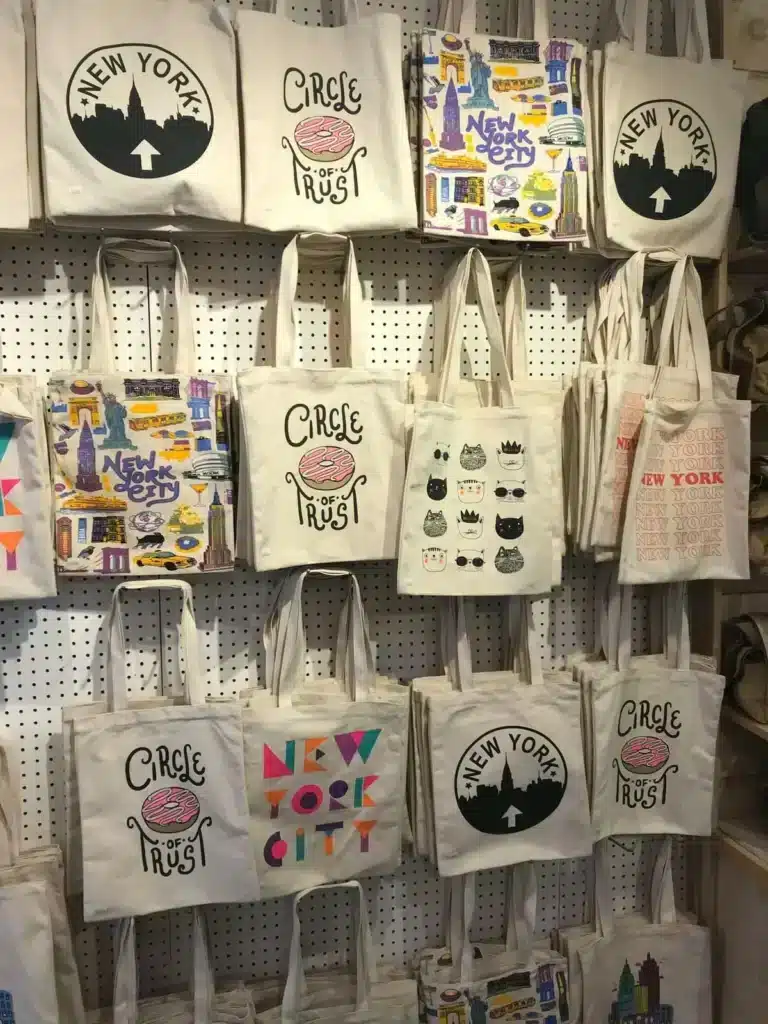
Tote bags are one of the most recognizable applications for printed canvas.
Custom artwork can cover the entire fabric or be designed for specific placement areas.
Canvas can be used to create:
- Shopping totes
- Promotional bags
- Brand merchandise
- Reusable bags
- Fashion totes
For more information, see our guide to custom fabric printing for bags and accessories.
Backpacks and Pouches
Canvas can also be used for:
- Backpacks
- Cosmetic bags
- Pencil cases
- Travel pouches
- Tool bags
- Small accessories
The appropriate canvas weight and construction should be selected according to the product’s structural requirements.
Home Decor
Custom printed canvas can be used for:
- Cushion covers
- Decorative panels
- Curtains
- Storage products
- Table textiles
- Wall decor
For more ideas, see printed fabric applications.
Fashion Apparel
Lightweight canvas can be used in certain apparel applications where a more structured fabric is desired.
Examples include:
- Jackets
- Overshirts
- Utility garments
- Skirts
- Dresses
- Workwear-inspired fashion
Canvas is generally more structured than jersey, making it suitable for fashion designs where shape and body are important.
For clothing businesses developing personalized textile collections, see our guide to custom fabric printing for clothing brands.
Art and Creative Products
Canvas has a long association with artistic applications.
Custom textile printing allows designers and artists to create:
- Decorative fabric panels
- Creative textile installations
- Art-inspired accessories
- Customized craft materials
- Interior decoration products
The exact suitability depends on whether the canvas is raw, coated, primed, or finished for a specific artistic purpose.
Upholstery and Interior Products
Heavier canvas constructions can be considered for certain interior applications.
The specific performance requirements may include:
- Abrasion resistance
- Colorfastness
- Light exposure
- Dimensional stability
- Cleaning performance
For commercial interior projects, the required performance specifications should be confirmed separately from the printing requirements.
How to Choose the Right Canvas Fabric for Printing
Choosing canvas should begin with the final product.
For Tote Bags
Consider:
- Medium to heavyweight canvas
- Firm structure
- Appropriate width
- Durable construction
- Suitable print method
For Apparel
Consider:
- Lightweight or medium-weight canvas
- Comfortable hand
- Appropriate drape
- Surface texture
- Garment construction
For Home Decor
Consider:
- Weight
- Width
- Drape
- Colorfastness
- Cleaning requirements
- Interior application
For Promotional Products
Consider:
- Cost
- Durability
- Print complexity
- Order quantity
- Intended use
- Required delivery schedule
For Outdoor Products
Consider:
- Fiber
- Coating
- UV exposure
- Moisture
- Weather resistance
- Required colorfastness
An outdoor canvas and an indoor canvas should not be treated as equivalent simply because both products are labeled “canvas.”
How to Prepare Artwork for Canvas Fabric Printing
Canvas can reproduce many types of artwork, but good file preparation remains essential.
Use High-Resolution Artwork
Use sufficiently high-resolution source files for the intended print dimensions.
Large-format canvas graphics can reveal defects that may not be visible on a computer screen.
Check Pattern Scale
Before production, determine how large the artwork should appear on the final fabric.
A floral motif that works well on a scarf may appear too small on a large tote bag.
Prepare Seamless Repeats
For all-over canvas printing, test whether the artwork repeats correctly.
Check:
- Horizontal edges
- Vertical edges
- Motif alignment
- Pattern scale
- Repeat frequency
Consider Canvas Texture
Canvas texture can influence how fine details are perceived.
Extremely thin lines or very small text may be less visually clear than they appear on a smooth digital display.
Confirm Color Expectations
Screen colors and physical textile colors are not identical.
For important commercial projects, a sample print or swatch can help verify:
- Color
- Contrast
- Pattern scale
- Detail
- Fabric texture
- Overall appearance
How Durable Is Printed Canvas Fabric?
The durability of printed canvas depends on both the fabric and the printing system.
Important factors include:
- Fiber composition
- Fabric construction
- Ink or dye selection
- Pretreatment
- Fixation
- Finishing
- Intended use
- Washing conditions
- Light exposure
Colorfastness should be evaluated according to the requirements of the finished product.
AATCC maintains test methods covering textile properties including colorfastness to crocking, laundering, perspiration, water, and light exposure.
For example, AATCC TM8 evaluates color transfer from textile surfaces under rubbing, while AATCC TM61 evaluates colorfastness to accelerated laundering.
This is particularly relevant for bags, clothing, home textiles, and products exposed to frequent handling or washing.
Canvas Fabric Printing vs Jersey Fabric Printing
Canvas and jersey are fundamentally different fabric constructions.
| Feature | Canvas Fabric | Jersey Fabric |
|---|---|---|
| Construction | Woven | Knitted |
| Structure | Firm and stable | Flexible and soft |
| Stretch | Usually limited | Usually higher |
| Surface | Often visibly textured | Generally softer knit surface |
| Common Uses | Bags, accessories, home products | T-shirts, dresses, baby clothing |
| Shape Retention | Generally higher | Generally more flexible |
| Printing Considerations | Surface texture and weight | Stretch and knit structure |
This comparison is useful when deciding which fabric should be used for a particular product.
A structured tote bag may benefit from canvas, while a fitted T-shirt may be more appropriate for jersey.
Can Small Businesses Order Custom Printed Canvas Fabric?
Yes. Canvas is particularly suitable for small brands and independent businesses because it can be used for many different product categories.
Small businesses may use custom printed canvas for:
- Limited-edition tote bags
- Small fashion collections
- Branded accessories
- Home decor
- Artist merchandise
- Packaging
- Seasonal collections
Small-batch production can reduce the amount of inventory a business needs when testing a new pattern or product concept.
For more information about smaller custom textile orders, see our guide to low MOQ custom fabric printing.
How Much Does Canvas Fabric Printing Cost?
The cost of custom canvas fabric printing depends on several factors.
Common pricing factors include:
- Canvas fabric composition
- Fabric weight
- Width
- Printing method
- Artwork complexity
- Print coverage
- Order quantity
- Pretreatment
- Finishing
- Cutting or sewing
- Shipping destination
A large custom repeat and a simple one-color logo may have very different production requirements.
Small quantities can also have a higher cost per meter because setup, handling, and finishing costs are spread across fewer meters.
For a more detailed explanation, see our custom fabric printing cost guide.
How to Order Custom Printed Canvas Fabric from JCWTextile
The ordering process can be divided into several simple steps.
1. Define Your Product
First determine what the canvas will become:
- Bag
- Apparel
- Home decor
- Accessory
- Art product
- Promotional product
2. Choose the Canvas Fabric
Select the appropriate fiber, weight, width, surface, and construction.
3. Prepare Your Design
Upload your artwork, repeating pattern, photograph, logo, or illustration.
4. Confirm the Printing Method
The printing process should be matched to the canvas fiber and intended application.
5. Request a Sample
A sample can help confirm the relationship between the artwork and the actual fabric.
6. Confirm Quantity and Specifications
Discuss:
- Fabric
- Width
- GSM
- Print scale
- Repeat
- Quantity
- Finishing
7. Begin Custom Production
Once the fabric and artwork are confirmed, the order can proceed to custom production.
Final Thoughts on Canvas Fabric Printing
Canvas fabric printing combines the strength and structure of woven canvas with the flexibility of custom textile design.
Because canvas can be produced in different fibers, weights, constructions, and finishes, there is no single canvas fabric that is ideal for every project.
For bags and accessories, a firm medium- or heavyweight canvas may provide the structure required for the finished product. For apparel, lightweight canvas may be more appropriate. Home decor, promotional goods, and artistic applications may require completely different specifications.
The most important step is therefore to select the fabric, printing technology, artwork, and end use together.
For brands and designers creating original textile products, custom printed canvas can provide an effective way to develop distinctive patterns, branded products, and personalized fabric collections.
📚 Frequently Asked Questions About Canvas Fabric Printing
1. What is canvas fabric printing?
Canvas fabric printing is the process of applying custom patterns, photographs, illustrations, logos, or other artwork to canvas textiles using a printing technology suitable for the fabric’s fiber composition and construction.
2. Is canvas fabric good for digital printing?
Yes. Many canvas fabrics can be digitally printed when the ink system, pretreatment, fabric surface, and fixation process are compatible.
3. Can cotton canvas be custom printed?
Yes. Cotton canvas can be printed using technologies designed for cotton and other cellulose-based textiles, including suitable digital, reactive, pigment, and other printing systems.
4. What is the best canvas fabric for printing?
There is no single best canvas for every project. The right fabric depends on the intended product, fiber content, weight, width, surface, construction, and printing method.
5. Can canvas fabric be used for tote bags?
Yes. Canvas is widely used for tote bags and other structured accessories. The appropriate weight and construction depend on the bag design and intended load.
6. Can canvas fabric be used for clothing?
Yes. Lightweight or medium-weight canvas can be suitable for certain jackets, overshirts, skirts, dresses, utility garments, and structured fashion products.
7. Can canvas fabric be digitally printed with photographs?
Yes. Digital textile printing can reproduce detailed images and complex artwork on suitable canvas fabrics. The final quality depends on the canvas surface, printing system, artwork resolution, and color management.
8. Is printed canvas fabric washable?
Washability depends on the fabric, printing technology, fixation, finishing, and care instructions. For products requiring repeated washing, the actual printed fabric should be evaluated for the required colorfastness and dimensional performance.
9. Can I order small quantities of custom printed canvas fabric?
Small-batch custom printing may be available depending on the fabric, printing method, and supplier. Minimum order quantities should be confirmed before production.
10. What artwork files are needed for canvas fabric printing?
Artwork requirements vary by printer, but high-resolution files with correct dimensions, color settings, and repeat information are generally recommended.