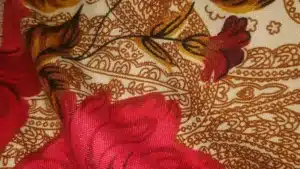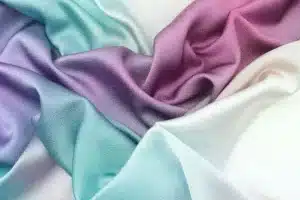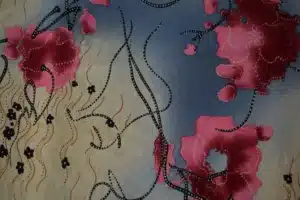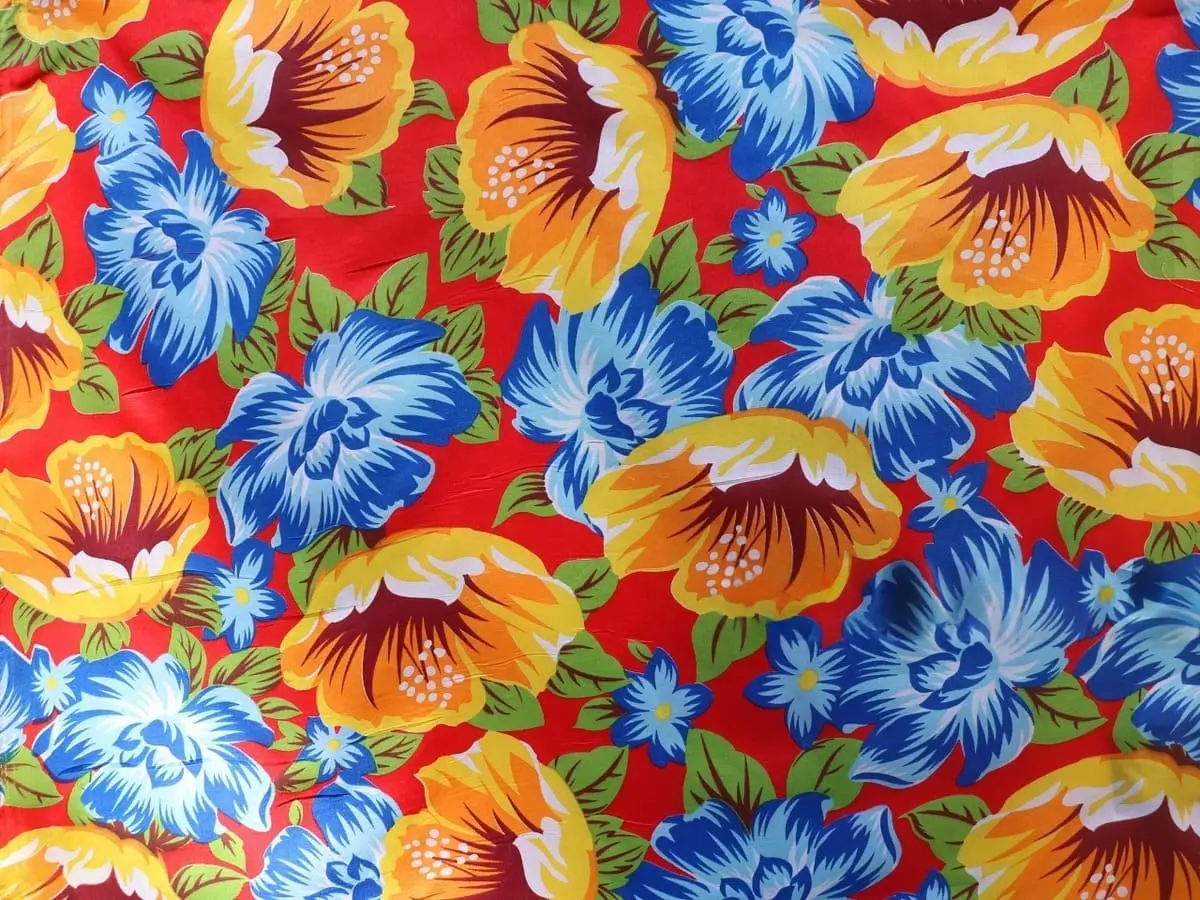
Rayon is a lightweight, soft, and versatile textile widely used in fashion, dresses, scarves, blouses, and flowing garments. Known for its smooth texture and elegant drape, rayon provides designers with a fabric option that combines the comfort of natural fibers with the appearance of premium fashion textiles.
With modern textile technology, rayon fabric printing allows brands, designers, and manufacturers to create customized fabrics featuring original patterns, floral designs, artwork, and unique fashion prints.
Unlike heavier fabrics such as canvas or fleece, rayon has a lightweight structure and excellent drape, making it especially suitable for:
- Fashion collections
- Women’s apparel
- Dresses
- Scarves
- Soft home textiles
For businesses exploring custom textile production, our Custom Fabric Printing Guide explains the complete process from artwork preparation to finished printed fabrics.
This guide covers what rayon fabric is, different rayon types, suitable printing methods, applications, artwork preparation, durability, sustainability considerations, and how brands can order custom printed rayon fabrics.
Table of Contents:Rayon Fabric Printing
What Is Rayon Fabric?
Rayon is a regenerated cellulose fiber produced from natural sources such as wood pulp.
Although rayon is manufactured through a textile production process, it is derived from plant-based cellulose materials.
Common rayon names include:
- Rayon
- Viscose
- Modal
- Lyocell
Rayon is popular because it provides:
- Soft hand feel
- Smooth surface
- Excellent drape
- Comfortable wear
Key Characteristics of Rayon Fabric
1. Soft and Smooth Texture
One of the main advantages of rayon is its luxurious softness.
It feels comfortable against the skin, making it suitable for:
- Dresses
- Blouses
- Scarves
- Lightweight apparel
2. Excellent Drape
Rayon flows naturally and creates an elegant garment silhouette.
This makes it popular among:
- Fashion designers
- Boutique clothing brands
- Women’s apparel manufacturers
3. Breathable Comfort
Rayon fabrics generally provide good moisture absorption and breathability.
Applications include:
- Summer clothing
- Casual wear
- Lightweight fashion products
4. Suitable Surface for Printing
The smooth rayon surface allows:
- Detailed patterns
- Floral designs
- Vibrant colors
- Fashion artwork
This makes rayon an attractive choice for custom printed textiles.
What Types of Rayon Fabric Can Be Printed?
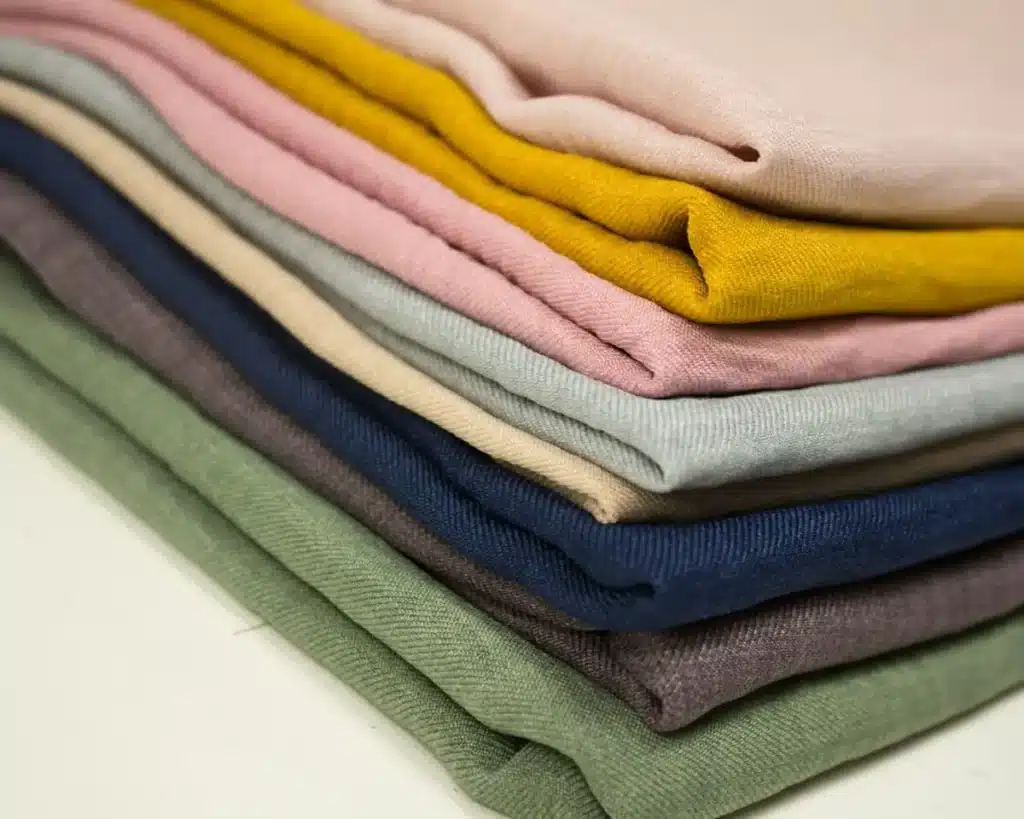
Different rayon variations offer different performance characteristics.
1. Viscose Rayon Fabric
Viscose is the most common type of rayon.
Advantages:
- Soft texture
- Excellent drape
- Comfortable feel
Applications:
- Dresses
- Skirts
- Blouses
- Fashion textiles
2. Modal Fabric
Modal is a type of regenerated cellulose fiber known for softness.
Characteristics:
- Smooth surface
- Good moisture management
- Comfortable wear
Common applications:
- Clothing
- Underwear
- Home textiles
3. Lyocell Fabric
Lyocell is another cellulose-based fiber with increasing popularity.
Benefits:
- Soft hand feel
- Good durability
- Sustainable sourcing options
Applications:
- Fashion apparel
- Premium textiles
4. Rayon Blend Fabrics
Rayon is often blended with other fibers.
Common blends include:
- Rayon cotton
- Rayon polyester
- Rayon linen
Blending can improve:
- Strength
- Durability
- Wrinkle resistance
Is Rayon Fabric Good for Printing?
Yes. Rayon is considered a suitable fabric for custom printing because of its smooth surface and excellent dye absorption properties.
Advantages include:
- Detailed patterns
- Soft color appearance
- Elegant fabric texture
- Fashion-quality results
However, rayon requires careful handling because:
- It has a delicate structure
- It may shrink if not properly treated
- Printing parameters need adjustment
Professional fabric preparation helps achieve consistent results.
What Printing Methods Are Used for Rayon Fabric?
1. Digital Fabric Printing
Digital textile printing is widely used for customized rayon fabrics.
Advantages:
- Complex patterns
- Unlimited colors
- Small production quantities
- Personalized designs
Suitable for:
- Fashion designers
- Clothing brands
- Boutique collections
Learn more:
2. Reactive Printing
Reactive printing is commonly used for cellulose-based fibers such as rayon.
Benefits:
- Excellent color absorption
- Soft fabric feel
- Good wash durability
It is suitable for:
- Fashion fabrics
- Premium apparel
3. Pigment Printing
Pigment printing can also be used for certain rayon applications.
Advantages:
- Flexible design options
- Suitable for various patterns
The final result depends on fabric construction and finishing processes.
Rayon Fabric Printing Process
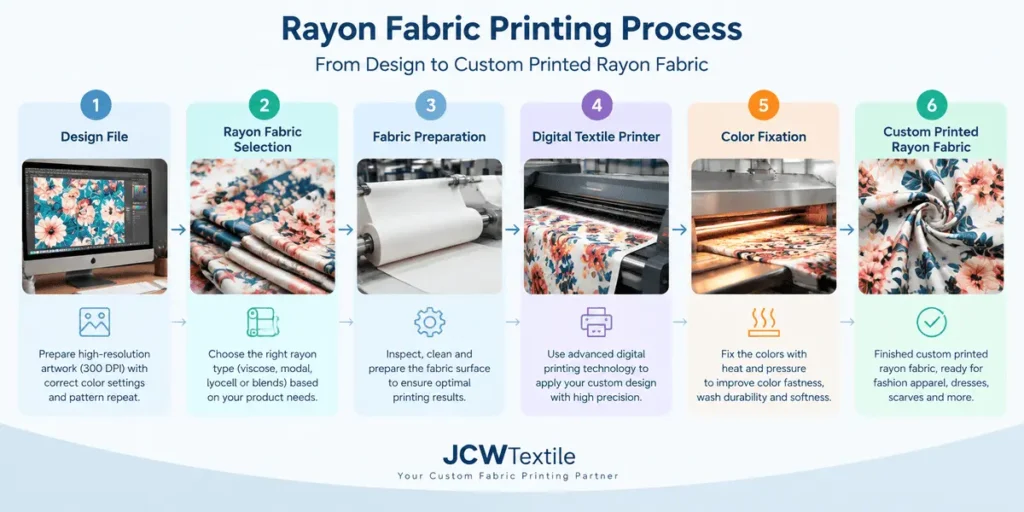
The typical custom rayon printing workflow includes:
Step 1: Artwork Preparation
Design files should be prepared according to textile printing requirements.
Recommended:
- High-resolution artwork
- 300 DPI
- Correct color settings
- Proper pattern repeat
Learn:
Step 2: Rayon Fabric Selection
The correct rayon type depends on the final product.
Examples:
Fashion dresses:
- Viscose rayon
Premium apparel:
- Modal or Lyocell
Lightweight garments:
- Rayon blends
Step 3: Fabric Preparation
Before printing:
- Fabric inspection
- Surface preparation
- Quality checking
help improve printing consistency.
Step 4: Digital Textile Printing
The custom design is printed onto rayon fabric.
Digital printing allows:
- Unique patterns
- Small collections
- Brand-specific artwork
Step 5: Color Fixation
After printing, fixation improves:
- Color stability
- Wash resistance
- Print durability
Step 6: Finishing and Inspection
Final steps include:
- Fabric finishing
- Quality inspection
- Packaging
Applications of Custom Printed Rayon Fabric
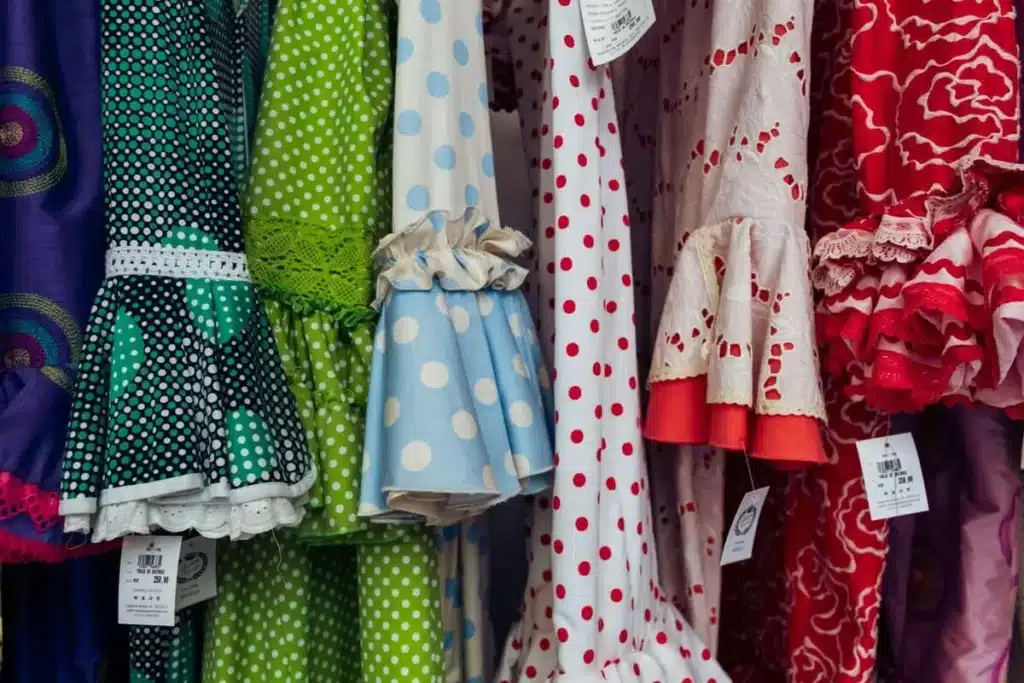
Rayon is widely used in fashion and lifestyle products.
For apparel products, textile safety certifications such as OEKO-TEX STANDARD 100 can help brands evaluate material safety requirements.
Women's Fashion Apparel
Printed rayon is especially popular for:
- Dresses
- Skirts
- Blouses
- Shirts
Designers choose rayon because it provides:
- Elegant movement
- Comfortable wear
- Premium appearance
Custom Printed Scarves
Rayon is suitable for scarves because of:
- Soft texture
- Lightweight feel
- Beautiful drape
Custom printing enables:
- Floral designs
- Artistic patterns
- Brand collections
Boutique Fashion Collections
Small fashion brands often choose rayon because it supports:
- Unique designs
- Limited collections
- Seasonal products
Home Textile Applications
Although mainly used in fashion, rayon can also be used for:
- Decorative textiles
- Lightweight curtains
- Soft accessories
Explore more:
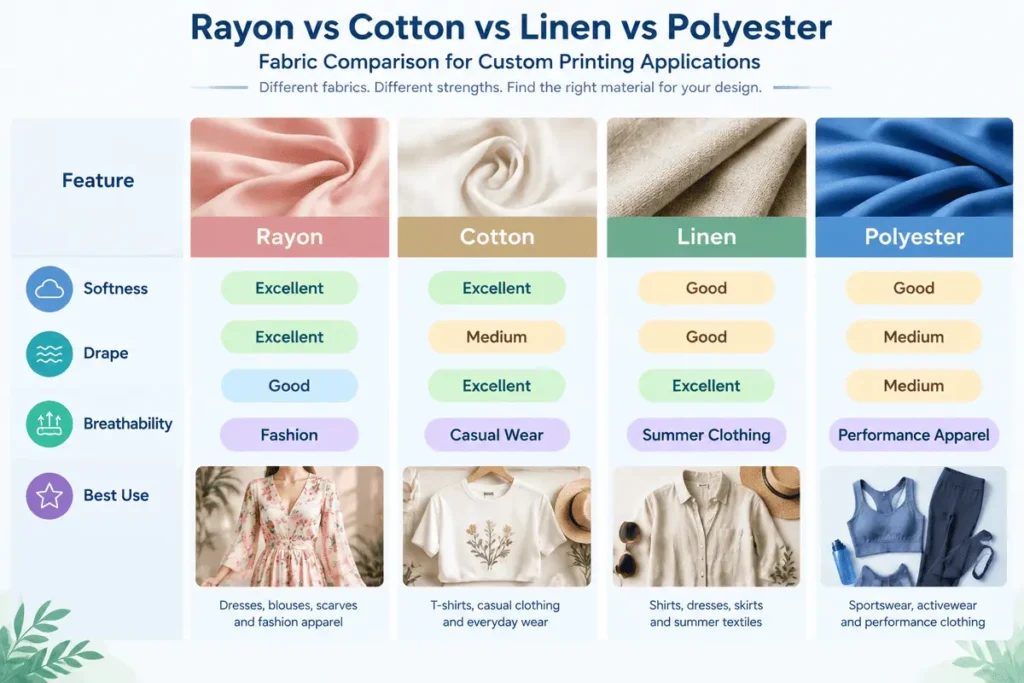
How to Choose Rayon Fabric for Printing
For Dresses
Consider:
- Softness
- Drape
- Fabric weight
For Scarves
Consider:
- Lightweight structure
- Smooth surface
- Color appearance
For Fashion Brands
Consider:
- Minimum order quantity
- Pattern flexibility
- Production requirements
How to Prepare Artwork for Rayon Fabric Printing
Use High Resolution Designs
Recommended:
- 300 DPI
- Clear details
- Correct dimensions
Consider Fabric Movement
Because rayon has excellent drape:
- Large patterns often create elegant effects
- Small details require careful testing
Test Before Production
Sampling helps evaluate:
- Color appearance
- Fabric feel
- Final garment result
Sustainable Rayon Fabric Options
As fashion brands increasingly focus on responsible materials, regenerated cellulose fibers such as rayon, modal, and lyocell are receiving more attention.
Sustainable rayon options focus on:
- Responsible raw material sourcing
- Improved production processes
- Reduced environmental impact
Brands interested in sustainable textile sourcing can explore information from organizations such as Textile Exchange.
Some regenerated cellulose fibers use responsibly sourced wood materials from certified forest systems such as FSC certified forest sources.
For sustainable printing solutions:
Is Printed Rayon Fabric Durable?
Yes, when produced with appropriate printing and finishing processes.
Durability depends on:
- Rayon quality
- Printing method
- Fabric finishing
- Care instructions
Proper care helps maintain:
- Color appearance
- Fabric softness
- Garment performance
Can Small Businesses Order Custom Printed Rayon Fabric?
Yes.
Digital printing makes rayon customization suitable for:
- Independent designers
- Boutique brands
- Small fashion companies
Benefits include:
- Flexible quantities
- Custom patterns
- Reduced inventory risk
For small production:
How Much Does Rayon Fabric Printing Cost?
Pricing depends on:
- Rayon type
- Fabric weight
- Printing method
- Quantity
- Design complexity
Factors include:
- Viscose vs modal vs lyocell
- Custom finishing requirements
- Production volume
Learn more:
How to Order Custom Printed Rayon Fabric from JCWTextile
Step 1
Choose your rayon fabric type.
Step 2
Upload your artwork.
Step 3
Confirm printing requirements.
Step 4
Review samples.
Step 5
Start production.
JCWTextile provides custom printed fabric solutions for:
- Fashion designers
- Clothing brands
- Textile businesses
- Creative projects
worldwide.
Conclusion
Rayon fabric printing provides designers and brands with a flexible solution for creating elegant, lightweight, and customized textiles.
Because rayon combines:
- Softness
- Excellent drape
- Comfortable wear
- Beautiful printing results
it remains a popular choice for fashion fabrics and personalized textile collections.
Successful custom printed rayon fabric production depends on:
- Selecting the right rayon type
- Choosing suitable printing technology
- Preparing artwork correctly
- Applying proper finishing processes
With modern digital textile printing, businesses can create unique rayon fabrics for dresses, scarves, apparel collections, and fashion products.
📚 FAQ About Rayon Fabric Printing
1. What is rayon fabric printing?
Rayon fabric printing is the process of applying custom designs, patterns, or artwork onto rayon textiles using digital or other textile printing methods.
2. Can rayon fabric be digitally printed?
Yes. Rayon can be digitally printed because its cellulose fibers absorb dyes effectively and produce detailed patterns.
3. What products use printed rayon fabric?
Printed rayon fabric is commonly used for dresses, scarves, blouses, skirts, shirts, and lightweight fashion textiles.
4. Is rayon fabric good for fashion printing?
Yes. Rayon is popular for fashion printing because it provides softness, excellent drape, and an elegant appearance.
5. Can I order small quantities of custom printed rayon fabric?
Yes. Digital textile printing allows small-batch production suitable for designers, startups, and boutique brands.