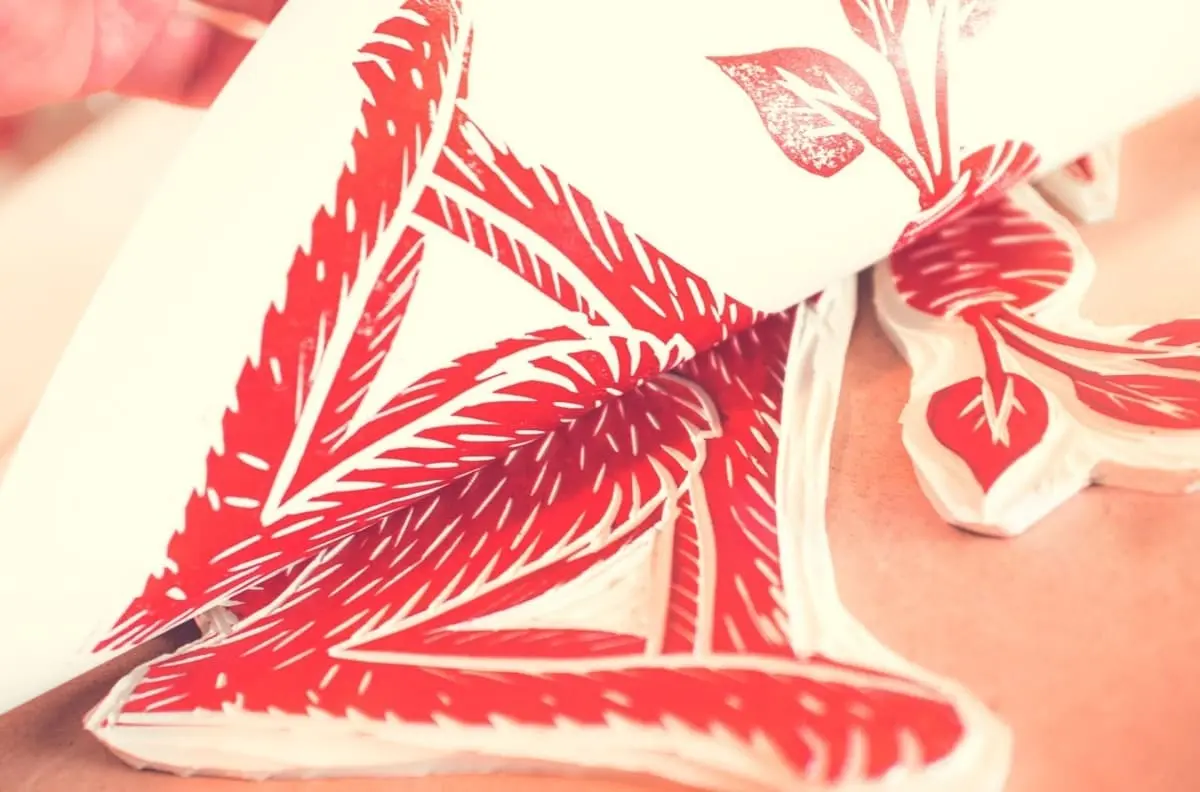
Acrylic fabric is a synthetic textile fiber known for its lightweight feel, warmth, softness, and wool-like appearance. It is commonly used in sweaters, blankets, scarves, knitwear, outdoor textiles, and other products that require warmth without the weight of traditional wool.
With modern textile printing technologies, acrylic fabric printing allows designers, textile brands, and manufacturers to create customized patterns, artwork, graphics, and color designs on acrylic fabrics.
Because acrylic is a synthetic fiber with its own coloration characteristics, choosing the right printing or coloration process is important for achieving consistent results. AATCC specifically recognizes basic-dye compatibility testing for acrylic fibers, illustrating why fiber chemistry and colorant selection matter when working with acrylic textiles.
If you are new to custom textile production, our Custom Fabric Printing Guide explains the overall process, from fabric selection and artwork preparation to printing and production.
This guide covers what acrylic fabric is, its characteristics, printable acrylic fabric types, printing methods, applications, artwork preparation, sustainability considerations, durability, cost factors, and how to order custom printed acrylic fabrics.
Table of Contents:Acrylic Fabric Printing
What Is Acrylic Fabric?
Acrylic fabric is a synthetic textile made from acrylic fibers. It is designed to provide some of the appearance and warmth associated with wool while offering different performance and care characteristics.
Acrylic textiles are commonly used in:
- Sweaters
- Scarves
- Blankets
- Knitwear
- Hats
- Gloves
- Home textiles
- Outdoor products
The term acrylic fabric in this article refers to acrylic textile fiber, not acrylic plastic or PMMA sheets.
Because fiber composition and construction affect textile performance, the specific acrylic fabric should always be evaluated before production.
Key Characteristics of Acrylic Fabric
1. Lightweight and Warm
Acrylic fibers are widely used for warm textile products because they can provide insulation without the weight associated with some natural fibers.
This makes acrylic suitable for:
- Winter clothing
- Sweaters
- Blankets
- Scarves
- Cold-weather accessories
2. Soft, Wool-Like Feel
One of the main reasons acrylic is used in apparel is its ability to provide a soft hand feel and wool-like appearance.
Depending on the fabric construction, acrylic can be:
- Soft
- Comfortable
- Fluffy
- Warm
3. Good Color Potential
Acrylic fibers have specific dye-fiber interactions that distinguish them from cotton, rayon, polyester, and other textiles.
AATCC identifies basic-dye compatibility as a specific testing area for acrylic fibers, while its textile color resources cover colorant and fiber interactions across acrylic and other major textile fibers.
For custom production, this means that the fiber type and selected coloration technology should be considered together.
4. Versatile Textile Applications
Acrylic can be manufactured into different knitted and woven structures.
This makes it useful for:
- Apparel
- Accessories
- Home textiles
- Decorative fabrics
- Seasonal products
What Types of Acrylic Fabric Can Be Printed?
Not all acrylic fabrics have the same structure or performance.
1. Acrylic Knit Fabric
Acrylic knit fabrics are widely used for:
- Sweaters
- Cardigans
- Scarves
- Hats
- Winter accessories
The knitted construction provides flexibility and comfort.
2. Acrylic Fleece
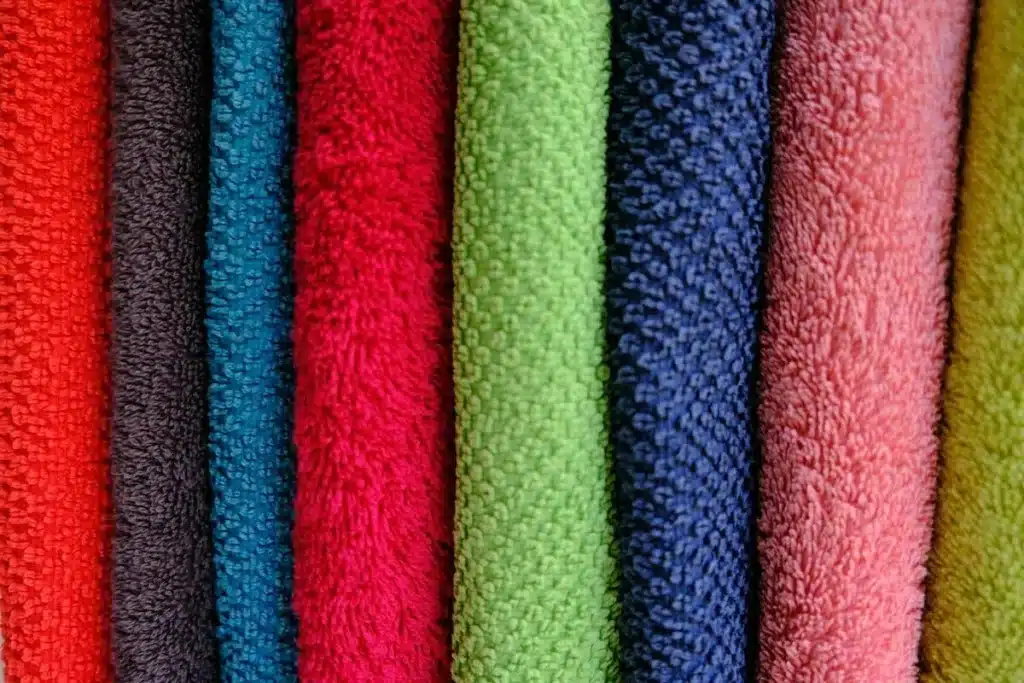
Acrylic fleece provides a soft and warm surface.
Possible applications include:
- Blankets
- Warm accessories
- Decorative textiles
- Cold-weather products
3. Acrylic Blend Fabric
Acrylic is often blended with other fibers.
Examples include:
- Acrylic wool blends
- Acrylic cotton blends
- Acrylic polyester blends
- Acrylic nylon blends
Blending can change:
- Hand feel
- Strength
- Stretch
- Durability
- Printing behavior
For blended fabrics, the complete fiber composition should be confirmed before selecting a printing process.
4. Acrylic Outdoor Textiles
Certain acrylic-based textiles are designed for outdoor applications.
Depending on the specific fabric construction and finishing, they may be used for:
- Outdoor cushions
- Decorative textiles
- Patio products
- Outdoor accessories
Performance requirements should be confirmed according to the intended end use.
Is Acrylic Fabric Good for Printing?
Acrylic can be customized with suitable textile coloration and printing technologies, but it requires more attention to fiber chemistry than simply treating it like cotton.
The printing result depends on:
- Acrylic fiber type
- Fabric construction
- Surface texture
- Ink or dye compatibility
- Printing technology
- Finishing process
For this reason, testing a fabric sample before bulk production is especially useful.
AATCC’s standards include TM141, Compatibility of Basic Dyes for Acrylic Fibers, which demonstrates the importance of matching coloration chemistry to acrylic fibers.
What Printing Methods Are Used for Acrylic Fabric?
1. Digital Textile Printing
Digital textile printing can be used to create customized textile designs without producing traditional printing screens for every design.
Potential advantages include:
- Complex artwork
- Detailed patterns
- Multiple colors
- Custom designs
- Flexible production quantities
The appropriate digital printing system depends on the acrylic fabric construction and compatible ink technology.
Learn more about:
2. Pigment Printing
Pigment printing is another approach that may be considered for selected acrylic textiles.
Pigments work differently from dyes because they generally require a binder system to attach color to the textile surface.
Potential benefits include:
- Flexible color options
- Suitable for selected fabric constructions
- Decorative pattern applications
However, the final performance depends on the fabric, binder, curing conditions, and intended use.
3. Specialized Acrylic Coloration
Acrylic fibers have traditionally been associated with cationic/basic dye systems.
This is an important difference from many other textile fibers.
For commercial production, the printing or coloration method should therefore be selected based on the actual acrylic fiber and fabric specification rather than simply choosing a method based on appearance.
Acrylic Fabric Printing Process
A typical custom acrylic textile workflow includes the following stages.
Step 1: Artwork Preparation
The first step is preparing the artwork for textile production.
Recommended considerations include:
- High-resolution artwork
- Correct dimensions
- Appropriate color settings
- Pattern repeat
- Clear fine details
Read our guide:
Step 2: Acrylic Fabric Selection
Select the fabric according to the final product.
For example:
Sweaters
- Acrylic knit
Scarves
- Lightweight acrylic
Blankets
- Acrylic fleece
Outdoor products
- Specialized acrylic-based textiles
Step 3: Fabric Preparation
Before printing, the fabric should be inspected and prepared according to the selected production process.
Important factors include:
- Fabric cleanliness
- Surface condition
- Width
- Weight
- Construction
- Finishing
Proper preparation can help improve consistency.
Step 4: Digital Textile Printing
The prepared fabric is printed using the selected textile printing system.
The design may include:
- Repeating patterns
- Logos
- Illustrations
- Floral artwork
- Geometric graphics
- Brand designs
Step 5: Color Fixation or Curing
Depending on the printing technology, the printed fabric may require an appropriate fixation or curing stage.
This helps establish the required:
- Color stability
- Adhesion
- Durability
- Appearance
The exact process varies according to the printing chemistry and acrylic fabric specification.
Step 6: Finishing and Inspection
The finished fabric is inspected for:
- Color consistency
- Pattern accuracy
- Surface appearance
- Fabric defects
- Overall quality
Applications of Custom Printed Acrylic Fabric
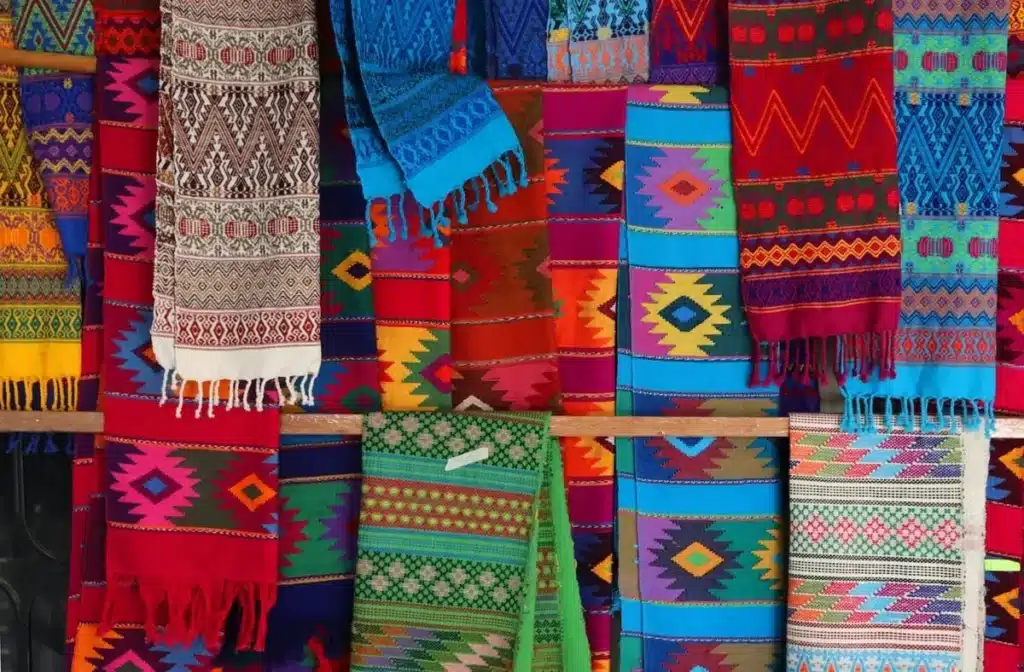
Acrylic fabric can be used in a wide range of products.
For consumer textile products, certifications such as OEKO-TEX STANDARD 100 help evaluate textile safety requirements.
Sweaters and Knitwear
Custom printed acrylic fabrics can be used for:
- Sweaters
- Cardigans
- Pullovers
- Fashion knitwear
Designers can create distinctive patterns for seasonal collections.
Scarves
Acrylic is commonly used for warm scarves.
Custom designs can include:
- Plaid
- Floral
- Geometric
- Brand patterns
- Seasonal artwork
Blankets
Acrylic blankets can combine:
- Warmth
- Soft texture
- Lightweight construction
Custom printing can be used to create:
- Children’s designs
- Home decor patterns
- Promotional products
- Seasonal collections
Hats and Accessories
Acrylic textiles can also be used in:
- Beanies
- Gloves
- Hats
- Winter accessories
Custom patterns can help create coordinated fashion collections.
Home Textiles
Depending on the fabric construction, acrylic textiles can be used for:
- Decorative blankets
- Cushions
- Throws
- Other soft furnishings
For broader textile applications, explore our Printed Fabric Applications guide.
Acrylic Fabric Printing for Fashion Brands
Acrylic can be useful for fashion brands developing:
- Winter collections
- Knitwear
- Accessories
- Seasonal products
- Custom patterns
For clothing companies developing coordinated textile collections, see:
Custom Fabric Printing for Clothing Brands.
Custom printing can allow brands to develop original patterns instead of relying entirely on standard fabric designs.
How to Choose Acrylic Fabric for Printing
Selecting the right acrylic fabric is an important part of the production process.
Consider Fabric Weight
Lightweight acrylic fabrics may be suitable for:
- Scarves
- Lightweight garments
- Fashion accessories
Heavier fabrics may be more appropriate for:
- Blankets
- Winter apparel
- Decorative products
Consider Fabric Construction
A knitted acrylic fabric and a woven acrylic fabric can behave differently during printing.
Consider:
- Stretch
- Surface texture
- Dimensional stability
- Pattern appearance
Consider the Final Product
Always choose the fabric based on the finished product.
For example:
| Product | Important Factors |
|---|---|
| Sweater | Softness, warmth, stretch |
| Scarf | Weight, softness, drape |
| Blanket | Warmth, surface feel, durability |
| Hat | Stretch, recovery, comfort |
| Home Textile | Durability, appearance, care |
How to Prepare Artwork for Acrylic Fabric Printing
Use High-Resolution Artwork
For detailed patterns, high-resolution artwork helps preserve:
- Fine lines
- Small graphics
- Pattern details
A common starting point for textile artwork is 300 DPI, although the actual requirement depends on the production system and final print size.
Consider Pattern Scale
Acrylic textiles may have:
- Knitted textures
- Fuzzy surfaces
- Raised structures
Very small details can therefore appear differently from how they look on a flat digital screen.
Large or medium-scale patterns may be easier to evaluate on textured fabrics.
Check Color Expectations
Color can appear different depending on:
- Fabric surface
- Fiber composition
- Printing system
- Lighting
- Finishing
For important brand colors, a physical sample is recommended before bulk production.
Is Printed Acrylic Fabric Durable?
The durability of printed acrylic fabric depends on several factors:
- Fiber composition
- Fabric construction
- Printing technology
- Coloration chemistry
- Fixation or curing
- Finishing
- Washing and care
It is therefore better to evaluate durability through the specific performance requirements of the finished product rather than assuming that all acrylic fabrics will perform identically.
Relevant textile testing can include colorfastness, dimensional stability, and appearance after laundering. AATCC maintains standardized test methods covering textile coloration and post-laundering appearance.
Sustainable Acrylic Fabric Options
Acrylic is a synthetic fiber, so brands considering sustainability should evaluate the entire material and production system rather than relying on fiber type alone.
Potential considerations include:
- Recycled synthetic fibers
- Responsible material sourcing
- Production efficiency
- Fabric durability
- Product lifespan
- Waste reduction
For brands developing more responsible material strategies, Textile Exchange provides industry resources covering fibers, materials, and textile supply chains.
Learn more about printing and sustainability:
Acrylic vs Polyester vs Fleece
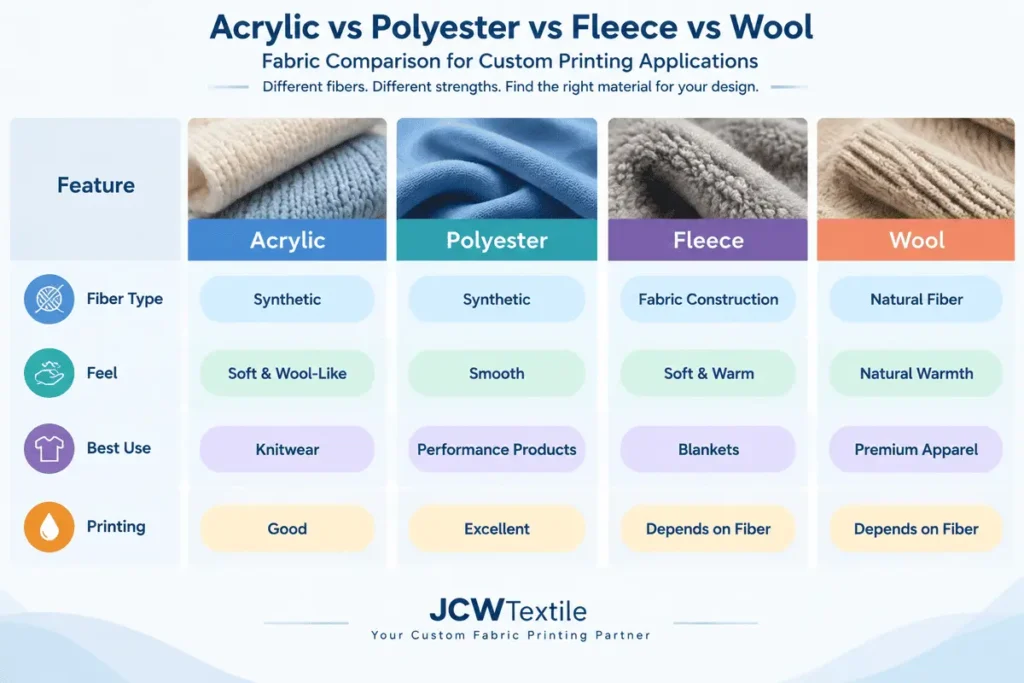
Acrylic is often compared with other synthetic fabrics.
| Feature | Acrylic | Polyester | Fleece |
|---|---|---|---|
| Fiber Type | Synthetic | Synthetic | Fabric construction |
| Feel | Soft & Wool-Like | Smooth or Technical | Soft & Warm |
| Warmth | Good | Depends on construction | Excellent |
| Typical Use | Knitwear | Sportswear & Performance | Blankets & Warm Apparel |
| Printing | Depends on Fiber & Process | Excellent with Suitable Methods | Depends on Fiber |
The best choice depends on the final application rather than simply selecting the fabric with the highest printing capability.
Acrylic Fabric vs Wool
Acrylic is sometimes selected as an alternative to wool for products that require a warm, soft appearance.
| Feature | Acrylic | Wool |
|---|---|---|
| Fiber Type | Synthetic | Natural Animal Fiber |
| Feel | Soft | Naturally Warm |
| Weight | Often Lightweight | Varies |
| Care | Often Easier | Can Require Special Care |
| Typical Use | Knitwear & Accessories | Premium Apparel & Knitwear |
The appropriate material depends on the desired performance, appearance, price, and care requirements of the product.
Can Small Businesses Order Custom Printed Acrylic Fabric?
Yes. Digital textile production can support customized fabric development for smaller brands, designers, and product developers.
Potential benefits include:
- Custom artwork
- Small-batch development
- Flexible designs
- Reduced dependence on standard patterns
This can be particularly useful for:
- Independent fashion brands
- Boutique businesses
- Designers
- Seasonal collections
For more information:
How Much Does Acrylic Fabric Printing Cost?
The cost of custom acrylic fabric printing depends on several variables.
Important factors include:
- Acrylic fabric type
- Fabric weight
- Fabric width
- Printing method
- Artwork complexity
- Quantity
- Finishing requirements
Larger production quantities may have different unit economics from small custom orders.
For a broader explanation of pricing factors:
How to Order Custom Printed Acrylic Fabric from JCWTextile
The typical process is straightforward.
Step 1: Choose Your Acrylic Fabric
Select the appropriate:
- Fiber composition
- Fabric construction
- Weight
- Width
- Surface
Step 2: Prepare Your Artwork
Prepare your design according to the required production specifications.
Step 3: Request a Sample
A sample can help evaluate:
- Color
- Pattern
- Fabric feel
- Printing appearance
Step 4: Confirm Production Requirements
Confirm:
- Quantity
- Fabric specification
- Artwork
- Printing method
- Finishing requirements
Step 5: Start Production
Once the specifications are confirmed, the custom acrylic fabric can move into production.
JCWTextile supports custom textile printing for designers, brands, manufacturers, and creative projects worldwide.
Conclusion
Acrylic fabric printing provides a way for designers and textile businesses to create customized synthetic fabrics for knitwear, scarves, blankets, accessories, home textiles, and seasonal products.
Acrylic is particularly useful when a product requires:
- Softness
- Warmth
- Lightweight construction
- Wool-like appearance
- Custom patterns
However, acrylic has different coloration characteristics from cotton, rayon, polyester, and other common textile fibers. Choosing the correct printing technology therefore requires consideration of the specific acrylic fabric, fiber composition, surface construction, and intended application.
For successful custom printed acrylic fabrics, the most important steps are:
- Choose the appropriate acrylic fabric.
- Confirm the fiber composition.
- Select a compatible printing process.
- Prepare artwork correctly.
- Test a sample before bulk production.
- Evaluate the finished fabric according to its intended use.
With careful fabric selection and professional textile printing, acrylic fabrics can become a flexible option for customized fashion, home textile, and lifestyle products.
📚 FAQ About Acrylic Fabric Printing
1. What is acrylic fabric printing?
Acrylic fabric printing is the process of applying custom designs, patterns, artwork, or graphics to acrylic textile fabrics using a suitable textile printing or coloration process.
2. Can acrylic fabric be digitally printed?
Yes, acrylic fabrics can be customized using suitable digital textile printing systems, but the appropriate ink or coloration technology depends on the specific acrylic fiber, fabric construction, and production requirements.
3. What is acrylic fabric commonly used for?
Acrylic fabric is commonly used for sweaters, scarves, hats, blankets, knitwear, winter accessories, and selected home or outdoor textile products.
4. Is acrylic fabric warm?
Acrylic is commonly used in warm textile products because it can provide a lightweight, insulating feel and is often used as a wool-like alternative in knitwear.
5. What type of acrylic fabric is best for printing?
There is no single best acrylic fabric for every application. The appropriate fabric depends on the intended product, fiber composition, construction, weight, surface, and compatible printing process.
6. Can small businesses order custom printed acrylic fabric?
Yes. Custom textile printing can support smaller production runs and customized designs, making it suitable for independent designers, boutique brands, and small businesses.
7. How should artwork be prepared for acrylic fabric printing?
Artwork should be prepared at an appropriate resolution and size for the printing system. Designers should also consider pattern scale, fabric texture, color expectations, and the final product dimensions.