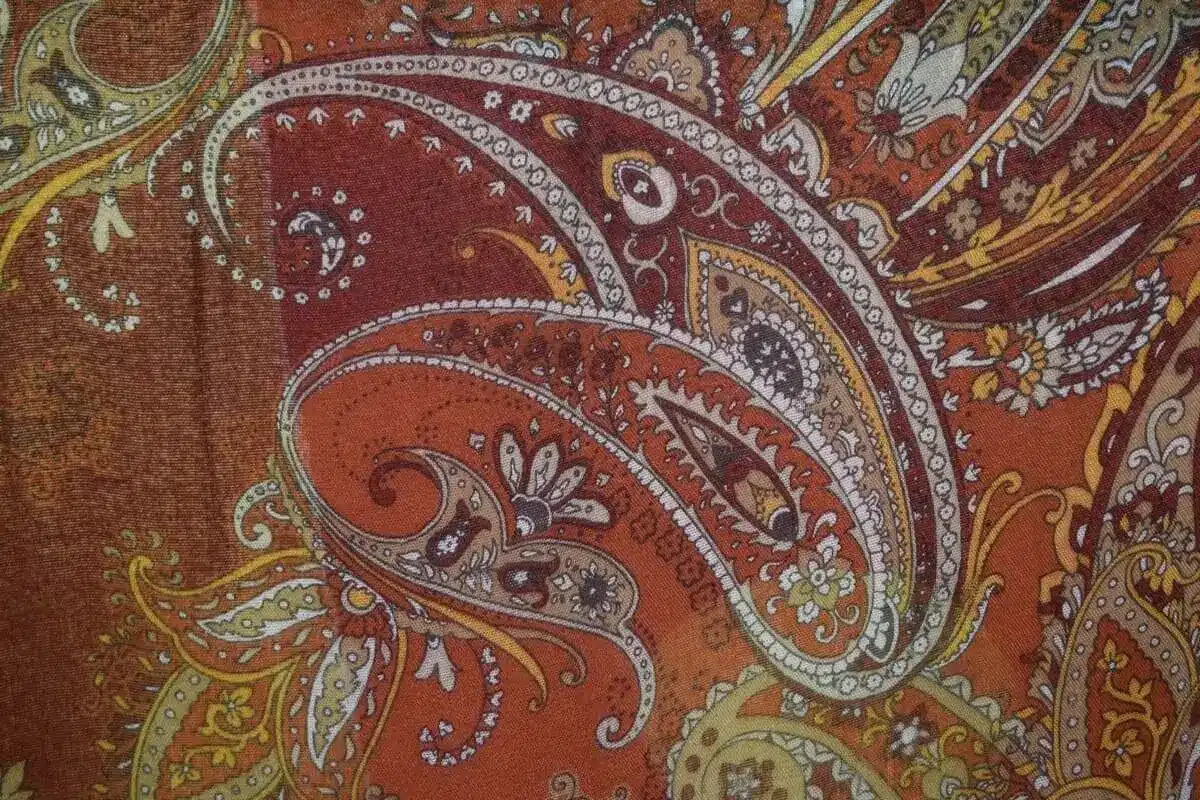
Paisley is one of the most recognizable decorative patterns in textile design. Its curved teardrop shapes, flowing botanical details, intricate borders, and repeating motifs can create everything from traditional and sophisticated textiles to colorful contemporary fabrics.
Paisley fabric printing allows designers, fashion brands, interior businesses, quilters, and product developers to create custom paisley textiles with their own colors, scales, compositions, and repeat patterns.
Instead of choosing only from ready-made paisley fabrics, custom fabric printing makes it possible to develop an original paisley pattern that matches a specific collection, brand identity, product, or interior concept.
In this guide, we explain what paisley fabric printing is, popular paisley pattern styles, suitable fabrics, printing methods, artwork preparation, applications, cost considerations, and how to order custom paisley pattern fabric.
Table of Contents:Paisley Fabric Printing
What Is Paisley Fabric Printing?
Paisley fabric printing is the process of applying paisley-inspired artwork to textile material using a compatible fabric printing method.
Paisley patterns are generally characterized by a curved or teardrop-shaped motif, often combined with botanical elements, leaves, flowers, decorative lines, and intricate internal details.
The pattern can range from a simple single-color motif to a highly detailed multicolor composition.
With custom paisley fabric printing, designers can control important characteristics such as:
- Paisley motif shape
- Pattern scale
- Color palette
- Background color
- Pattern density
- Repeat size
- Motif orientation
- Decorative details
- Overall textile composition
This flexibility makes custom paisley fabric useful when a standard commercial fabric does not provide the exact appearance required for a project.
What Does a Paisley Pattern Look Like?
Traditional paisley patterns are often based on a curved teardrop or comma-shaped motif.
However, modern textile designers can reinterpret the concept in many different ways.
A paisley pattern may include:
- Teardrop-shaped motifs
- Curved leaves
- Floral details
- Small decorative dots
- Fine lines
- Ornamental borders
- Abstract botanical shapes
- Repeating geometric elements
- Layered colors
- Decorative textures
The overall appearance depends on the relationship between the main paisley motif, secondary details, background, and repeat structure.
A traditional paisley can feel ornate and decorative, while a simplified contemporary paisley can look clean and modern.
Popular Types of Paisley Fabric Patterns
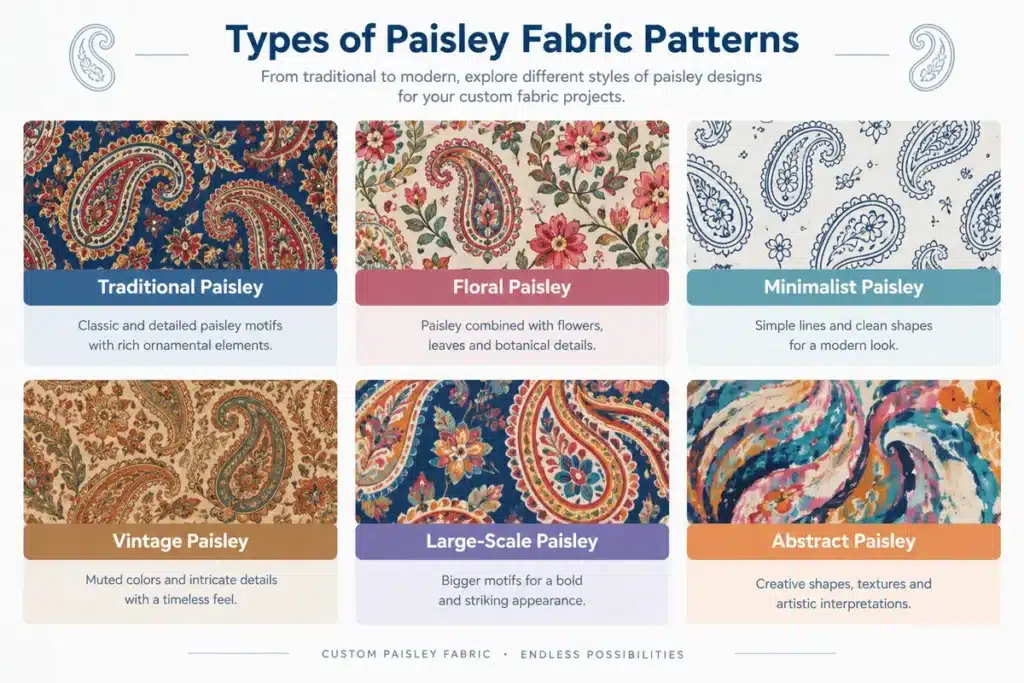
One of the advantages of custom paisley fabric printing is the ability to create different interpretations of the same basic pattern concept.
1. Traditional Paisley Patterns
Traditional paisley designs often feature detailed teardrop-shaped motifs surrounded by botanical and ornamental elements.
They can create a classic appearance suitable for:
- Scarves
- Dresses
- Decorative textiles
- Home décor
- Quilting
- Accessories
2. Floral Paisley
Floral paisley combines the characteristic curved paisley form with flowers, leaves, vines, and botanical details.
This style can create a softer and more decorative appearance.
Floral paisley can work particularly well for:
- Dresses
- Blouses
- Scarves
- Curtains
- Cushion covers
- Quilting fabrics
Designers interested in combining paisley with botanical motifs can also explore floral fabric printing as a related pattern direction.
3. Modern Minimalist Paisley
Modern paisley does not have to be highly detailed.
A minimalist design may use:
- Simple outlines
- Limited colors
- Large motifs
- Open background space
- Reduced decorative details
- Monochromatic palettes
This approach can make paisley more suitable for contemporary fashion and interior design.
4. Vintage-Inspired Paisley
Vintage-inspired paisley patterns often use muted colors, intricate details, and dense repeating compositions.
Possible palettes include:
- Burgundy
- Olive green
- Navy
- Mustard
- Brown
- Cream
- Rust
- Muted pink
This style can work well for fashion, home textiles, accessories, and retro-inspired product collections.
5. Large-Scale Paisley
Large paisley motifs can create a strong visual statement.
Large-scale designs may be suitable for:
- Dresses
- Statement jackets
- Curtains
- Upholstery
- Large scarves
- Decorative fabric panels
The pattern scale should always be evaluated according to the final product because part of a large motif may be removed during cutting and sewing.
6. Small-Scale Paisley
Small paisley motifs can create a more delicate and repetitive appearance.
They can be useful for:
- Shirts
- Blouses
- Children’s products
- Quilting
- Accessories
- Small textile products
7. Abstract Paisley
Abstract paisley designs reinterpret the traditional motif using unusual shapes, colors, textures, or compositions.
Designers can combine paisley forms with:
- Geometric shapes
- Organic lines
- Watercolor effects
- Brush textures
- Asymmetrical elements
- Contemporary color combinations
This makes abstract paisley particularly useful for modern textile collections.
Paisley Fabric vs. Other Pattern Styles
Paisley belongs to a broader world of decorative textile patterns.
Understanding how it relates to other patterns can help designers choose the right visual direction.
Paisley and Floral Patterns
Floral patterns focus primarily on flowers, leaves, stems, and botanical forms.
Paisley may include floral elements, but the characteristic curved or teardrop-shaped motif gives it a distinctive appearance.
Paisley and Geometric Patterns
Geometric patterns are based on structured shapes such as squares, circles, diamonds, triangles, and grids.
Paisley is generally more organic and decorative, although modern designers can combine paisley motifs with geometric structures.
For more structured pattern ideas, see our guide to geometric fabric printing.
Paisley and Abstract Patterns
Abstract fabric designs can use free-form shapes, artistic textures, and unconventional compositions.
An abstract paisley can combine the recognizable paisley silhouette with a more artistic visual language.
What Fabrics Are Suitable for Paisley Fabric Printing?
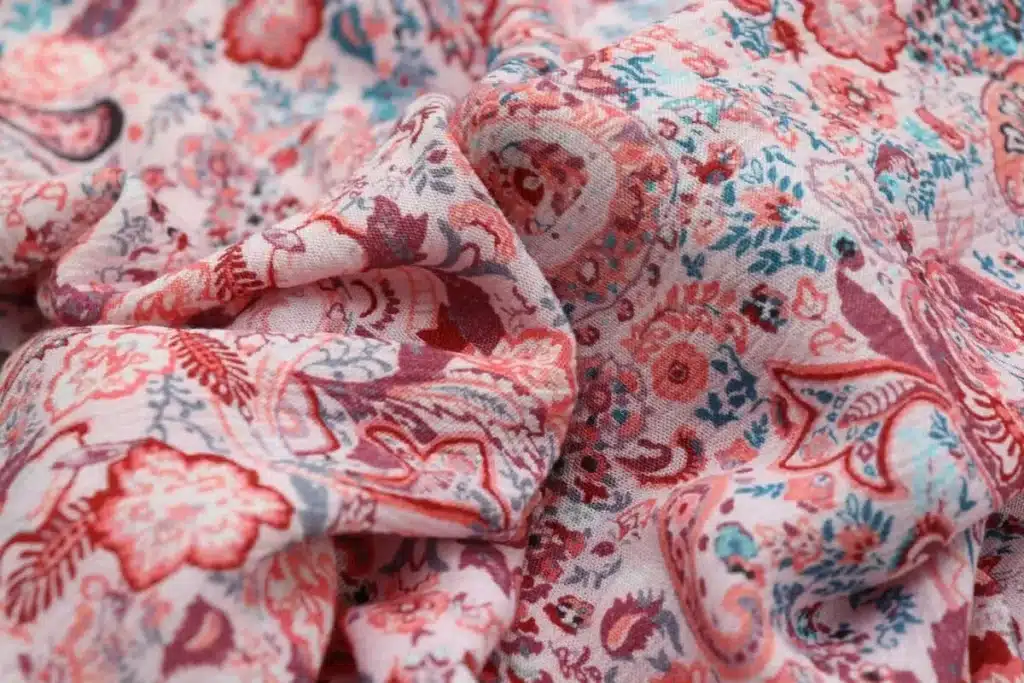
The ideal fabric depends on the intended product, desired hand feel, pattern scale, fabric construction, and compatible printing method.
Cotton
Cotton is a versatile choice for custom paisley fabric.
It can be suitable for:
- Dresses
- Shirts
- Quilting
- Home textiles
- Children’s products
- Lightweight accessories
Cotton can also provide a soft, familiar textile feel that works well with detailed decorative patterns.
For more information, see our guide to Cotton Fabric Printing.
Linen
Linen can give paisley patterns a natural and textured appearance.
It may be suitable for:
- Home décor
- Curtains
- Table textiles
- Dresses
- Shirts
- Decorative accessories
The natural texture of linen can create an interesting contrast with detailed paisley artwork.
Polyester
Polyester can be considered for fashion, accessories, and other applications where synthetic textile performance is appropriate.
It can also work with printing processes designed for compatible polyester fabrics.
For more information about polyester textile printing, see our Polyester Fabric Printing guide.
Rayon
Rayon is known for its soft feel and flowing drape.
It can be especially interesting for paisley fashion fabrics used for:
- Dresses
- Blouses
- Scarves
- Skirts
- Lightweight garments
Flowing paisley artwork can complement the drape of rayon-based fabrics.
Canvas
Canvas is a more structured fabric and may be suitable for larger paisley motifs.
Potential applications include:
- Tote bags
- Accessories
- Decorative products
- Craft projects
- Structured textile products
For heavier canvas fabrics, fiber composition, weight, and printing compatibility should be considered before production.
Which Printing Methods Can Be Used for Paisley Fabric?
The best printing process depends on the selected fabric and production requirements.
Digital Fabric Printing
Digital fabric printing is particularly useful for custom paisley patterns because it can reproduce detailed artwork, multiple colors, gradients, and intricate decorative elements.
It can be suitable for:
- Detailed paisley motifs
- Multicolor designs
- Custom color palettes
- Small production runs
- Personalized textile designs
- Pattern variations
Digital printing can also make it easier to test different paisley colorways before committing to larger production.
Screen Printing
Screen printing can be suitable for selected textile projects, especially when the artwork uses a limited number of colors and production quantities justify the setup.
Highly detailed multicolor paisley designs may require additional screens and careful registration.
Dye Sublimation
Dye sublimation can be suitable for compatible polyester-based textiles.
It is commonly considered for certain fashion, sports, and accessory applications where polyester is appropriate.
The printing process should always be selected based on fabric composition and the performance requirements of the finished product.
How to Design Custom Paisley Fabric
Creating a successful paisley textile requires careful consideration of motif design, scale, color, and repeat structure.
1. Choose the Paisley Style
First determine the overall direction of the pattern.
For example:
- Traditional
- Floral
- Vintage
- Minimalist
- Large-scale
- Small-scale
- Abstract
- Contemporary
The selected style should match the intended product and target customer.
2. Select the Color Palette
Color has a major influence on the final appearance of paisley fabric.
Possible approaches include:
- Two-color designs
- Monochromatic palettes
- Earth tones
- Pastel colors
- Jewel tones
- High-contrast colors
- Brand colors
- Seasonal color palettes
For fashion brands, using a consistent color system can help create a recognizable collection.
3. Determine the Pattern Scale
Pattern scale should be considered in relation to the finished product.
A large paisley motif may work well on a dress or curtain but may be partially hidden when used on a small accessory.
A smaller repeat can provide more consistent coverage across garments and smaller products.
4. Create a Balanced Composition
Paisley patterns can become visually dense if too many details are combined.
Consider balancing:
- Main motifs
- Secondary motifs
- Background space
- Decorative elements
- Color density
Negative space can be just as important as the paisley motifs themselves.
5. Design the Repeat
A seamless repeat allows the paisley artwork to continue across the width and length of the fabric.
Common repeat approaches include:
- Straight repeat
- Half-drop repeat
- Mirror repeat
- Brick repeat
- Irregular repeat
The most suitable repeat depends on the artwork and intended product.
6. Prepare High-Quality Artwork
Artwork should be prepared according to the printing supplier’s technical requirements.
Important considerations include:
- File format
- Resolution
- Color mode
- Pattern dimensions
- Repeat size
- Motif scale
- Fabric width
- Seamless edges
For a detailed explanation of preparing artwork for textile production, see our Artwork Preparation Guide for Fabric Printing.
The Custom Paisley Fabric Printing Process
A typical custom paisley printing project can follow these steps:
Paisley Design → Artwork Preparation → Fabric Selection → Printing → Fixation / Finishing → Quality Inspection → Finished Paisley Fabric
Step 1: Create or Select the Artwork
Develop your original paisley pattern or prepare existing artwork that you have the right to use.
Step 2: Prepare the Pattern
Check the repeat, motif size, colors, resolution, and artwork dimensions.
Step 3: Select the Fabric
Choose the fabric based on the final product rather than the pattern alone.
For example, flowing apparel may require a different fabric construction from a structured tote bag.
Step 4: Confirm the Printing Method
The printing process should be compatible with the fabric composition and project requirements.
Step 5: Produce a Sample
A sample can help evaluate:
- Color appearance
- Pattern scale
- Fabric hand feel
- Print detail
- Repeat alignment
- Overall appearance
Step 6: Move to Production
After the artwork, fabric, and sample have been approved, the project can proceed to the required production quantity.
For projects where textile performance characteristics are important, buyers should discuss applicable testing requirements with the supplier. AATCC textile testing standards provide recognized test methods for properties such as colorfastness to crocking, laundering, light, and other textile performance characteristics.
Applications of Custom Paisley Fabric
Custom paisley fabric can be used across fashion, home décor, accessories, quilting, and other textile products.
Fashion and Clothing
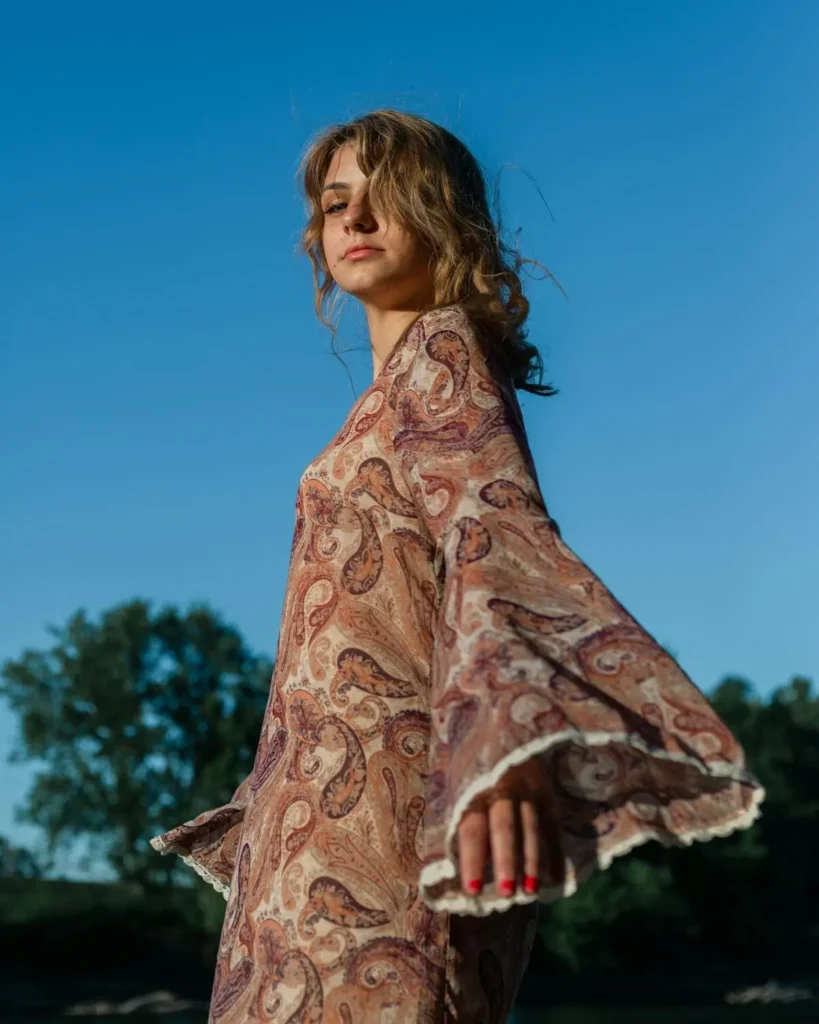
Paisley is particularly suitable for fashion products because the pattern can range from subtle to highly decorative.
Applications include:
- Dresses
- Shirts
- Blouses
- Skirts
- Jackets
- Scarves
- Trousers
- Fashion accessories
Custom printing allows brands to create original paisley patterns rather than relying entirely on standard commercial designs.
Scarves
Paisley is especially suitable for scarves because the large surface area allows detailed motifs and decorative compositions to be displayed.
Designers can create:
- Large central motifs
- Border patterns
- Repeating paisley
- Symmetrical compositions
- Multicolor designs
Home Décor
Paisley can create a traditional, artistic, or contemporary atmosphere in interior textiles.
Potential applications include:
- Curtains
- Cushion covers
- Table runners
- Decorative textiles
- Throws
- Upholstery
- Wall textiles
Interior designers can develop custom color palettes to coordinate paisley textiles with a specific room or design concept.
Bags and Accessories
Custom paisley fabric can also be used for:
- Tote bags
- Pouches
- Cosmetic bags
- Backpacks
- Wallets
- Fashion accessories
Structured fabrics such as canvas may be appropriate for some bag applications, while softer fabrics may work better for lightweight accessories.
Quilting and Sewing
Paisley is a popular design direction for quilting and sewing projects.
Custom fabric printing allows makers to create a specific color palette or coordinate paisley patterns with other fabrics in a collection.
For broader ideas, see our guide to Custom Fabric Printing for Quilters.
Custom Paisley Fabric for Fashion Brands
Fashion brands can use custom paisley fabric to create a distinctive visual identity.
Instead of selecting a standard paisley pattern from a wholesale catalog, a brand can develop an original design with its own:
- Color palette
- Motif scale
- Repeat structure
- Decorative elements
- Fabric type
A custom paisley pattern can then become part of a seasonal collection or limited-edition product line.
Brands should evaluate how the repeat interacts with garment construction before placing a large production order.
For additional information, see our guide to Custom Fabric Printing for Clothing Brands.
Custom Paisley Fabric for Home Décor
Paisley can work particularly well in interior textiles because the pattern can be adapted to both traditional and contemporary environments.
A designer may create a custom paisley pattern specifically for:
- Curtains
- Cushions
- Throws
- Table textiles
- Upholstery
- Decorative accessories
Pattern scale is especially important for home décor because large surfaces can accommodate larger motifs than small fashion accessories.
How Much Does Paisley Fabric Printing Cost?
The cost of custom paisley fabric printing depends on multiple factors.
These can include:
- Fabric type
- Fabric composition
- Fabric weight
- Fabric width
- Printing method
- Pattern complexity
- Order quantity
- Finishing requirements
- Sampling
- Packaging
- Shipping
A detailed paisley pattern with many colors does not necessarily determine the final price by itself. Fabric selection, quantity, production method, finishing, and logistics can all affect the total project cost.
For a broader explanation of custom textile pricing, see our Custom Fabric Printing Cost Guide.
For an accurate quotation, provide the supplier with the artwork, fabric preference, required quantity, fabric width, and intended application.
Can Small Businesses Order Custom Paisley Fabric?
Yes. Depending on the fabric and production requirements, small businesses may be able to order custom paisley fabric in smaller quantities.
This can be useful for:
- Independent fashion brands
- Etsy sellers
- Interior designers
- Quilters
- Product developers
- Accessory brands
- Small textile businesses
- Start-up companies
Small-batch production can allow a business to test a new pattern before committing to a larger quantity.
A sample or small production run can help evaluate:
- Color
- Pattern scale
- Fabric hand feel
- Print quality
- Repeat structure
- Product appearance
Businesses interested in smaller production quantities can also explore Low MOQ Custom Fabric Printing.
Sustainability Considerations for Paisley Fabric Printing
Sustainability should be considered when selecting both the textile material and the production approach.
Depending on the application, designers may evaluate:
- Natural fiber options
- Recycled textile materials
- Fabric durability
- Product lifespan
- Material sourcing
- Production quantity
- Sampling requirements
- Printing efficiency
Choosing a fabric that matches the intended product can help avoid unnecessary material waste caused by poor performance or unsuitable construction.
Textile Exchange provides resources on textile materials and their environmental considerations.
For products where textile chemical safety is an important requirement, buyers can also ask suppliers about applicable testing and certifications. OEKO-TEX STANDARD 100, for example, focuses on testing textile products for harmful substances.
Paisley Fabric Printing Design Tips
Before sending a paisley pattern to production, consider these practical tips.
Keep the Repeat Seamless
Check the edges of the artwork carefully so that the paisley motifs connect correctly when repeated across the fabric.
Test the Pattern at Actual Size
A paisley motif may look very different when viewed on a computer screen compared with its appearance on physical fabric.
Consider the Final Product
Always consider how the fabric will be cut and sewn.
A large paisley motif may be attractive on a fabric roll but may not be fully visible on a small garment panel.
Avoid Excessive Pattern Density
Highly detailed paisley artwork can become visually crowded when too many motifs are placed close together.
Use negative space when appropriate.
Check Color Combinations
Color relationships can change significantly depending on the fabric and printing process.
A physical sample is useful when exact color appearance is important.
Order a Sample Before Bulk Production
Sampling is especially useful for custom paisley patterns because it allows you to evaluate:
- Pattern scale
- Fabric texture
- Color
- Print detail
- Drape
- Repeat alignment
Conclusion
Paisley fabric printing gives designers and businesses a flexible way to create custom paisley pattern fabrics for fashion, home décor, accessories, quilting, and other textile applications.
Rather than relying only on standard commercial designs, you can customize the paisley motif, color palette, pattern scale, repeat structure, and fabric type to match a specific product or collection.
The most important considerations are the relationship between pattern design, fabric selection, printing method, pattern scale, and final application.
Whether you are developing a traditional paisley, floral paisley, vintage-inspired pattern, minimalist design, or contemporary abstract interpretation, custom fabric printing can help transform your textile artwork into finished fabric.
If you are developing a new paisley textile, consider starting with a sample to evaluate the fabric, pattern scale, color appearance, and print quality before moving to larger production.
For your next custom textile project, explore the complete Custom Fabric Printing Guide or request a project-specific quotation from JCWTextile.
📚 FAQ About Paisley Fabric Printing
1. What is paisley fabric printing?
Paisley fabric printing is the process of printing paisley-inspired patterns onto textile materials. The design can include curved teardrop-shaped motifs, botanical details, decorative elements, and customized colors and repeats.
2. Can I create my own custom paisley fabric?
Yes. You can create your own original paisley artwork and submit it for custom fabric printing. The artwork should meet the supplier’s requirements for file format, resolution, color, dimensions, and repeat construction.
3. What fabrics are suitable for paisley fabric printing?
Cotton, linen, polyester, rayon, canvas, and other textiles may be suitable depending on the intended application and compatible printing process. Fabric choice should consider hand feel, weight, construction, drape, durability, and the final product.
4. Can paisley patterns be printed in custom colors?
Yes. Custom paisley patterns can be developed using brand colors, seasonal palettes, neutral tones, pastel colors, or other color combinations depending on the artwork and printing process.
5. Is digital printing suitable for detailed paisley patterns?
Digital fabric printing can be suitable for many paisley designs because it supports detailed artwork, multiple colors, gradients, and customized repeating patterns. The appropriate process depends on the selected fabric and production requirements.
6. What products can use custom paisley fabric?
Custom paisley fabric can be used for clothing, scarves, home décor, curtains, cushions, quilting, bags, accessories, and other textile products.
7. Can small businesses order custom paisley fabric?
Small-batch or low-MOQ custom paisley fabric may be available depending on the selected fabric and production requirements. Ordering a sample first can help small businesses evaluate the design before larger production.
8. How much does custom paisley fabric printing cost?
The cost depends on fabric type, weight, width, printing method, artwork requirements, quantity, finishing, sampling, packaging, and shipping. A project-specific quotation is the best way to determine the actual cost.