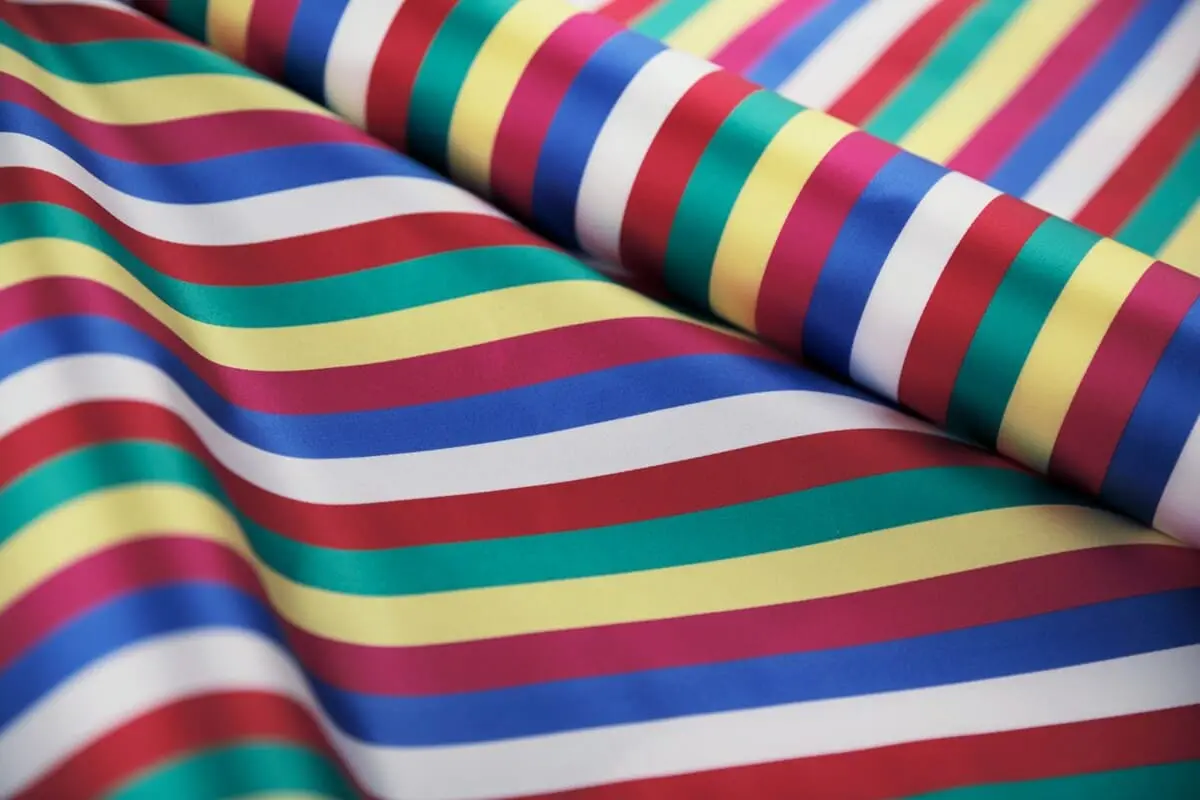
Striped fabric is a timeless textile choice for fashion, home décor, accessories, and creative sewing projects. From classic navy-and-white stripes to bold multicolor patterns and contemporary asymmetrical designs, stripes can create distinctive visual effects across many fabric types. With striped fabric printing, designers and businesses can customize stripe widths, colors, spacing, directions, and repeat patterns to match their creative vision.
At JCWTextile, customers can explore custom digital fabric printing for a variety of textile applications. Whether you are developing a clothing collection, creating coordinated home textiles, producing fabric for bags, or testing a new design concept, understanding stripe patterns, fabric selection, and artwork preparation can help you achieve better results.
This guide explains the main types of striped fabric, suitable materials, printing methods, design preparation, applications, and ordering considerations for custom printed striped fabrics.
Table of Contents:Striped Fabric Printing
What Is Striped Fabric Printing?
Striped fabric printing is the process of applying stripe patterns to textile surfaces using suitable fabric printing techniques. Unlike stripes created exclusively through weaving or knitting, printed stripes can be designed digitally and customized for different colors, proportions, and layouts.
A printed stripe pattern may feature two colors or a complex combination of multiple shades. Stripes can run horizontally, vertically, diagonally, or in irregular directions. Designers can also combine stripes with florals, geometric shapes, abstract artwork, and other decorative elements.
Digital fabric printing is particularly useful for custom stripe designs because it allows detailed artwork to be reproduced without creating traditional screens for every color. Depending on the fabric composition, ink system, and finishing requirements, the appropriate printing process can be selected for the intended product.
Custom striped fabric printing can be useful for:
- Independent fashion designers developing original collections.
- Clothing brands creating signature textile patterns.
- Interior designers coordinating curtains, cushions, and upholstery accents.
- Quilters and sewing enthusiasts making personalized projects.
- Small businesses testing new textile products.
- Manufacturers and product developers sourcing custom printed materials.
For an overview of the broader process, explore our Custom Fabric Printing Guide.
Popular Types of Striped Fabric Patterns
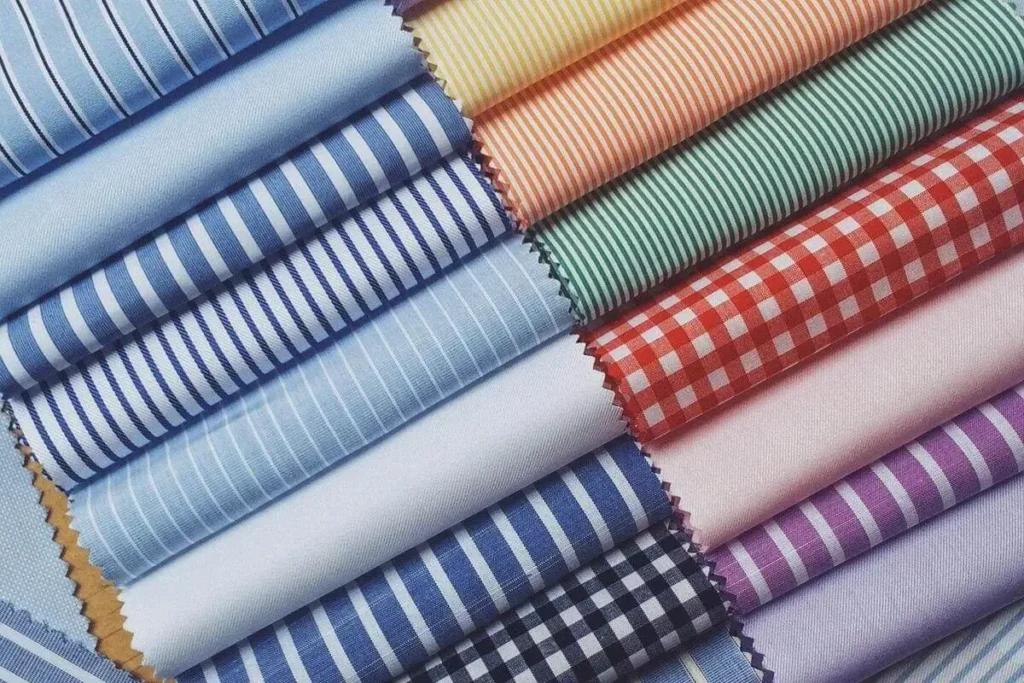
Types of striped fabric patterns including horizontal vertical diagonal pinstripe and multicolor designsAt JCW Textile, our Rayon Twill Fabric is designed for brands, designers, and apparel manufacturers looking for a soft, breathable, and durable fabric with excellent drape and print performance. This premium twill weave fabric combines comfort and versatility, making it ideal for fashion apparel, dresses, skirts, blouses, scarves, and lightweight outerwear.
Our custom printed Rayon Twill Fabric delivers vibrant color reproduction, smooth texture, and long-lasting quality for both wholesale and retail customers worldwide.
Whether you are creating fashion collections, boutique clothing, or custom textile projects, our Rayon Twill Fabric provides the perfect balance of elegance and functionality.
The appearance of striped fabric depends on stripe direction, width, spacing, color contrast, and the overall repeat design. Understanding these variations makes it easier to choose a pattern for a particular application.
1. Horizontal Stripes
Horizontal stripes run from side to side across the fabric. Classic Breton-style stripes, colorful beachwear patterns, and casual jersey designs are common examples.
Horizontal stripes work well for T-shirts, dresses, children’s clothing, cushion covers, and casual accessories. Narrow stripes can create a subtle visual texture, while wide contrasting stripes produce a stronger graphic effect.
When preparing a horizontal stripe design, consider how the pattern will align with garment panels or other cut fabric pieces.
2. Vertical Stripes
Vertical stripes run along the length of the fabric and are widely used in shirts, dresses, trousers, curtains, and decorative textiles.
Fine vertical stripes can create a clean, understated appearance, while wide stripes can make a design feel bold and contemporary. Pinstripes, multicolor fashion stripes, and alternating tonal stripes are popular variations.
For clothing production, consider stripe alignment at side seams, pockets, collars, and other construction details.
3. Diagonal Stripes
Diagonal stripes introduce movement and visual energy. They are often used in fashion garments, statement accessories, decorative cushions, and modern textile designs.
Designers can create diagonal stripes at different angles, combine multiple diagonal directions, or use contrasting bands to form chevrons and zigzag effects.
Diagonal designs require careful planning when fabric pieces must align across seams or when the pattern repeats across a larger textile surface.
4. Pinstripes and Fine Stripes
Pinstripes feature narrow lines separated by relatively small gaps. They are suitable for refined apparel, tailored garments, minimalist home textiles, and subtle decorative applications.
Fine stripe designs require sufficient contrast and appropriate artwork resolution. Very thin lines may become less distinct depending on the fabric texture, print process, and viewing distance.
Before ordering a large quantity, consider testing the pattern on a fabric swatch.
5. Wide and Bold Stripes
Wide stripes create strong visual contrast and can become the main design feature of a textile product. Large color blocks, alternating neutral tones, and oversized multicolor bands are examples.
These patterns are useful for statement clothing, beach accessories, curtains, cushions, tote bags, and contemporary interiors.
Because wide stripes are visually prominent, color selection and the proportions between stripes are especially important.
6. Multicolor and Irregular Stripes
Multicolor stripes combine several shades in a repeating sequence. Irregular stripes vary in width, spacing, or direction to create a more artistic appearance.
These designs can be used in children’s products, resortwear, scarves, fashion accessories, and decorative fabrics. They can also incorporate gradients, hand-drawn lines, or abstract details.
For more artistic pattern ideas, see our guide to Abstract Fabric Printing.
What Fabrics Are Suitable for Striped Fabric Printing?
Choosing the right fabric is essential because fiber composition, surface texture, weight, stretch, and intended use can affect the printed result. The best material depends on both the stripe design and the final product.
For textile products where harmful-substance testing is relevant, buyers can review the requirements of OEKO-TEX STANDARD 100. Always verify the certification status of the specific textile or finished article rather than assuming that every printed fabric is certified.
Cotton Fabric
Cotton is a popular choice for apparel, quilting, children’s projects, lightweight home textiles, and everyday accessories. It is available in different constructions and weights, allowing designers to choose materials for soft garments or more structured products.
Cotton can be suitable for custom stripes printed using compatible textile printing systems. The appropriate ink and fixation process depend on the fabric construction and production requirements.
Learn more in our Cotton Fabric Printing Guide.
Linen Fabric
Linen offers a natural texture and relaxed appearance. Its visible weave can add character to simple stripe patterns, particularly for curtains, cushion covers, table linens, summer clothing, and lightweight home décor.
Fine stripes may appear slightly different on textured linen compared with a smooth fabric. Consider the relationship between stripe width, weave texture, and the intended viewing distance.
See our Linen Fabric Printing Guide for more material considerations.
Polyester Fabric
Polyester is widely used in fashion, accessories, performance textiles, and selected home textile applications. Depending on the fabric construction, it can support smooth, detailed stripe patterns and strong color contrast.
Polyester often works with disperse-dye sublimation or other compatible printing systems. However, the correct method depends on the particular polyester textile and the required performance.
Explore our Polyester Fabric Printing Guide.
Jersey and Stretch Fabrics
Jersey and other stretch fabrics are useful for T-shirts, dresses, leggings, swimwear, and casual apparel. Stripe designs on stretch materials require special attention to the fabric’s recovery, stretch direction, and garment construction.
A stripe pattern may appear wider or narrower when a garment is stretched. Designers should evaluate the pattern under realistic wearing conditions and confirm the fabric’s suitability for the intended printing method.
Canvas Fabric
Canvas is a practical option for tote bags, pouches, decorative products, and selected upholstery or craft projects. Its relatively structured construction makes it suitable for bold stripes and simple graphic designs.
For bag production, consider the canvas weight, print appearance, sewing requirements, and whether the pattern needs to align across different panels.
The best fabric is not determined by pattern alone. Fiber composition, finishing, color requirements, product use, and printing compatibility should all be considered before production.
Which Printing Methods Are Used for Striped Fabrics?
Different printing technologies are suitable for different fibers and production requirements. There is no single method that is best for every striped fabric.
For projects where color durability matters, textile properties may need to be evaluated through appropriate testing. AATCC provides standardized methods for assessing properties such as colorfastness to rubbing, laundering, and light exposure.
Digital Fabric Printing
Digital fabric printing transfers artwork from a digital file to compatible textile material. It is useful for customized stripe patterns because designers can change stripe widths, colors, spacing, and repeat layouts without preparing a separate screen for each color.
Digital printing can be particularly helpful for:
- Custom color combinations.
- Multiple stripe variations.
- Small production runs and design sampling.
- Detailed patterns combining stripes with other artwork.
- Design development for independent brands.
The final result depends on the fabric, ink system, color management, pretreatment, fixation, and finishing process.
Screen Printing
Screen printing applies ink through prepared screens. It can be appropriate for certain textile designs and production volumes, particularly when the artwork and process are well suited to this technique.
For designs requiring frequent changes in stripe colors or layout, screen preparation may add time and setup costs. The suitability of screen printing depends on the order size, fabric, and production specifications.
Dye Sublimation
Dye sublimation is commonly associated with suitable polyester textiles. Under controlled heat and pressure, dye transfers into the material, producing a print integrated with the compatible textile surface.
It can be useful for stripe patterns on polyester-based apparel, sportswear, and selected accessories. It is not a universal solution for every fiber, especially untreated natural-fiber fabrics.
When selecting a printing method, confirm the fiber content, required color appearance, intended product, and finishing requirements with your supplier.
How to Design Custom Striped Fabric
A well-prepared stripe pattern helps reduce design errors and makes production planning easier. Follow these steps when creating custom striped fabric.
Step 1: Choose the Stripe Direction
Decide whether the pattern should run horizontally, vertically, diagonally, or in multiple directions.
Remember that the direction shown in your design file may not correspond to the direction you expect on the finished product if the artwork is rotated or the fabric is cut differently. Clearly identify the fabric length direction and the intended orientation.
Step 2: Define Stripe Width and Spacing
Specify the width of each stripe and the distance between them. For example, a pattern may alternate between a narrow stripe and a wider stripe, or use evenly spaced bands throughout the design.
Use real measurements where possible. This is particularly important for garments, curtains, quilting, and other products where the scale of the pattern affects the finished appearance.
Step 3: Select a Consistent Color Palette
Choose colors based on the intended product, brand identity, and target audience. High-contrast combinations can create a bold graphic effect, while similar shades may produce a softer appearance.
RGB colors displayed on a monitor do not always match printed textile colors exactly. Color profiles, fabric color, ink chemistry, and finishing can all affect the result.
If color accuracy is important, request a suitable sample and confirm the acceptable color range before proceeding with production.
Step 4: Set Up the Repeat Pattern
Many striped fabrics use a repeating design. Ensure that the stripe sequence repeats seamlessly at the edges of the artwork.
Check that the spacing, color sequence, and stripe widths remain consistent across the repeat. If the design contains irregular stripes, verify that the intended variation looks deliberate rather than accidental.
Step 5: Consider Garment and Product Construction
For clothing, consider how stripes will appear on front and back panels, sleeves, collars, and pockets. For bags and home textiles, think about panel placement, seams, hems, and finished dimensions.
If stripes must align at seams, communicate this requirement before production. Pattern matching can affect fabric consumption and cutting plans.
Step 6: Prepare the Artwork File
Prepare the artwork at an appropriate scale and resolution for the final fabric size. Confirm the file format, color settings, repeat dimensions, and other production specifications with your printing supplier.
For more detailed guidance, read How to Prepare Artwork for Fabric Printing.
Step 7: Test Before Ordering Larger Quantities
A digital preview is useful, but it cannot fully show the hand feel, drape, texture, or printed color of the finished textile.
Where possible, order a swatch or sample to assess stripe scale, color, fabric suitability, and intended application. This is especially valuable for commercial projects and coordinated product collections.
Applications of Custom Striped Printed Fabric
Striped patterns are versatile and can be adapted for many textile products.
Fashion and Clothing
Striped fabric is used for shirts, dresses, skirts, casual trousers, children’s apparel, resortwear, and fashion accessories.
Brands can develop distinctive stripe widths, colors, and repeat sequences to create a recognizable visual identity. Custom printing also makes it easier to test different design variations during product development.
For more ideas, visit our guide to Custom Fabric Printing for Fashion Designers and Clothing Brands.
Home Décor
Stripes are widely used in curtains, cushion covers, table linens, decorative panels, and other interior textile products.
Neutral stripes can complement minimalist spaces, while bold or multicolor stripes can become a decorative focal point. Fabric weight, light exposure, cleaning requirements, and the intended use should be considered when choosing a material.
Bags and Accessories
Custom striped fabric can be used for tote bags, pouches, cosmetic bags, fabric organizers, scarves, and selected fashion accessories.
For products that require structure or durability, consider canvas and other suitable woven materials. Check the fabric weight, construction, and finishing requirements before selecting a material for production.
Quilting and Sewing Projects
Quilters and sewing enthusiasts can use striped fabric as a main pattern, border, accent, or coordinating element in a larger project.
Stripe direction can influence how individual pieces fit together visually. When combining stripes with floral, geometric, or abstract patterns, consider the scale and color relationships to maintain a balanced design.
What Affects the Cost of Striped Fabric Printing?
The cost of custom striped fabric printing depends on several factors rather than stripe patterns alone.
Fabric type and weight: Different fibers, constructions, and fabric weights can have different material and processing costs.
Printing method: Ink systems, pretreatment, fixation, and finishing requirements vary according to the textile.
Order quantity: Setup requirements and production efficiency can affect the cost per meter. Small runs may have a different unit price from larger orders.
Artwork and color requirements: Standard repeating stripes may be straightforward to prepare, while complex layouts, color matching, or special finishing requirements can add work.
Sampling and shipping: Sample costs, packaging, international freight, and any applicable remote-area charges should be considered separately where relevant.
JCWTextile offers custom fabric printing options for different design and order requirements. For pricing guidance, review our Custom Fabric Printing Cost Guide. You can also contact JCWTextile with your preferred fabric, design, estimated quantity, and intended application to request a project-specific quotation.
Can Small Businesses Order Custom Striped Fabric?
Custom striped fabric can be useful for independent designers, small fashion labels, quilting businesses, makers, and startups that want to test new textile products.
A custom digital printing workflow can support design variation and sampling without requiring the same setup approach as traditional screen printing. Actual minimum quantities depend on the fabric, production process, and supplier requirements.
JCWTextile promotes low-barrier custom fabric printing options, including no-minimum-order options for applicable products. Before ordering, confirm the minimum quantity, fabric availability, sample cost, production time, and shipping arrangements for your specific project.
Read our guide to Low MOQ Custom Fabric Printing to learn more about developing fabric designs for smaller production runs.
How to Order Custom Striped Fabric from JCWTextile
If you are planning a custom striped textile project, preparing a few details in advance can help make the process smoother.
- Choose your fabric. Identify the fiber composition, weight, texture, stretch, and intended use.
- Prepare your stripe design. Specify the direction, stripe widths, repeat size, and color palette.
- Submit your artwork or design concept. Provide a production-ready file when available, or discuss your requirements with the team.
- Confirm the printing requirements. Review fabric compatibility, color expectations, sampling, and any finishing needs.
- Review pricing and logistics. Confirm the quantity, estimated production schedule, and international shipping arrangements before placing your order.
Production time varies with fabric availability, order specifications, and finishing requirements. Confirm the current lead time with JCWTextile before finalizing a delivery schedule.
To discuss your project, visit the JCWTextile website and use the available contact or quotation options.
Conclusion
Striped fabric printing offers designers and businesses a flexible way to create distinctive textile patterns for clothing, home décor, bags, accessories, and sewing projects. By selecting a suitable fabric, defining stripe direction and scale, preparing accurate artwork, and testing samples when necessary, you can develop a design that better matches your product requirements.
Whether you prefer classic pinstripes, bold color bands, diagonal patterns, or modern multicolor designs, custom printed stripes can be adapted to a wide range of creative concepts.
Explore the JCWTextile Custom Fabric Printing Guide to learn more about fabric selection, printing methods, artwork preparation, and ordering custom printed textiles.
📚 FAQ About Striped Fabric Printing
1. What is striped fabric printing?
Striped fabric printing is the process of applying horizontal, vertical, diagonal, or other stripe patterns to textiles using a suitable printing method. It allows designers to customize stripe colors, widths, spacing, and repeat patterns.
2. Can I print my own striped design on fabric?
Yes. You can prepare your own stripe artwork and submit it to a custom fabric printing supplier. Confirm the required file format, artwork scale, color settings, and repeat dimensions before production.
3. Which fabrics are best for striped fabric printing?
Cotton, linen, polyester, jersey, and canvas may all be suitable for particular stripe designs. The best choice depends on the intended product, fabric construction, fiber composition, and compatible printing method.
4. Is digital printing suitable for custom stripe patterns?
Digital fabric printing is well suited to many custom stripe designs because it allows flexible changes to colors, stripe widths, and repeat layouts. The final print quality depends on the fabric, ink system, artwork, and finishing process.
5. Can I order striped fabric in small quantities?
Small-quantity ordering may be available, depending on the fabric and production requirements. Confirm the applicable minimum order quantity, sampling options, and pricing with your supplier.
6. How do I prepare a striped fabric design for printing?
Define the stripe direction, widths, spacing, colors, and repeat size. Prepare the artwork at the appropriate scale and resolution, check that the pattern repeats correctly, and confirm the supplier’s file requirements before submitting it.
7. How much does custom striped fabric printing cost?
Pricing depends on the fabric, weight, printing method, quantity, finishing requirements, sampling, and shipping. Request a quotation using your chosen fabric, artwork, and estimated order quantity for a more accurate estimate.