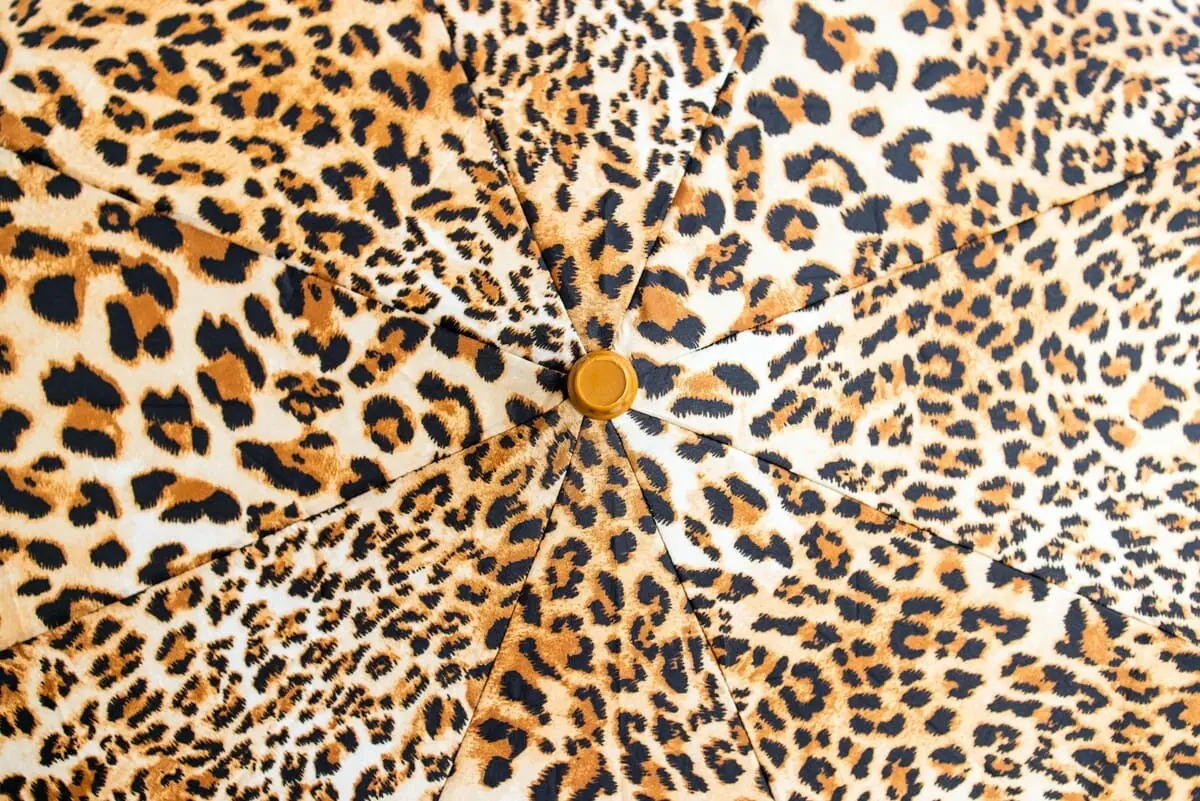
Animal print fabric has remained a popular textile design for fashion, accessories, home décor, and creative sewing projects. Leopard spots, zebra stripes, tiger stripes, and other animal-inspired patterns can create bold visual effects while giving designers many opportunities to customize colors, scale, and pattern placement.
With custom animal print fabric, designers are not limited to traditional brown, black, beige, or natural-looking patterns. Digital textile printing can make it possible to develop animal-inspired designs in different color palettes, sizes, layouts, and artistic styles.
For fashion brands, independent designers, interior projects, and small businesses, custom printed animal patterns can provide a way to develop distinctive textile collections without relying entirely on ready-made fabrics.
This guide explains the main types of animal print fabric, suitable materials, printing methods, artwork preparation, applications, sustainability considerations, and ordering tips.
Table of Contents:Animal Print Fabric
What Is Animal Print Fabric?
Animal print fabric is textile material decorated with patterns inspired by the natural markings of animals. Common examples include leopard spots, tiger stripes, zebra stripes, snake-inspired scales, giraffe patches, and other organic patterns.
The term does not necessarily mean that the fabric contains animal-derived material. In most cases, animal print describes the visual pattern rather than the fiber composition.
For example, a polyester fabric can feature a leopard-inspired print, while cotton, linen, rayon, or other textiles can also be printed with animal patterns when the fabric and printing method are compatible.
Custom animal print fabric gives designers greater control over:
- Pattern type
- Pattern scale
- Color palette
- Repeat size
- Pattern density
- Background color
- Artwork placement
- Fabric selection
This makes animal-inspired designs suitable for both traditional fashion applications and contemporary textile collections.
For a broader overview of custom textile production, see the Custom Fabric Printing Guide.
Popular Types of Animal Print Fabric
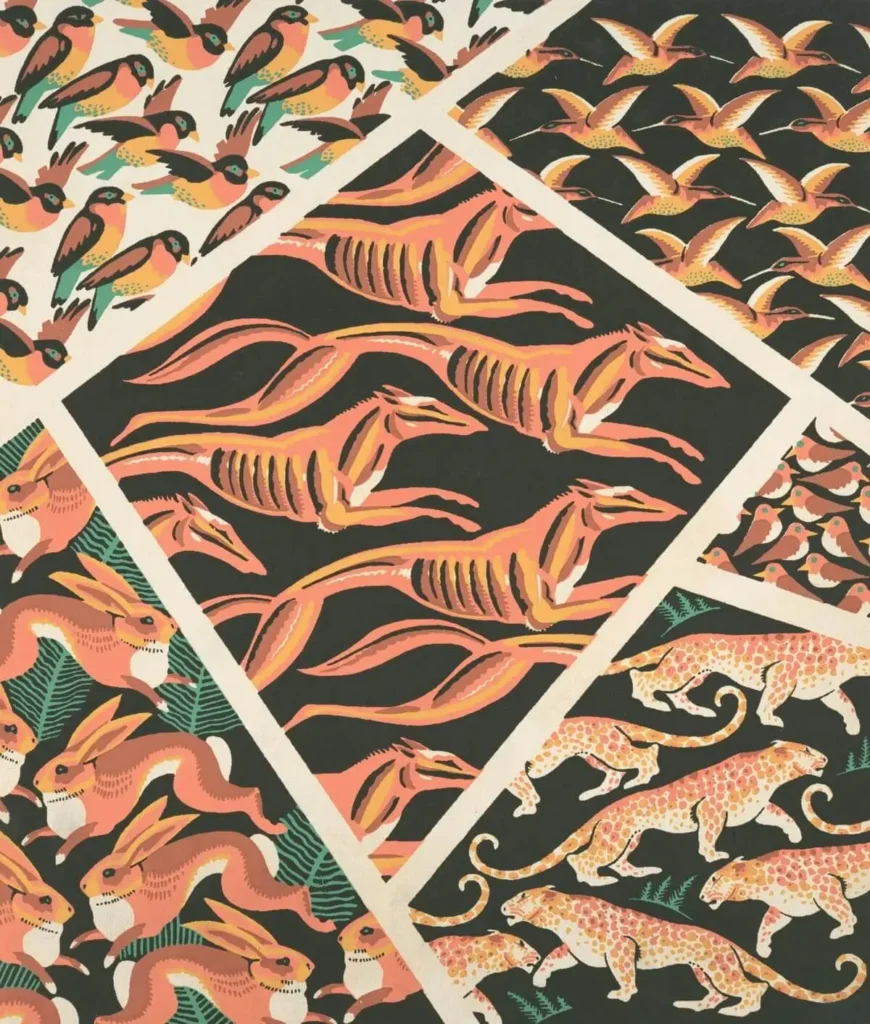
Different animal-inspired patterns create very different visual effects. The following styles are among the most recognizable options for custom textile designs.
Leopard Print Fabric
Leopard print is characterized by irregular spots and rosette-like markings. Traditional leopard-inspired designs often use combinations of tan, beige, brown, black, and cream.
However, custom printing allows designers to reinterpret the pattern with almost any color palette.
For example, a designer could create:
- Black and white leopard print
- Pink and red leopard print
- Blue and purple leopard print
- Neutral beige leopard print
- Metallic-inspired color combinations
- Pastel leopard patterns
- Oversized abstract leopard spots
The scale of the spots can also be changed. Small repeated spots can produce a subtle texture, while oversized rosettes create a stronger fashion statement.
Leopard print fabric is commonly considered for dresses, skirts, tops, scarves, bags, cushions, and fashion accessories.
Zebra Print Fabric
Zebra print is usually associated with contrasting stripes that create an organic black-and-white pattern.
Unlike regular geometric stripes, zebra-inspired stripes tend to vary in width, direction, and curvature. This irregularity gives the pattern a more natural appearance.
Custom zebra print fabric can also be developed in alternative color combinations such as:
- Black and white
- Navy and cream
- Brown and beige
- Pink and black
- Blue and white
- Green and black
- Multicolor artistic designs
Zebra patterns can work particularly well on apparel, bags, accessories, upholstery accents, and decorative textiles.
For comparison with more structured stripe designs, see our guide to Striped Fabric Printing.
Tiger Print Fabric
Tiger-inspired patterns typically feature curved or irregular dark stripes over a lighter background.
Traditional color combinations often include orange, golden yellow, cream, brown, and black. Custom printing can reinterpret the pattern using different backgrounds and color combinations.
Tiger-inspired designs may be useful for:
- Fashion apparel
- Scarves
- Bags
- Decorative cushions
- Accessories
- Statement textiles
- Creative sewing projects
Because tiger patterns can contain strong directional elements, designers should consider how the pattern will be positioned across garment panels or sewn products.
Giraffe Print Fabric
Giraffe-inspired patterns use irregular polygonal patches separated by contrasting lines or spaces.
The relatively large scale of the patches can make this pattern particularly suitable for bold fashion designs, children’s products, accessories, and decorative textiles.
Designers can also create stylized versions using colors that are very different from natural giraffe markings.
Snake-Inspired Print Fabric
Snake-inspired patterns can use repeating scale shapes, curved lines, or organic geometric structures.
These designs can create a sophisticated appearance for accessories, fashion garments, bags, and decorative products.
Because snake-inspired patterns can be highly detailed, the choice of fabric surface and printing resolution may affect how clearly the smaller elements appear.
Abstract Animal Patterns
Animal-inspired designs do not have to reproduce a specific animal exactly.
Abstract animal patterns can combine spots, stripes, organic shapes, and artistic textures to create an original textile design.
This approach is especially useful for designers who want an animal-inspired aesthetic without creating a realistic reproduction.
For more artistic textile patterns, see our guide to Abstract Fabric Printing.
Custom Animal Print vs. Ready-Made Animal Print Fabric
Ready-made animal print fabrics can be convenient when a standard pattern and color combination meets your requirements. However, custom printing provides greater control over the design.
| Feature | Ready-Made Animal Print | Custom Animal Print Fabric |
|---|---|---|
| Pattern | Predetermined | Customizable |
| Colors | Usually limited | Custom color palette |
| Pattern Scale | Fixed | Adjustable |
| Repeat | Predetermined | Can be customized |
| Branding | Limited | Suitable for original designs |
| Small Design Changes | Usually unavailable | Possible |
| Fabric Choice | Supplier-dependent | Can be selected from available fabrics |
Custom printing can therefore be particularly useful when a designer needs a specific pattern scale, unusual color combination, or original animal-inspired artwork.
What Fabrics Can Be Used for Animal Print Fabric?
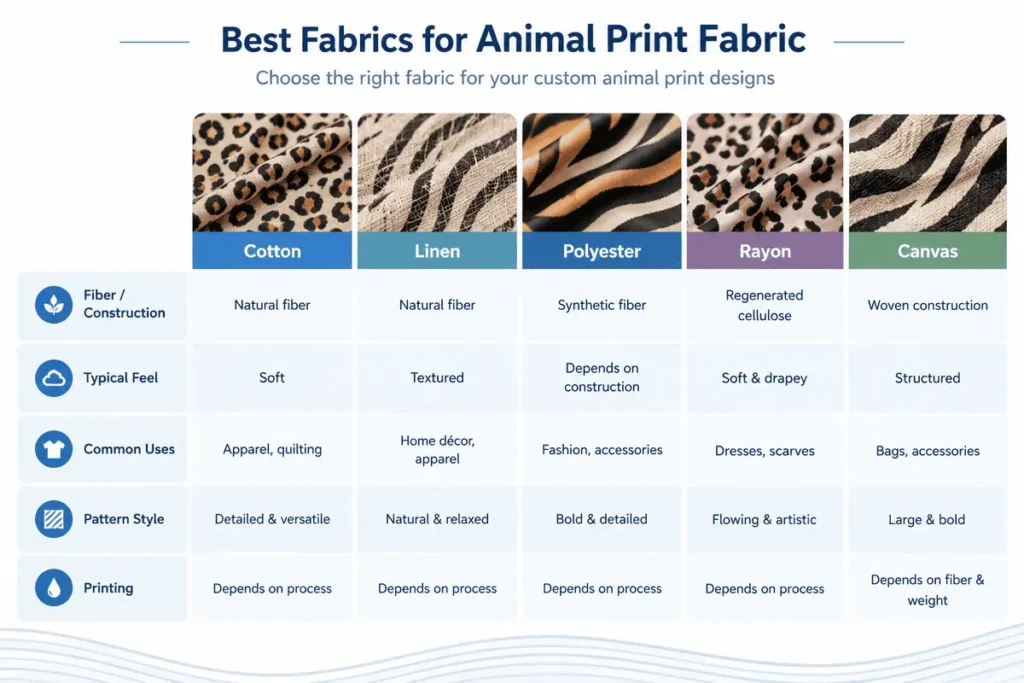
The appropriate fabric depends on the final product, fiber composition, surface texture, printing method, and performance requirements.
Cotton Animal Print Fabric
Cotton is a versatile natural fiber used for apparel, quilting, children’s products, accessories, and selected home textiles.
Animal patterns can work particularly well on cotton because the material is available in different weights and constructions.
Designers can use cotton for both subtle and bold animal-inspired patterns, depending on the intended application.
Learn more about Cotton Fabric Printing.
Linen Animal Print Fabric
Linen has a distinctive natural texture that can give printed animal patterns a more relaxed and organic appearance.
It may be considered for:
- Home décor
- Curtains
- Cushion covers
- Lightweight apparel
- Table textiles
- Decorative products
The visible texture of linen should be considered when choosing highly detailed animal patterns.
For more information, see Linen Fabric Printing.
Polyester Animal Print Fabric
Polyester can be used for many fashion, accessory, performance, and decorative applications.
Depending on the specific textile construction and printing process, polyester can support detailed patterns and strong color combinations.
Some polyester fabrics are suitable for dye sublimation, while other polyester textiles may require different printing systems. The correct method should be determined according to the actual fabric.
See our Polyester Fabric Printing Guide.
Rayon Animal Print Fabric
Rayon can provide a soft drape that is useful for dresses, blouses, scarves, and other lightweight fashion products.
Animal-inspired patterns can create a dramatic appearance when combined with flowing fabrics.
The printing process should be selected according to the fiber composition and characteristics of the specific rayon textile.
Canvas Animal Print Fabric
Canvas provides a more structured textile surface and can be useful for tote bags, pouches, accessories, and selected home products.
Bold leopard, zebra, and abstract animal patterns can work particularly well on larger canvas products where the pattern is clearly visible.
Which Printing Methods Work for Animal Print Fabric?
The most appropriate printing method depends on the fabric and production requirements.
Digital Fabric Printing
Digital fabric printing is particularly useful for custom animal print designs because the artwork can contain multiple colors, irregular shapes, gradients, and detailed pattern elements.
It can be useful when designers want to change:
- Animal pattern colors
- Pattern scale
- Repeat dimensions
- Background colors
- Design combinations
Digital printing can also be practical for sampling and smaller custom production runs, depending on the fabric and supplier requirements.
Screen Printing
Screen printing can be suitable for selected textile projects and production conditions.
For simple animal patterns using a limited number of colors, screen printing may be considered depending on the fabric, quantity, and desired result.
However, complex multicolor artwork can require additional preparation and separate screens.
Dye Sublimation
Dye sublimation is commonly associated with compatible polyester fabrics.
It can be useful for detailed animal-inspired designs on suitable polyester textiles, particularly in fashion, sportswear, and accessories.
The process is not suitable for every type of fabric, so the fiber composition should always be confirmed before selecting the printing method.
How to Design Custom Animal Print Fabric
Creating a successful animal-inspired textile design involves more than choosing a leopard or zebra pattern.
Step 1: Choose the Animal Pattern
Decide whether the design should be based on leopard spots, zebra stripes, tiger stripes, giraffe patches, snake-inspired scales, or an abstract combination.
The pattern should match the visual identity and intended application of the product.
Step 2: Select the Pattern Scale
Pattern scale can significantly change the appearance of the finished textile.
Small animal spots may create an overall texture, while oversized patterns can become the main visual feature of a garment or product.
Consider the finished product dimensions when choosing the scale.
Step 3: Develop the Color Palette
Natural animal colors are not required.
A custom textile design can reinterpret an animal pattern using brand colors or an artistic palette.
For example, a fashion brand could use its signature colors to create a recognizable animal-inspired textile.
Step 4: Define the Repeat
Determine how the pattern will repeat across the fabric.
Check:
- Repeat width
- Repeat height
- Pattern spacing
- Direction
- Edge matching
- Color sequence
A seamless repeat is especially important for continuous fabric printing.
Step 5: Consider the Final Product
Think about how the pattern will appear after cutting and sewing.
For garments, consider sleeves, front and back panels, collars, pockets, and seams.
For bags, consider front panels, side panels, handles, and gussets.
For home décor, consider the final width and length of curtains, cushions, or other products.
Step 6: Prepare the Artwork
Artwork should be created at an appropriate scale and resolution for the intended print size.
Check the supplier’s requirements for:
- File format
- Resolution
- Color mode
- Repeat dimensions
- Artwork scale
- Bleed or edge requirements
For more information, see our Artwork Preparation Guide for Fabric Printing.
Step 7: Order a Sample When Appropriate
A digital screen preview cannot fully demonstrate the texture, drape, color, or final appearance of printed fabric.
A sample or swatch can help you evaluate:
- Pattern scale
- Color appearance
- Fabric texture
- Print clarity
- Hand feel
- Suitability for the final product
This can be especially useful for commercial collections.
For commercial textile projects, relevant performance checks may include colorfastness and dimensional stability depending on the intended use. AATCC textile testing standards include methods for evaluating properties such as colorfastness to laundering, rubbing, and light exposure.
Animal Print Fabric for Fashion Brands
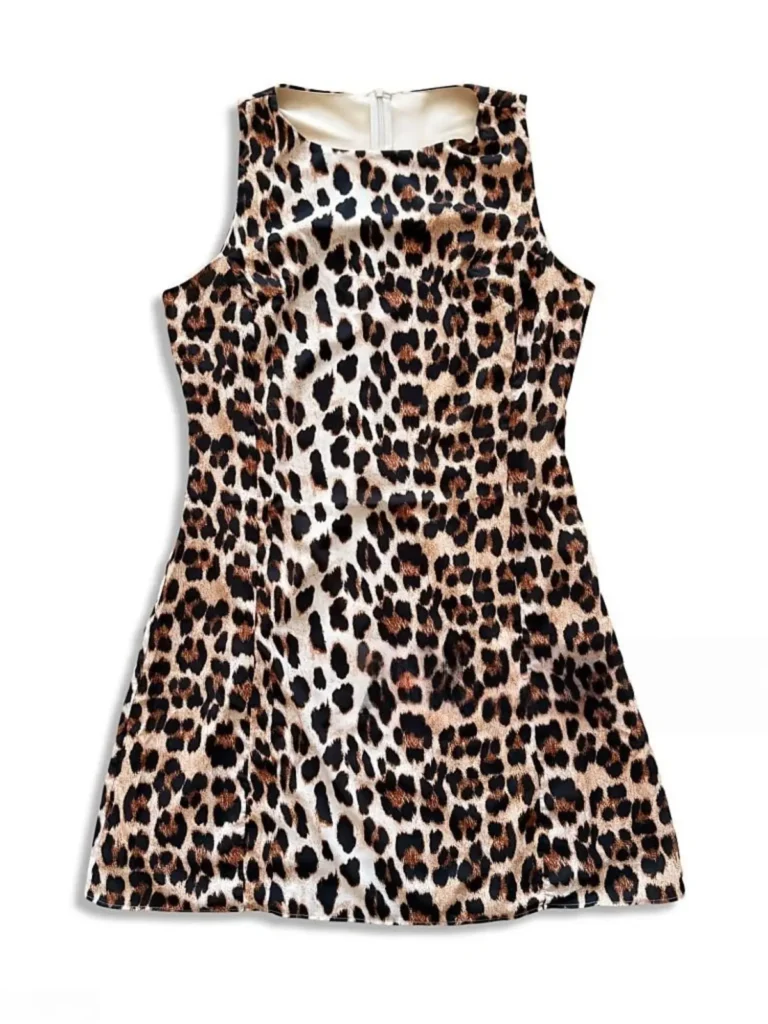
Animal patterns are often associated with statement fashion because they can create an immediately recognizable visual effect.
Custom printing gives clothing brands the opportunity to create their own interpretations rather than relying exclusively on standard commercial patterns.
Potential applications include:
- Dresses
- Skirts
- Tops
- Jackets
- Scarves
- Children’s clothing
- Resortwear
- Fashion accessories
A brand could also develop several coordinated colorways from the same animal-inspired artwork.
For more information, see Custom Fabric Printing for Fashion Designers and Clothing Brands.
Animal Print Fabric for Bags and Accessories
Animal-inspired patterns can also work well for bags and textile accessories.
Examples include:
- Tote bags
- Cosmetic bags
- Pouches
- Fabric wallets
- Scarves
- Hair accessories
- Decorative accessories
For structured products, canvas and other suitable woven fabrics may provide the required construction.
The pattern should also be evaluated at the size of the finished product. A design that looks attractive across an entire fabric roll may look very different when only a small section appears on a bag.
Animal Print Fabric for Home Décor
Animal-inspired patterns can introduce strong visual accents into interior textile products.
Possible applications include:
- Cushion covers
- Curtains
- Decorative throws
- Upholstery accents
- Table textiles
- Decorative fabric panels
For interiors, consider the relationship between pattern scale and room size. Large animal patterns can become a focal point, while smaller patterns can provide a more subtle decorative texture.
Explore Custom Fabric Printing for Home Décor for more ideas.
Animal Print Fabric for Quilting and Sewing
Animal-inspired patterns can also be incorporated into quilting and sewing projects.
A leopard or zebra design can function as a primary fabric, border, accent panel, or coordinating material.
When combining animal patterns with floral or geometric fabrics, consider:
- Pattern scale
- Color relationships
- Visual contrast
- Fabric weight
- Surface texture
For example, a small leopard pattern may work as an accent alongside a larger floral print, while a large zebra pattern may become the dominant design.
What Affects the Cost of Custom Animal Print Fabric?
The price of custom animal print fabric depends on several factors.
Fabric Type
Different fibers, constructions, and fabric weights have different material and processing requirements.
Printing Method
The printing method must be compatible with the selected fabric and desired result.
Order Quantity
Production quantity can affect the cost per meter and overall production efficiency.
Artwork Complexity
A simple two-color zebra pattern may require less artwork preparation than a detailed multicolor animal design with gradients and complex repeats.
Sampling
If you need a sample or swatch before placing a larger order, sampling costs should be considered separately.
Shipping
International freight, packaging, destination, and other logistics factors can affect the final delivered cost.
For a broader explanation of pricing factors, see our Custom Fabric Printing Cost Guide.
Is Custom Animal Print Fabric Available in Small Quantities?
Small-quantity custom printing can be particularly useful for independent designers, small fashion brands, makers, and businesses testing new product ideas.
Instead of committing to a large production run immediately, designers may use smaller quantities or samples to evaluate a pattern before scaling up.
JCWTextile offers low-MOQ and no-MOQ options for applicable custom fabric printing products, but the exact minimum quantity depends on the selected fabric and production requirements.
Before ordering, confirm:
- Fabric availability
- Minimum order quantity
- Sample options
- Production time
- Printing method
- Shipping arrangements
Our Low MOQ Custom Fabric Printing Guide provides additional information.
Sustainable Considerations for Animal Print Fabric
When developing custom printed textiles, sustainability should be considered alongside pattern and appearance.
The environmental profile of a textile can depend on factors such as:
- Fiber selection
- Material sourcing
- Production processes
- Printing technology
- Chemical management
- Product durability
- Expected product lifetime
Choosing a longer-lasting fabric and producing quantities appropriate to actual demand can help reduce unnecessary material waste.
For brands developing sustainable textile collections, it can also be useful to investigate recognized fiber and material resources rather than relying only on marketing claims.
Certification and sustainability claims should always be evaluated according to the specific fabric, supplier, and verified certification status.
When selecting textiles for a custom collection, brands can consider fiber composition, material sourcing, and the broader impacts associated with different textile materials. Textile Exchange provides material resources covering fibers and materials used across the fashion and textile industry.
How to Order Custom Animal Print Fabric from JCWTextile
Before requesting custom animal print fabric, prepare the following information:
1. Pattern:
Specify whether you need leopard, zebra, tiger, giraffe, snake-inspired, or another animal pattern.
2. Artwork:
Upload your artwork if you already have a finished design.
3. Fabric:
Choose the material based on the final application, desired hand feel, weight, stretch, and printing compatibility.
4. Quantity:
Provide your estimated quantity or request a sample if you are still testing the design.
5. Application:
Explain whether the fabric will be used for clothing, bags, accessories, home décor, quilting, or another product.
6. Color requirements:
If color consistency is important, explain your expectations before production and request an appropriate sample when necessary.
Once these details are available, the printing supplier can help determine the most suitable production approach.
Conclusion
Animal print fabric offers designers a flexible way to create bold and recognizable textile designs. Leopard spots, zebra stripes, tiger patterns, giraffe patches, and abstract animal motifs can all be adapted into custom printed textiles.
With custom animal print fabric, designers can adjust pattern scale, colors, repeat size, and artwork to better suit clothing, bags, accessories, home décor, quilting, and other products.
The key to a successful project is choosing a suitable fabric and printing method, preparing accurate artwork, considering the final product construction, and testing a sample when color, pattern scale, or fabric performance is important.
Whether you are developing a fashion collection or testing a small textile product, custom animal-inspired printing can provide a practical way to create original fabric designs.
Explore the Custom Fabric Printing Guide to learn more about fabric selection, artwork preparation, printing methods, and custom textile production.
📚 FAQ About Animal Print Fabric
1. What is animal print fabric?
Animal print fabric is textile material decorated with patterns inspired by animal markings, such as leopard spots, zebra stripes, tiger stripes, giraffe patches, or snake-inspired scales. The term describes the visual pattern and does not necessarily indicate that the fabric contains animal-derived materials.
2. Can I create my own custom animal print fabric?
Yes. You can create your own leopard, zebra, tiger, or other animal-inspired artwork and submit it for custom fabric printing. The artwork should meet the printing supplier’s requirements for file format, resolution, scale, color, and repeat dimensions.
3. What fabrics are suitable for animal print fabric?
Cotton, linen, polyester, rayon, canvas, and other textiles may be suitable depending on the intended application and compatible printing process. The best choice depends on fiber composition, fabric construction, weight, texture, and product requirements.
4. Can leopard, zebra, and tiger patterns be printed in custom colors?
Yes. Custom printing can allow animal-inspired patterns to be adapted to different color palettes. Designers can use natural colors or create original combinations that match a brand identity or product concept.
5. Is digital printing suitable for animal print patterns?
Digital fabric printing can be suitable for many animal print designs because it supports detailed artwork, multiple colors, irregular shapes, and customized repeat patterns. The appropriate printing process depends on the selected fabric and production requirements.
6. Can I order small quantities of custom animal print fabric?
Small quantities may be available depending on the fabric and printing requirements. JCWTextile offers low-MOQ and no-MOQ options for applicable products. Always confirm the current minimum quantity and sampling options before ordering.
7. How much does custom animal print fabric cost?
The cost depends on fabric type, weight, printing method, quantity, artwork requirements, sampling, finishing, and shipping. A project-specific quotation is the best way to determine the actual price for a custom animal print fabric order.