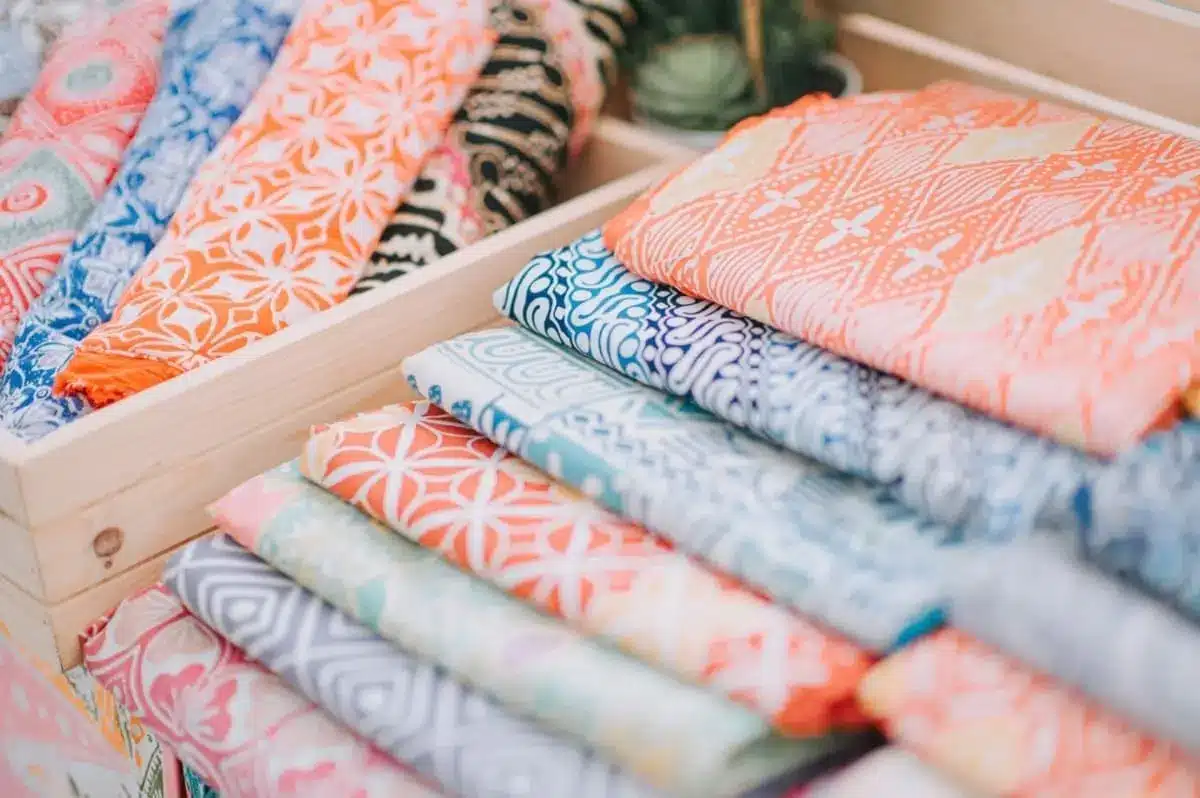
Launching a new clothing line or testing a new textile product can be difficult when fabric suppliers require large minimum orders.
For small brands, independent designers, startups, and product developers, buying hundreds of meters of fabric before knowing whether a product will sell can create unnecessary inventory risk.
Low MOQ custom fabric printing offers a more flexible approach. Instead of committing to a large production run, businesses can start with samples, small quantities, or limited collections and increase production as demand grows.
For brands looking for even greater flexibility, no minimum custom fabric printing can make it possible to create custom textiles without committing to a traditional minimum order quantity.
This guide explains what low MOQ and no MOQ fabric printing mean, how small-batch fabric printing works, and how small brands can use custom printed fabric to develop products with less inventory risk.
What Does Low MOQ Custom Fabric Printing Mean?
MOQ stands for Minimum Order Quantity.
In textile manufacturing, MOQ is the minimum amount a supplier requires a customer to order before production can begin. Depending on the supplier, fabric type, printing method, and production process, traditional textile production may require relatively large quantities.
Low MOQ custom fabric printing means that a supplier can support smaller production quantities than a traditional large-scale textile manufacturer.
For example, a small brand may want to print its own pattern for a limited collection without purchasing a large quantity of unused fabric.
A low-MOQ workflow can make that type of project more practical.
Low MOQ vs. No MOQ
These terms are related but not identical.
Low MOQ means the supplier has a relatively small minimum order requirement.
No MOQ means the supplier does not impose a standard minimum order quantity for the custom printing service.
This distinction matters because a business may need only a small amount of fabric for a prototype, sample, product test, or limited release.
At JCW Textile, the no MOQ model is designed to make custom fabric printing accessible to projects that do not require traditional large-volume production.
What Is No Minimum Custom Fabric Printing?
No minimum custom fabric printing means you can order custom printed fabric without being required to meet a traditional minimum production quantity.
This can be useful when you want to:
- Test a new design
- Create a prototype
- Produce a small collection
- Develop product samples
- Launch a limited edition
- Test customer demand
- Create personalized products
- Reduce excess inventory
For a large manufacturer, ordering a small quantity may not be practical. For a small brand, however, smaller orders can be an important part of product development.
No-MOQ printing changes the starting point.
Instead of thinking:
“How many meters do I need to buy?”
you can start by asking:
“How much fabric do I actually need for this project?”
That difference can make custom textile development more flexible.
Why Small Brands Need Small Batch Fabric Printing
Small businesses often operate with limited budgets and uncertain demand.
A new product may look promising during development but perform differently once it reaches the market. Producing a large amount of fabric too early can leave a brand with excess inventory.
Small batch fabric printing provides a way to reduce that risk.
Reduce Inventory Risk
One of the biggest advantages of ordering smaller quantities is better inventory control.
Instead of printing a large volume of fabric before validating the product, a business can start with a smaller quantity and monitor customer response.
This can be particularly useful for startups and independent brands.
Test New Designs
A new print may look excellent on a screen but produce a different visual effect when printed onto real fabric.
Small-batch production allows you to test:
- Pattern scale
- Color appearance
- Fabric texture
- Print quality
- Garment appearance
- Customer response
This makes the design process more flexible.
Launch Limited Collections
Not every collection needs mass production.
A brand may create a seasonal capsule, collaboration, artist collection, or limited-edition release with a relatively small amount of fabric.
Small-batch printing can make these projects easier to manage.
Reduce Upfront Commitment
Large fabric orders require more capital before the product is sold.
For smaller brands, keeping the initial production commitment lower can leave more room for:
- Marketing
- Product photography
- Packaging
- Website development
- Sampling
- Customer acquisition
Scale After Validation
A small order does not have to remain small.
A practical strategy is:
Test → Learn → Improve → Scale
Once a design proves successful, the brand can increase production.
Low MOQ vs. Traditional Fabric Minimum Orders
The difference between traditional production and low-quantity printing is especially important for small brands.
| Factor | Traditional Fabric Production | Low MOQ / No MOQ Printing |
|---|---|---|
| Minimum Order | Often larger | Smaller quantities possible |
| Initial Investment | Higher | More flexible |
| Product Testing | More difficult | Easier |
| Design Sampling | May require larger commitment | More accessible |
| Inventory Risk | Higher | Lower |
| Limited Editions | Less practical | More practical |
| Suitable For | Large production | Small brands and designers |
| Scaling | Large commitment early | Start small and scale |
The exact minimum quantity always depends on the supplier, fabric, printing method, and project requirements.
For this reason, it is important to confirm the actual production conditions before placing an order.
Who Can Benefit From Low Quantity Fabric Printing?
Low-quantity textile printing is not limited to fashion startups.
A wide range of businesses and creators can benefit from a flexible production model.
Small Fashion Brands
Emerging clothing brands can use custom printed fabrics to create original products without immediately committing to large quantities.
Independent Fashion Designers
Designers developing a new collection may need samples, prototypes, or small runs before moving into larger production.
See our related guide:
Custom Fabric Printing for Clothing Brands & Fashion Designers
Startups
New businesses often need to test product-market fit before investing heavily in inventory.
Custom printed fabric in smaller quantities can support this testing process.
Online Sellers
Online businesses can experiment with new patterns and product ideas before deciding which products deserve larger production runs.
Product Developers
Product developers may need small amounts of printed fabric for prototypes, testing, photography, or presentations.
Limited-Edition Creators
Artists, collaborators, and niche brands can use small quantities to create exclusive collections without maintaining large fabric inventories.
What Can You Make With Small Batch Fabric Printing?
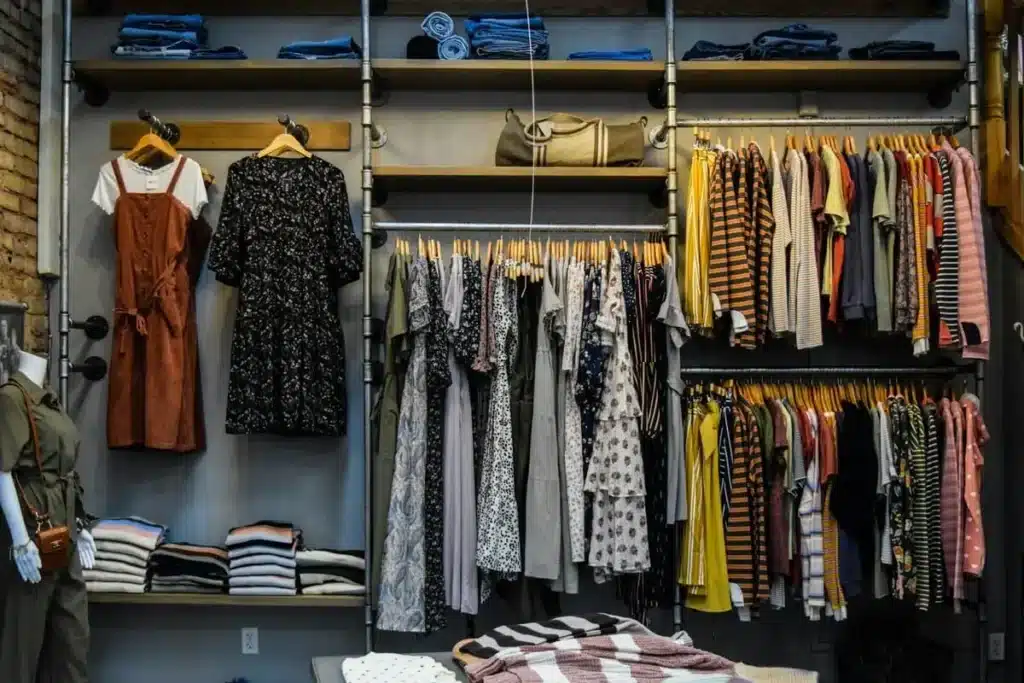
The right custom printed fabric can be used across many product categories.
Common applications include:
Apparel
- Dresses
- Shirts
- Skirts
- Pajamas
- Children’s clothing
- T-shirts
- Activewear
- Loungewear
Accessories
- Scarves
- Bags
- Pouches
- Hair accessories
- Textile gifts
Home and Lifestyle Products
- Quilts
- Cushions
- Soft furnishings
- Decorative textiles
Product Development
Small quantities are also useful for:
- Prototypes
- Samples
- Test products
- Photography samples
- Limited releases
For more ideas, see our guide to Printed Fabric Applications.
How Small Batch Custom Fabric Printing Works
A flexible fabric printing project can usually be organized into several stages.
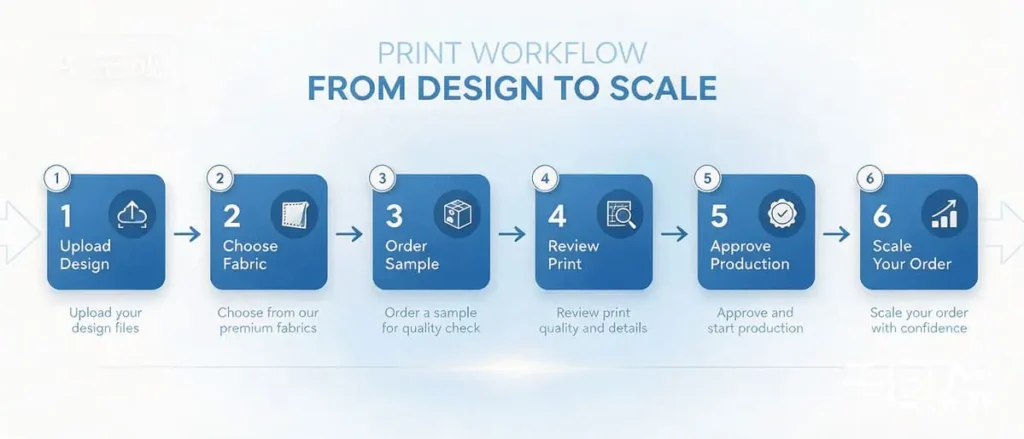
Step 1: Prepare Your Design
Start with your original artwork.
Your design can include:
- Patterns
- Illustrations
- Photos
- Logos
- Artwork
- Repeating motifs
Before production, check the artwork’s dimensions, resolution, colors, pattern scale, and repeat structure.
For more detailed preparation advice, see:
Step 2: Choose Your Fabric
The fabric should match your product requirements. When comparing material options, brands may also consider the fiber composition, sourcing practices, and sustainability characteristics of different materials. Textile Exchange publishes industry data and research on fibers and raw materials used across the textile and apparel sector.
Consider:
- Fiber composition
- Weight
- Stretch
- Texture
- Drape
- Breathability
- Durability
- Intended application
A fabric that works well for a dress may not be ideal for a structured bag or fitted sportswear product.
Step 3: Order a Sample or Small Quantity
Start with a sample or a smaller quantity when testing a new design.
This allows you to evaluate the actual printed fabric before committing to a larger run.
Step 4: Review the Printed Fabric
Check:
- Color
- Print clarity
- Pattern scale
- Fabric feel
- Drape
- Stretch
- Overall appearance
Physical inspection is particularly important because the appearance of a printed textile may differ from a digital mockup.
Step 5: Approve Production
Once the sample meets your expectations, move forward with the quantity required for your project.
Step 6: Scale When Ready
When a design performs well, increase the production quantity according to demand.
This creates a more flexible development model:
Sample → Small Batch → Market Test → Larger Production
How Much Fabric Should a Small Brand Order?
There is no single quantity that works for every project.
The right amount depends on what you are trying to accomplish.
| Project Type | Recommended Approach |
|---|---|
| Design Testing | Sample or very small quantity |
| Prototype | Small quantity |
| Product Photography | Small quantity |
| Customer Testing | Small batch |
| Limited Collection | Small to medium batch |
| Proven Best-Seller | Larger production |
For example, a startup creating its first product may need only enough fabric for several prototypes and a small initial release.
Another brand with an established product may require significantly more material.
The key is to match production quantity with actual business needs rather than ordering more fabric simply because a supplier requires a large MOQ.
Is Low MOQ Fabric Printing More Expensive?
A smaller order can sometimes have a higher per-unit cost than a large production run.
This does not necessarily mean that low MOQ printing is more expensive overall.
Consider the total business cost.
A large order may provide a lower price per meter, but it also creates a larger upfront investment and greater inventory risk.
A smaller order may have a higher unit price while reducing the amount of unsold inventory.
For a small brand, the more useful question may be:
What is the total cost and risk of the project?
Rather than:
What is the lowest possible fabric price per meter?
A balanced evaluation should consider:
- Fabric price
- Printing cost
- Sampling
- Shipping
- Production quantity
- Inventory
- Rework
- Storage
- Product demand
This is particularly important when launching a new product.
Low MOQ Does Not Mean Lower Quality
Some brands assume that a small order automatically means lower quality.
That is not necessarily true.
MOQ is a quantity requirement, not a quality standard.
Print quality depends on many factors, including:
- Fabric quality
- Fiber composition
- Printing technology
- Artwork resolution
- Color preparation
- Production settings
- Quality control
A small quantity still requires appropriate fabric selection and proper artwork preparation.
For a broader comparison of textile printing methods, see our Fabric Printing Methods: Reactive vs. Pigment vs. Sublimation Printing guide.
What Should Small Brands Look for in a Low MOQ Fabric Supplier?
Not every low-MOQ supplier will provide the same service.
Before placing an order, evaluate the complete workflow.
No MOQ or Low MOQ Options
Confirm whether the supplier truly accepts the quantity you need.
Do not assume that “small order” automatically means there is no minimum.
Fabric Selection
Check whether the supplier offers fabrics suitable for your specific application.
More fabric choices can give you greater flexibility during product development.
Custom Printing
Make sure the supplier can reproduce your artwork and support the type of pattern or design you intend to use.
Sampling
A sample or test print is valuable before full production.
Quality Consistency
Ask how the supplier manages repeat production and maintains consistency between orders. For brands evaluating textile quality, it can also be useful to understand common industry testing practices, including tests for colorfastness, abrasion resistance, dimensional change, and other fabric performance characteristics. AATCC provides standardized textile test methods covering many of these areas.
Lead Time
Production time can affect product launches and inventory planning.
Ask about estimated production and shipping times before confirming your schedule.
Global Shipping
For international brands, shipping availability and delivery options can be just as important as production.
Ability to Scale
A good supplier should ideally be able to support both your initial small order and larger production later.
This means you do not necessarily have to change suppliers when your business grows.
How Low MOQ Supports a Start-Small, Scale-Later Strategy
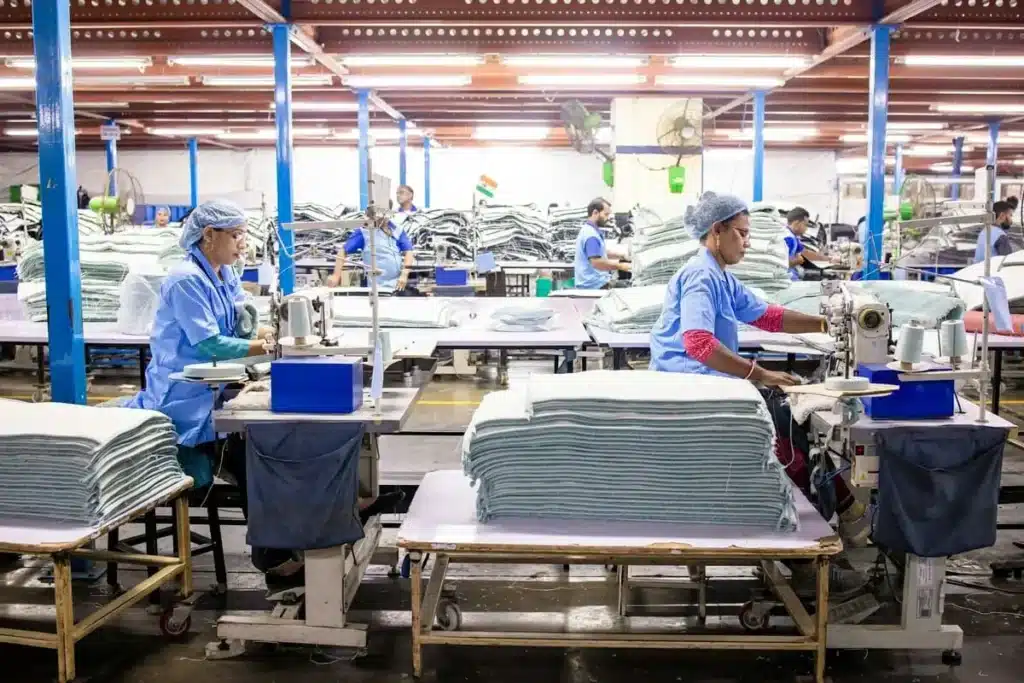
One of the most practical advantages of low-quantity fabric printing is that it supports gradual growth.
A small brand can follow a development model such as:
Stage 1: Experiment
Create several designs and evaluate them.
Stage 2: Sample
Print samples on the selected fabrics.
Stage 3: Test
Create a small number of products and introduce them to the market.
Stage 4: Measure
Review sales, customer feedback, and product performance.
Stage 5: Scale
Increase production for designs that demonstrate stronger demand.
This approach can help reduce the amount of money committed before the product is validated.
It can also make it easier for brands to experiment with new patterns and seasonal ideas.
Low MOQ Custom Fabric Printing at JCW Textile
JCW Textile provides custom fabric printing with no MOQ, supporting brands and creators that need more flexibility than traditional large-volume textile production.
This model is suitable for projects such as:
- Fabric samples
- Product prototypes
- Small collections
- Independent fashion brands
- New product testing
- Limited-edition products
- Custom textile projects
The process can start with your design and selected fabric, followed by sample evaluation and production according to your project requirements.
For brands that are still testing a concept, starting with a smaller order can reduce unnecessary inventory commitment.
When a product proves successful, production can then be increased based on actual demand.
Explore the available materials on Our Fabrics page or begin your project through Design Your Fabric.
Low MOQ Fabric Printing vs. Buying Ready-Made Fabric
Another important question is whether a small brand should print its own fabric or simply buy an existing printed textile.
Ready-made fabrics can be convenient when an available design already meets your requirements.
Custom printing becomes more valuable when you need:
- An original pattern
- A specific color palette
- Brand artwork
- A unique repeat
- A logo-based design
- A limited-edition textile
- A design that is not available commercially
For brands where visual differentiation is important, custom fabric allows the textile itself to become part of the product identity.
Common Mistakes Small Brands Should Avoid
Ordering Too Much Fabric Too Early
Do not order a large quantity simply because you are excited about a new design.
Test the concept before scaling.
Skipping Physical Samples
A digital preview cannot fully reproduce the appearance and feel of real fabric.
Choosing Fabric Only by Price
The cheapest fabric may not be appropriate for the final product.
Consider performance, construction, texture, and end use.
Ignoring Pattern Scale
The same artwork can look completely different depending on the size of the repeat.
Failing to Plan for Growth
When choosing a supplier, consider not only your first small order but also whether the supplier can support larger production later.
Start Your No MOQ Custom Fabric Printing Project
You do not always need a large production run to bring a custom textile idea to life.
For small brands, designers, startups, and product developers, low MOQ custom fabric printing can provide a practical way to test designs, develop products, launch limited collections, and reduce unnecessary inventory.
Starting small can give you more flexibility:
Create → Sample → Test → Improve → Scale
With no minimum custom fabric printing, your production strategy can be based on your actual project needs rather than a large minimum order requirement.
Ready to create your own custom printed fabric?
📚 Frequently Asked Questions (FAQs)
1. What is low MOQ custom fabric printing?
Low MOQ custom fabric printing allows customers to order customized printed fabric in smaller quantities than traditional textile production. It is useful for samples, prototypes, small collections, and product testing.
2. What does no MOQ mean for custom fabric printing?
No MOQ means there is no standard minimum order quantity required for the custom printing service. The exact ordering conditions should always be confirmed based on the fabric and project.
3. Can I order just a small amount of custom printed fabric?
Yes. A supplier offering low MOQ or no MOQ printing can support smaller fabric projects, depending on the selected fabric and production requirements.
4. Is custom fabric printing suitable for startups?
Yes. Small-batch fabric printing can help startups test designs and products without committing to large inventory quantities at the beginning.
5. Is low MOQ fabric printing more expensive per yard?
A smaller order may have a higher unit cost than a large production run. However, it can also reduce the financial risk of producing more fabric than the business needs.
6. Can I order a sample before a larger production run?
Yes. Ordering a sample is a useful way to evaluate the fabric, print quality, colors, pattern scale, and overall appearance before moving into larger production.
7. Can I increase my fabric order later?
In many cases, yes. A flexible supplier may allow brands to begin with a smaller quantity and increase production later. Confirm production conditions with your supplier before placing the initial order.
8. What types of products can use small batch printed fabric?
Small-batch printed fabric can be used for clothing, accessories, bags, quilts, home textiles, prototypes, limited collections, and many other custom textile applications.