Rayon challis is a lightweight woven fabric known for its soft texture, fluid drape, and comfortable feel against the skin. It is commonly used for dresses, blouses, skirts, and other garments that benefit from gentle movement rather than a stiff, structured shape.
But what exactly is rayon challis fabric made of? Is challis a natural fabric? And how does it compare with cotton or other rayon fabrics?
This guide explains the fiber composition, texture, breathability, clothing applications, printing considerations, and care requirements of rayon challis.
Table of Contents: What Is Rayon Challis Fabric
What Is Rayon Challis Fabric?

Rayon challis is typically a lightweight, plain-weave fabric made from rayon, often viscose rayon.
The word rayon describes the fiber, while challis describes a type of soft, lightweight woven fabric. Historically, challis has also been produced from wool and other fibers, so not every challis fabric is made from rayon.
Rayon challis is especially popular in apparel because it combines a smooth surface with a relaxed, flowing drape.
Unlike crisp woven fabrics that hold a firm silhouette, rayon challis tends to fall softly around the body.
For additional information about the composition and production of rayon, see the CFDA Fiber Guide: Rayon.
What Is Rayon Challis Fabric Made Of?
Most rayon challis sold for contemporary apparel is made from viscose rayon, a regenerated cellulose fiber.
Cellulose is obtained from plant-based sources and processed into textile fibers. Although its raw material originates from plants, rayon undergoes significant chemical processing.
For that reason, rayon is generally classified as a manufactured cellulosic fiber, rather than a natural fiber such as cotton or linen.
Is Challis a Natural Fabric?
Not necessarily.
Challis describes a fabric type, not a single fiber composition. It may be produced using wool, rayon, or other fibers.
Rayon challis contains manufactured cellulosic fibers, so describing it simply as a natural fabric would be misleading.
When buying challis, always check the supplier’s stated fiber composition.
The distinction between natural and manufactured fibers is also explained in the U.S. Federal Trade Commission’s Textile Products Identification Act.
What Does Rayon Challis Fabric Feel Like?
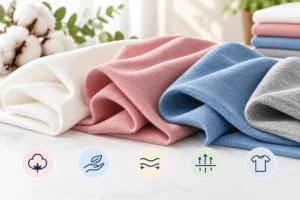
Rayon challis typically feels soft, smooth, lightweight, and flexible.
Its most recognizable characteristic is its fluid drape. Instead of standing away from the body, it follows movement and forms soft folds.
Rayon Challis Fabric Texture
The texture of rayon challis is usually:
Smooth and soft to the touch
Lightweight without a rigid hand feel
Flexible and fluid when draped
Relatively matte rather than highly glossy
Suitable for flowing garment silhouettes
Exact texture depends on the yarn, weave density, finishing process, and fabric weight.
Rayon challis is not usually as crisp as cotton poplin or as textured as many crepe fabrics.
Is Rayon Challis Breathable?
Rayon challis can be comfortable in warm weather because its lightweight construction allows air movement, while its cellulosic fibers absorb moisture.
However, breathability depends on fabric construction, thickness, finishing, and garment design. Not all rayon challis fabrics perform identically.
For summer garments, consider both fabric weight and the intended garment fit.
For a more detailed explanation of warm-weather comfort, moisture absorption, and fabric differences, read our Rayon Challis Breathability and Summer Comfort Guide, including a practical comparison with cotton poplin.
Rayon Challis Fabric vs Cotton
Rayon challis and cotton fabrics can both be suitable for everyday clothing, but their performance differs.
| Feature | Rayon Challis | Cotton Fabric |
|---|---|---|
| Fiber | Usually regenerated cellulose rayon | Natural cotton fiber |
| Drape | Generally soft and fluid | Varies widely by weave |
| Texture | Often smooth and supple | Can be crisp, soft, or textured |
| Warm-weather use | Common in flowing summer garments | Common across many summer garment types |
| Wet handling | Some viscose fabrics require extra care | Depends on cotton construction and finish |
| Typical applications | Dresses, blouses, skirts | Shirts, dresses, quilting, casualwear |
Common Uses of Rayon Challis Fabric

Rayon challis is particularly suitable for garments where softness and drape are important.
Dresses and Skirts
Its flowing character works well for relaxed dresses, gathered skirts, and garments designed to move naturally.
Blouses and Shirts
Rayon challis can create soft blouses and loose-fitting shirts without the crisp appearance associated with some shirting fabrics.
Scarves and Lightweight Accessories
Its smooth feel and flexible structure can also make it useful for certain scarves and lightweight fashion accessories.
For garment-specific guidance, read our Rayon Challis Fabric for Dresses article.
Is Rayon Challis Suitable for Custom Fabric Printing?
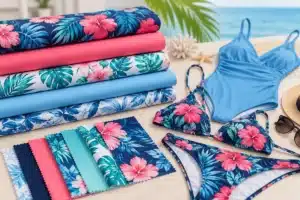
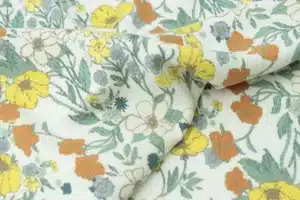
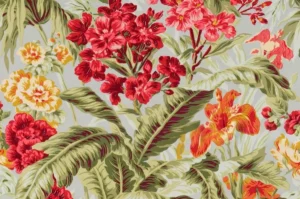
Rayon challis can be suitable for custom textile printing, particularly for fashion patterns such as florals, botanical motifs, and illustrated designs.
However, print results depend on the exact fiber composition, pretreatment, printing chemistry, finishing, and production process.
A print method suitable for one rayon fabric is not automatically suitable for every rayon challis construction.
Before committing to production, designers should evaluate:
Fabric composition and weight
Print color and detail requirements
Dimensional stability
Colorfastness requirements
Intended garment care instructions
For a broader explanation, see our Rayon Fabric Printing Guide.
How to Care for Rayon Challis Fabric
Rayon challis may require gentle handling, particularly when wet.
Always follow the care label supplied with the specific fabric. Depending on the fabric and finish, professional cleaning or gentle washing may be recommended.
When washing is permitted:
Use cool water and a mild detergent.
Avoid vigorous agitation and wringing.
Handle the wet fabric carefully.
Avoid excessive dryer heat.
Press at a suitable low-to-medium temperature, following the care label.
Some rayon challis fabrics can shrink or change dimensions during laundering. Prewashing a test piece before cutting and sewing is advisable when the supplier’s instructions allow it.
What Should Designers Check Before Buying Rayon Challis?
Before ordering rayon challis for a fashion project, confirm the following specifications with the supplier:
Fiber composition
Fabric weight in GSM
Usable width
Opacity and color base
Shrinkage and care recommendations
Compatibility with the intended printing method
Sample availability
For purchasing considerations and custom orders, see our Rayon Challis Fabric by the Yard Guide.
For guidance on identifying textile fiber content, refer to the FTC’s Textile and Wool Labeling Guide.
Final Thoughts
Rayon challis is a versatile fabric for designers who want softness, fluid movement, and a lightweight woven texture.
Understanding its fiber composition, drape, care requirements, and printing compatibility helps you select the right fabric for your project.
If you are exploring custom printed fabrics for a new collection, compare available fabric specifications and request a sample before moving into production.
📚 Frequently Asked Questions (FAQs)
1. What is rayon challis fabric?
Rayon challis is a soft, lightweight woven fabric commonly made from viscose rayon. It is valued for its fluid drape and is frequently used in dresses, blouses, and skirts.
2. Is rayon challis a natural fabric?
Rayon is a manufactured cellulosic fiber derived from plant-based cellulose. It is not classified in the same way as natural fibers such as cotton or linen.
3. What is rayon challis fabric texture like?
It is typically smooth, soft, flexible, and fluid, with a relatively matte surface. Exact texture varies with the fabric construction and finish.
4. Is rayon challis breathable?
Rayon challis can be comfortable for warm-weather clothing, although breathability varies according to fabric weight, weave, and garment construction.
5. Does rayon challis shrink?
Some rayon challis fabrics can shrink during washing or drying. Check the supplier’s care instructions and test the fabric before garment production.
6. Is rayon challis good for dresses?
Yes. Its soft drape makes it suitable for many flowing dresses and relaxed silhouettes, although it may be less appropriate for designs requiring substantial structure.