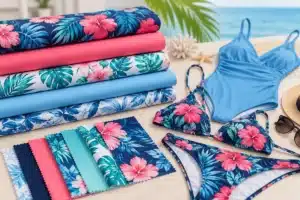
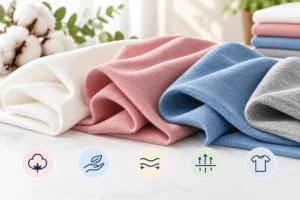
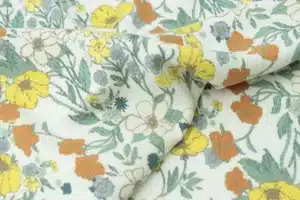
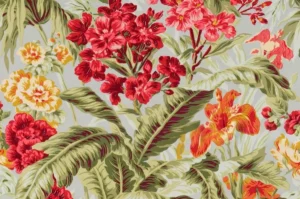
Cotton Lycra fabric printing offers an attractive option for designers and clothing brands that want custom patterns on soft, flexible cotton-rich fabrics. However, printing on a stretch knit requires more than choosing an attractive design. Fabric construction, ink or dye chemistry, artwork preparation, and finishing conditions can all affect the final result.
Cotton Lycra, also called cotton spandex or cotton elastane, combines cotton fibers with an elastic component. Its comfort and stretch make it useful for fitted T-shirts, children’s clothing, casualwear, and selected stretch apparel applications.
This guide explains how to approach cotton lycra fabric printing, compare printing methods, prepare artwork, evaluate samples, and avoid common production mistakes.
For information about fabric constructions, GSM, and purchasing specifications, read our Cotton Lycra Fabric Guide.
Table of Contents: Cotton Lycra Fabric Printing
Can You Print on Cotton Lycra Fabric?
Yes. Cotton Lycra fabrics can be printed, provided the printing process is compatible with the fiber blend, knit construction, and intended end use.
The cotton component can be colored with suitable cotton-compatible dyes or inks. The elastane component contributes stretch but may be sensitive to excessive heat, mechanical tension, and unsuitable processing conditions.
Before selecting a printing method, confirm:
The exact cotton/elastane composition.
Whether the fabric is jersey, rib, interlock, or another knit.
Fabric weight and usable width.
Expected stretch direction and recovery.
Required print appearance and hand feel.
Washing, rubbing, and durability requirements.
Two fabrics labeled “95% cotton, 5% elastane” can behave differently because their yarns, knit structures, pretreatments, and finishing histories may differ.
The practical rule: Test the actual production fabric rather than assuming that every Cotton Lycra blend will print identically.
Cotton Lycra Fabric Printing Methods Compared
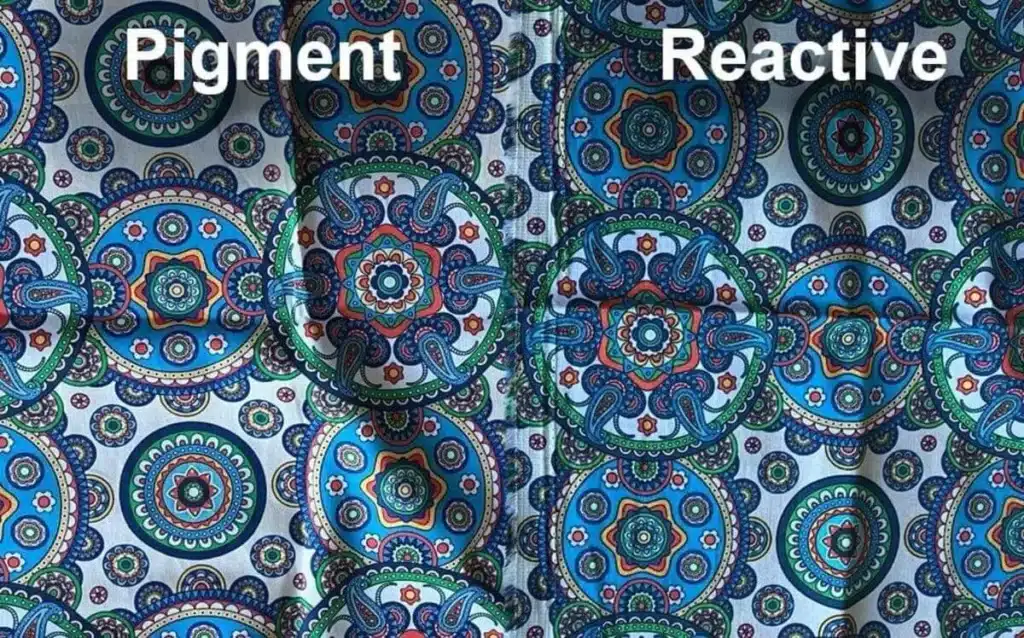
Digital textile printing can be used to produce custom artwork, repeating patterns, and multicolor designs without the same screen preparation requirements as traditional rotary or flatbed screen printing.
For cotton-rich stretch fabrics, pigment and reactive printing are two important methods to evaluate. The correct choice depends on the fabric and the available production process.| Factor | Pigment Printing | Reactive Dye Printing |
|---|---|---|
| Color mechanism | Pigment particles are held by a binder | Reactive dyes chemically bond with suitable cellulosic fibers |
| Fabric compatibility | Depends on ink system, pretreatment, and fabric | Primarily colors the cotton component |
| Hand feel | Binder may influence surface feel | Can provide a soft feel after appropriate processing |
| Processing | Typically involves drying and curing | Typically involves pretreatment, fixation, and washing |
| Stretch considerations | Binder flexibility and print-film behavior require evaluation | Knit stability and processing conditions require evaluation |
| Main quality checks | Rubbing, washing, cracking, hand feel | Colorfastness, washing, shrinkage, dimensional stability |
| Best choice | Depends on production goals and testing | Depends on fiber composition and available processing |
Pigment Printing on Cotton Lycra
Pigment printing places color particles on the fabric, where a binder helps hold them in place.
It can be useful for custom designs, but the binder system matters particularly on stretch fabrics. A print that looks acceptable when relaxed may show surface changes when stretched repeatedly.
Ask the printer to assess:
Flexibility of the printed surface.
Dry and wet rubbing fastness.
Wash durability.
Changes in hand feel.
Appearance after repeated stretching.
Do not assume that every pigment ink is equally suitable for stretch knit fabrics.
Reactive Dye Printing on Cotton Lycra
Reactive dyes are designed to react with cellulosic fibers such as cotton under suitable processing conditions.
They can be considered for cotton-rich blends, but the elastane component, pretreatment chemistry, fixation temperature, washing process, and fabric stability all require attention.
The dye does not color cotton and elastane in the same way. Therefore, the final shade and appearance depend on the material and process.
Reactive printing should be evaluated through actual production samples, particularly when the garment requires a specific color standard or dimensional tolerance.
What About Sublimation Printing?
Conventional disperse-dye sublimation printing is primarily associated with polyester-based textiles. It is not generally the first choice for ordinary cotton-rich Cotton Lycra fabric.
Specialized transfer systems may have different capabilities, but these should not be confused with conventional polyester sublimation.
For a broader comparison of textile printing technologies, see our Fabric Printing Methods Guide.
How Stretch Affects Printed Designs
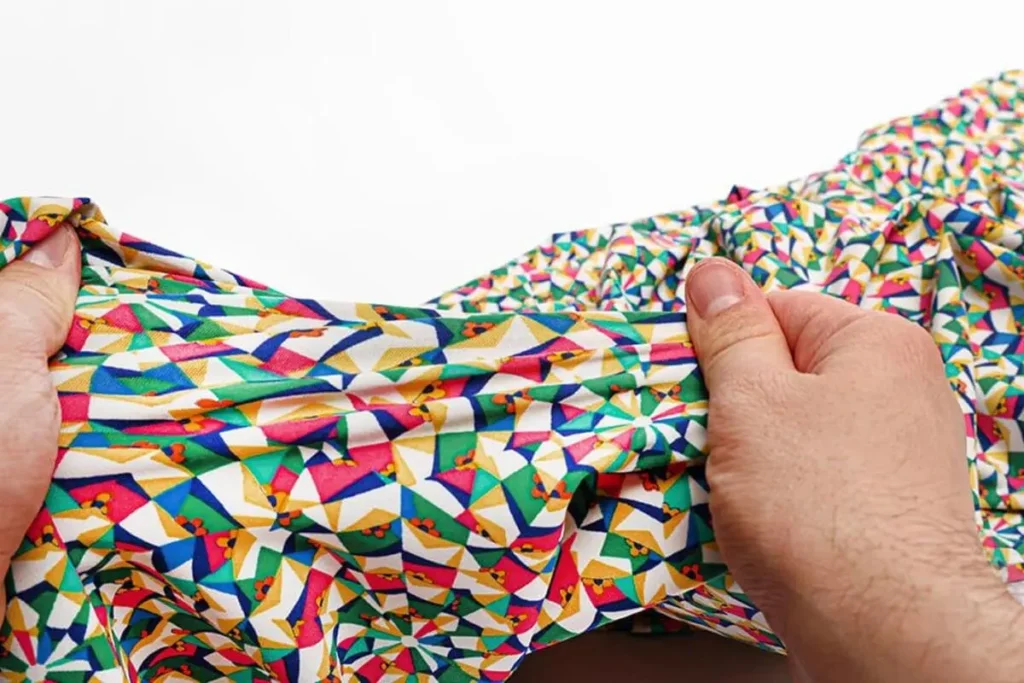
A design may look different when Cotton Lycra is stretched across the body or during sewing.
This is especially important for fitted garments, leggings, children’s clothing, and other products with significant movement.
Pattern Distortion
When a printed knit stretches, motifs can become wider or longer depending on the stretch direction.
Circles may appear oval, geometric patterns may lose their original proportions, and repeated motifs may change spacing when worn.
For fitted garments, evaluate the design at both the relaxed and expected wearing stretch.
Fine Lines and Small Details
Thin outlines, small lettering, and closely spaced elements may be more sensitive to distortion and printing variation.
Before approving a design:
Print a representative sample at actual size.
Inspect it in the relaxed state.
Stretch it to a realistic garment-use condition.
Check fine details, outlines, and motif proportions.
Repeat the inspection after washing if durability is important.
Print Surface and Flexibility
Surface-applied pigment systems require particular attention to binder flexibility.
Stretching may reveal changes that are not visible on a flat sample. The result depends on the print chemistry, fabric construction, coverage, and processing conditions.
A sample test is more useful than a general claim that a print will never crack.
Preparing Artwork for Cotton Lycra Fabric Printing
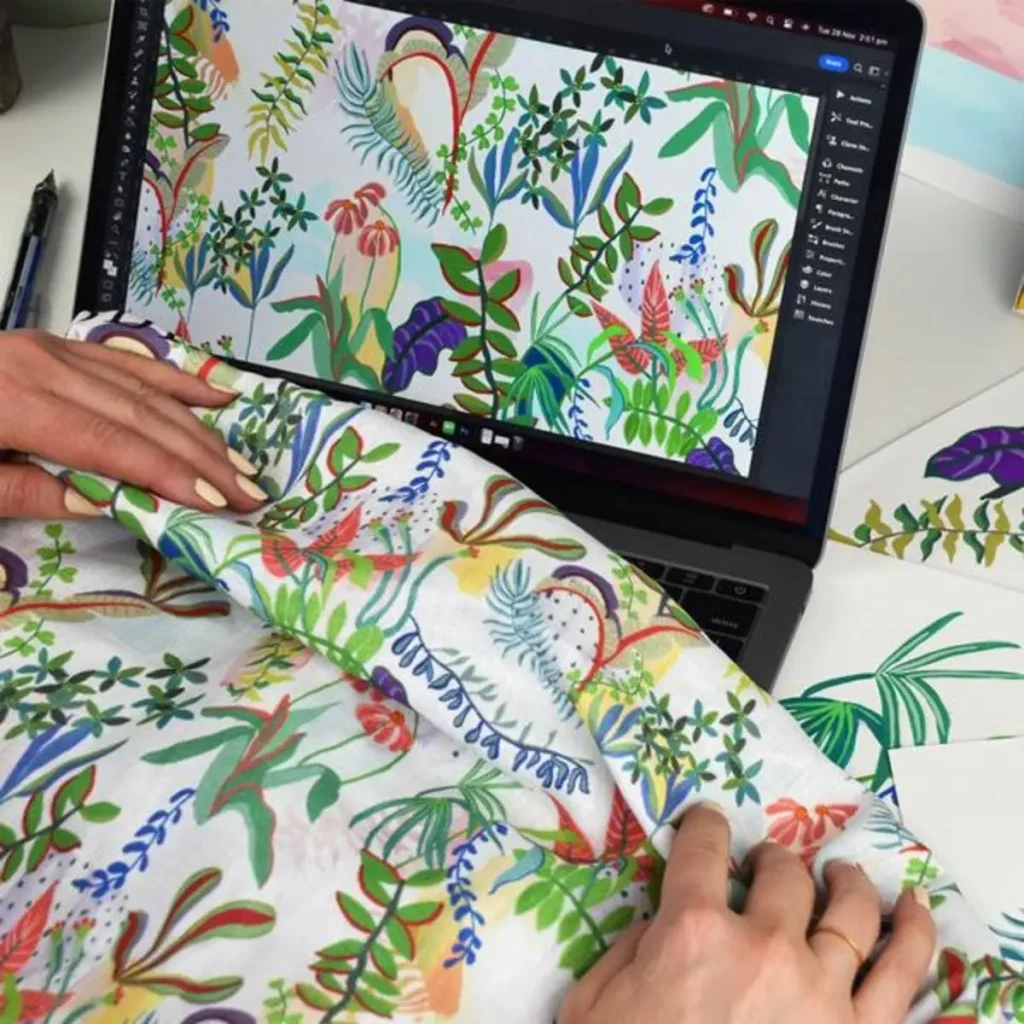
Good artwork preparation reduces avoidable production problems, although it cannot replace fabric testing.
1. Use the Correct Print Dimensions
Create the design at its intended physical size.
For a repeating pattern, confirm the repeat dimensions and whether the pattern must align across garment panels.
2. Check Image Resolution
For raster artwork, approximately 150–300 pixels per inch at final print size is a common preparation range, depending on the design, viewing distance, and printer requirements.
Simple graphics may have different requirements from detailed photographic images.
Always follow the printing supplier’s file specifications.
3. Confirm Color Expectations
A design displayed on a monitor will not necessarily match the printed fabric exactly.
Monitor calibration, color profiles, fabric whiteness, printing chemistry, and finishing can all influence the result.
For color-sensitive orders, request a physical sample or strike-off before approving bulk production.
4. Design for Stretch and Garment Placement
Consider how the fabric will stretch in the finished garment.
For example:
Large geometric patterns may show visible distortion on fitted panels.
Small repeating patterns may be more forgiving in some applications.
Logos and lettering need special placement consideration.
Seam allowances and cutting layouts may affect motif positioning.
5. Keep the Original Artwork
Retain the editable master file, along with a production-ready export.
Useful formats may include TIFF, PNG, PDF, or other formats accepted by the printer. Confirm whether embedded profiles, transparent backgrounds, or layered files are required.
For additional preparation advice, read our Artwork Preparation Guide.
Quality Testing for Custom Printed Cotton Lycra
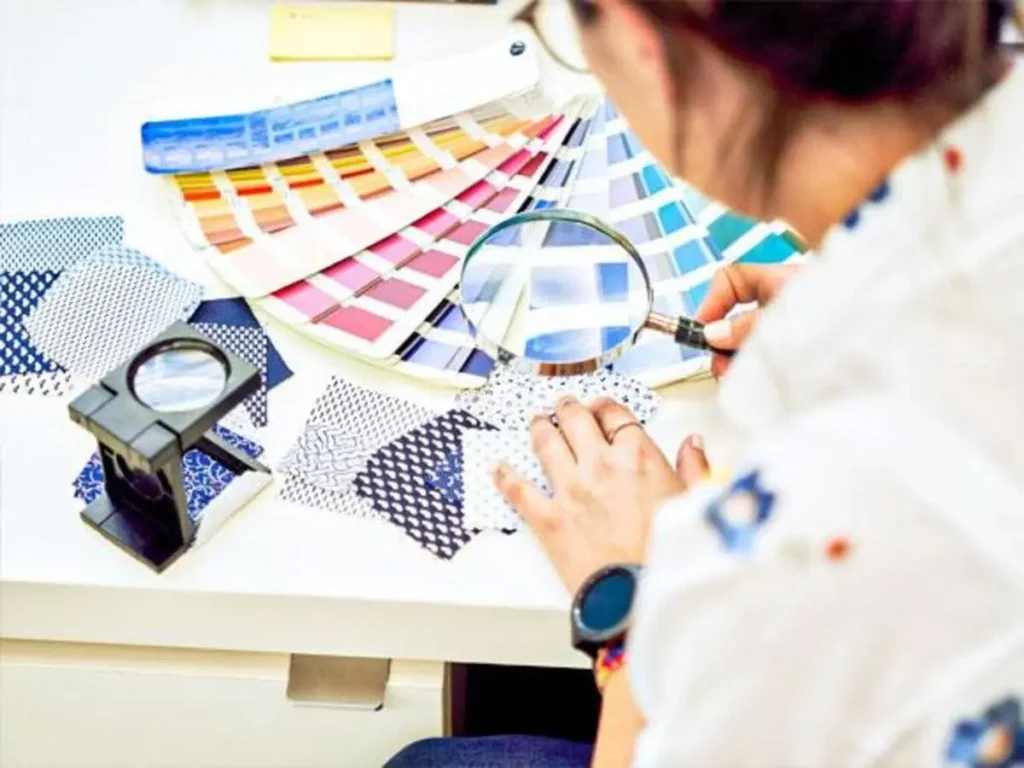
A visually attractive print is only one part of a successful fabric order.
The fabric must also meet the intended garment’s performance requirements.| Test Area | What to Examine | Why It Matters |
|---|---|---|
| Color appearance | Shade and pattern consistency | Helps identify visual differences |
| Washing fastness | Color change and staining after laundering | Important for washable garments |
| Rubbing fastness | Color transfer under dry and wet rubbing | Relevant to handling and wear |
| Dimensional stability | Length and width changes after washing | Affects garment sizing |
| Stretch and recovery | Extension and return toward original dimensions | Important for fitted clothing |
| Print appearance after stretching | Cracking, distortion, or surface change | Evaluates print suitability |
| Hand feel | Softness, stiffness, or surface coating | Influences comfort and drape |
Common Cotton Lycra Printing Mistakes
Choosing a Method Based Only on Fabric Name
“Cotton Lycra” does not specify the exact knit, finishing process, or elastane content.
Better approach: Confirm the material specifications and run a print trial.
Ignoring Stretch During Design Approval
Flat fabric photographs do not show how artwork will appear on a fitted garment.
Better approach: Evaluate the sample under realistic extension.
Skipping Washing Tests
A print may look good immediately after production but change after laundering.
Better approach: Test the finished printed fabric using agreed washing conditions.
Assuming Screen Colors Will Match Fabric Colors
Digital artwork and printed textile colors can differ.
Better approach: Approve a physical strike-off when color accuracy is important.
Using Excessive Heat Without Validation
Elastane-containing fabrics can be sensitive to inappropriate thermal processing.
Better approach: Follow the fabric and printing system’s validated processing requirements.
Ordering Bulk Fabric Before Approving a Sample
Large orders magnify small errors in artwork, shade, and material selection.
Better approach: Approve the fabric specification and printed sample before proceeding.
How to Order Custom Printed Cotton Lycra Fabric
At JCWTextile, we support custom fabric printing projects for independent designers, clothing brands, and businesses ordering small or larger quantities.
A practical ordering workflow includes the following stages.
Step 1: Share Your Artwork
Provide your design file, repeat dimensions, intended colors, and any placement requirements.
Step 2: Confirm the Fabric
Specify the desired cotton/elastane composition, knit construction, GSM, width, and intended garment use.
If you are unsure which fabric is appropriate, request guidance before finalizing the order.
Step 3: Review Printing Requirements
Discuss the available printing method, color expectations, artwork preparation, and any special performance requirements.
Step 4: Approve a Sample When Needed
For color-sensitive, technical, or larger projects, review a physical sample before production.
Step 5: Confirm Quantity and Shipping
Confirm the yardage, production requirements, destination country, and shipping quotation.
International shipping charges may be quoted separately based on order weight, yardage, and destination.
Planning a custom Cotton Lycra collection? Contact JCWTextile with your fabric specifications and artwork to discuss the appropriate printing options.
Final Thoughts
Successful cotton lycra fabric printing depends on matching the fabric, artwork, printing chemistry, and quality requirements.
The most important decisions are not simply whether Cotton Lycra can be printed, but which process suits the material, how the design behaves during stretching, and what testing is needed for the finished garment.
By confirming specifications, preparing artwork carefully, and reviewing samples before production, designers can make more informed decisions and reduce avoidable printing problems.
Explore our Cotton Lycra Fabric Guide for more information about fabric types and GSM, or contact JCWTextile to discuss your custom printing project.
📚 FAQ About Cotton Lycra Fabric Printing
1. Can Cotton Lycra fabric be digitally printed?
Yes. Cotton Lycra can be digitally printed using a compatible process. The best method depends on fiber composition, fabric construction, pretreatment, and production requirements.
2. Is pigment printing suitable for stretch fabric?
It can be, provided the ink and binder system are suitable for the fabric’s expected extension and use. Sample testing should include stretch appearance, rubbing, and washing performance.
3. Is reactive printing better than pigment printing for Cotton Lycra?
Not necessarily. Reactive and pigment systems have different processing requirements and performance characteristics. The better choice depends on the fabric, desired finish, available equipment, and quality requirements.
4. Will printed Cotton Lycra crack when stretched?
Not every printed fabric will crack, but cracking or surface changes are possible with some printing systems and conditions. Evaluate the actual print under realistic stretch and laundering conditions.
5. What resolution should artwork have for fabric printing?
Approximately 150–300 PPI at final print size is a common starting range for raster designs, but the appropriate resolution depends on the artwork and printer specifications.
6. Can I print photographs on Cotton Lycra?
Photographic artwork may be possible with a suitable digital printing process. Image detail, color reproduction, and fabric surface characteristics should be checked using a sample.
7. Does Cotton Lycra shrink after printing or washing?
Shrinkage depends on the knit construction, processing history, finishing, and laundering conditions. Request dimensional stability information or conduct testing rather than assuming a fixed shrinkage percentage.
8. Can I order custom printed Cotton Lycra in small quantities?
JCWTextile offers custom fabric printing without a minimum order quantity for applicable services. Confirm fabric availability, sampling arrangements, and order-specific requirements before production.