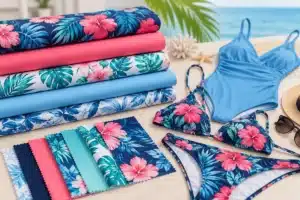
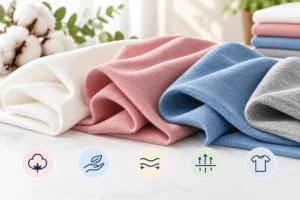
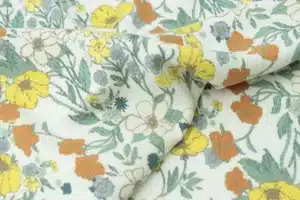
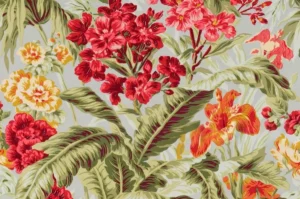
Cotton Lycra fabric has become one of the most popular materials in the fashion and textile industry—valued for its comfort, breathability, and excellent stretch recovery. Whether you are a designer, fabric retailer, small business owner, or DIY sewing enthusiast, understanding this fabric can help you choose the right cotton lycra material for clothing, kidswear, sportswear, and more.
In this comprehensive guide, we’ll explore the meaning, types, uses, GSM selection, and buying tips for cotton lycra fabric—with practical advice to help you select the best cotton lycra fabric by the yard for your needs.
Table of Contents: Cotton Lycra Fabric Guide
What is Cotton Lycra Fabric?
Cotton Lycra fabric—also known as cotton lycra cloth or cotton lycra material—is a soft and breathable knit fabric made from a blend of Cotton and Lycra (also known as Spandex or Elastane). This combination offers the perfect balance of natural comfort and stretch.
Composition & Characteristics
Most cotton lycra fabrics come in blends such as:
| Cotton | Lycra (Spandex) | Characteristics |
|---|---|---|
| 95% | 5% | Soft, stretchy, durable, ideal for apparel |
| 92% | 8% | Higher elasticity, suitable for sports & activewear |
| 90% | 10% | Very elastic, body-hugging garments |
Key Advantages:
Breathable and gentle on the skin
2-way or 4-way stretch
Excellent shape retention
Flexible and suitable for daily wear
Comfortable for long hours of use
Unlike 100% cotton, cotton lycra material does not lose shape easily, making it perfect for fitted garments.
For certified safety and quality standards, cotton lycra fabrics often comply with OEKO-TEX Standard 100 regulations, ensuring they are free from harmful chemicals.
Cotton Lycra vs. 100% Cotton
| Feature | 100% Cotton | Cotton Lycra Fabric |
|---|---|---|
| Stretch | Minimal | Moderate to high stretch |
| Comfort | Soft & breathable | Softer + flexible comfort |
| Shape Retention | May lose form | Holds shape well |
| Best For | Loose clothing | Fitted or stretch garments |
Conclusion: If you need stretch, comfort, and a body-flattering fit, cotton lycra cloth is the better choice.
Types of Cotton Lycra Fabric (With GSM Guide)
Choosing the right cotton lycra material depends heavily on its GSM (grams per square meter)—a measure of fabric thickness and weight.
Below is a helpful guide for selecting the right option:
| Type | GSM Range | Stretch | Best For |
|---|---|---|---|
| Lightweight Cotton Lycra | 140–180 GSM | 2-way or light 4-way stretch | Baby clothing, summer tops, innerwear |
| Medium Weight Cotton Lycra | 180–220 GSM | 4-way stretch | T-shirts, leggings, dresses, athleisure |
| Heavy Cotton Lycra | 220–280 GSM | High 4-way stretch | Hoodies, joggers, maternity wear, winter clothing |
How to Choose the Right GSM
For Leggings: 200–240 GSM
For T-shirts: 180–200 GSM
For Children’s Clothing: 160–200 GSM
For Yoga/Activewear: 200–260 GSM
If you need help choosing the ideal GSM for your product, explore more textile guides at our Blog.
Cotton Lycra Fabric: Comfort, Stretch and Recovery
One of the main reasons cotton lycra fabric is widely used in everyday clothing is its combination of softness, flexibility, and shape retention. Cotton contributes a comfortable hand feel and moisture absorption, while the elastane component allows the fabric to stretch and recover during movement.
However, not all cotton lycra fabrics offer the same level of comfort or elasticity. The final performance depends on the fiber composition, knit construction, fabric weight (GSM), and finishing process.
What Makes Cotton Lycra Fabric Comfortable?
Cotton lycra fabric can provide a soft, flexible feel that makes it suitable for garments worn close to the skin. Its comfort depends on several factors:
Softness: Cotton fibers contribute a naturally soft hand feel, although yarn quality and fabric finishing also affect the result.
Flexibility: Elastane helps the fabric accommodate body movement without excessive restriction.
Breathability: Cotton-rich knit fabrics can allow air and moisture vapor to pass through, but performance varies with fabric thickness, density, and construction.
Fit: A suitable combination of stretch and recovery helps fitted garments move with the wearer.
Fabric weight also matters. Lightweight cotton lycra jersey may feel more suitable for T-shirts and layering, while heavier constructions can provide greater coverage and structure.
Higher GSM does not automatically mean better quality or comfort. The appropriate weight depends on the intended garment.
Stretch vs. Stretch Recovery: What's the Difference?
Although stretch and recovery are closely related, they describe different fabric properties.
Stretch refers to how much a fabric extends when force is applied. Stretch recovery describes how well it returns toward its original dimensions after the force is removed.A fabric may stretch easily but still lose its shape after repeated use if its recovery performance is inadequate.| Property | What It Means | Why It Matters |
|---|---|---|
| Stretch | The fabric extends under tension | Allows freedom of movement |
| Stretch recovery | The fabric returns toward its original size after extension | Helps garments retain their fit |
| Four-way stretch | The fabric stretches in both lengthwise and widthwise directions | Useful for garments requiring multidirectional movement |
| Dimensional stability | The fabric resists unwanted size changes during washing and use | Helps maintain garment measurements |
How GSM and Knit Construction Affect Comfort
Fabric weight and knit construction influence how cotton lycra feels, drapes, and performs in finished clothing.
For example:
Cotton Lycra Jersey: Often selected for soft, flexible everyday garments. Its appearance and stability depend on yarn and knitting specifications.
Cotton Lycra Interlock: A double-knit construction that may offer a smoother, more substantial feel and improved coverage compared with some single-jersey fabrics.
Cotton Lycra Rib: Commonly used where flexibility and close fit are important, including cuffs, neckbands, and selected fitted garments.
These are general construction characteristics rather than guaranteed performance specifications. Fabrics with the same GSM can behave differently depending on how they are manufactured.
When choosing cotton lycra fabric for a clothing project, consider the following:
Confirm the cotton and elastane percentages.
Select the appropriate GSM and knit construction.
Check stretch direction and recovery.
Evaluate softness, coverage, and drape using a physical sample.
Review dimensional stability and care requirements before bulk production.
For garments that will be custom printed, the fabric’s stretch and recovery should also be considered during artwork development. Learn more in our Cotton Lycra Fabric Printing Guide.
By considering comfort, stretch, recovery, and fabric construction together, designers can select cotton lycra materials that better match their garment requirements.
Common Uses of Cotton Lycra Fabric

Cotton lycra fabric is incredibly versatile and widely used in both the fashion and sportswear industries. Here are the top applications:
1. T-shirts and Everyday Wear
Soft, breathable, and stretchable—perfect for casual, everyday comfort.
2. Kids & Baby Clothing
Because cotton lycra cloth is gentle and safe on sensitive skin, it’s a preferred choice for baby rompers, pajamas, and children’s apparel.
3. Sportswear & Activewear
The 4-way stretch makes it ideal for yoga pants, cycling shorts, athletic tops, and activewear that requires flexibility.
4. Dresses & Fashion Apparel
Its drape and elasticity make it suitable for dresses, skirts, tops, and fitted fashion apparel.
5. Maternity & Innerwear
The elasticity adapts to the body and provides flexibility, making it ideal for maternity outfits, underwear, and loungewear.
Cotton Lycra Fabric by the Yard: Buying Guide

If you’re planning to buy cotton lycra fabric by the yard—whether for retail, manufacturing, or DIY sewing—here are key factors to consider:
1. Check the Fabric Composition
The blend ratio impacts stretch, comfort, and pricing:
95/5 Cotton Lycra → Best overall balance for apparel
92/8 Cotton Lycra → More stretch for sportswear or leggings
90/10 Cotton Lycra → Maximum stretch for body-fit clothing
For most clothing brands, 95/5 remains the most popular and recommended choice.
2. Select the Right GSM
Match the GSM to the product type (see chart in previous section).
Tip: For opaque leggings or gym wear, avoid GSM below 200.
3. Printed vs. Solid Colors
Solid Cotton Lycra Fabric: More affordable, versatile
Digital Printed Cotton Lycra: Ideal for unique designs, brand customization
If your business sells kids clothing or boutique fashion apparel, printed cotton lycra by the yard offers higher retail value.
4. Wholesale or Retail Purchase
| Purchase Type | Suitable For | Pricing Advantage |
|---|---|---|
| Retail (1–10 yards) | DIY crafters, samples | Higher per-yard price |
| Bulk/Wholesale (50+ yards) | Clothing brands, workshops | Lowest cost per yard |
5. Trusted Supplier Selection (Important!)
✔ Fabric quality consistency
✔ Stretch recovery & durability tests
✔ Eco-friendly or OEKO-TEX certification availability
✔ Custom printing capabilities
⭐ Why Choose Us as Your Cotton Lycra Fabric Supplier?
Our advantages include:
✔ Custom digital printing with vibrant and long-lasting colors
✔ Various GSM options (140–280 GSM)
✔ Soft, breathable, and premium stretch quality fabrics
✔ Low MOQ to support small businesses and startups
✔ Global shipping available
For wholesale inquiries or custom printing requests, feel free to contact us — we are happy to support your brand’s growth.
You may learn more about who we are on our About Us page.
Cotton Lycra vs. Cotton Spandex: Are They the Same?
Many buyers wonder: Is cotton lycra the same as cotton spandex?
The answer: Yes — in most cases.
Lycra is a trademarked brand name for Spandex (mainly used in Europe).
Spandex is the generic fiber name (used in the US and globally).
So “cotton lycra fabric” and “cotton spandex fabric” often refer to the same product.
Care & Washing Instructions for Cotton Lycra Fabric
To maintain elasticity, color quality, and garment lifespan, follow these care tips:
✅ Washing Care
Wash in cold or lukewarm water
Use mild detergent (avoid bleach)
Turn garments inside out before washing
💨 Drying
Air dry flat or hang dry
Avoid tumble drying at high heat as it may reduce elasticity
🧺 Ironing & Maintenance
Iron at a low temperature
Avoid direct heat on printed designs
Do not wring or stretch while drying
Pro Tip: Add fabric softener sparingly to maintain softness without damaging the Lycra fibers.
Conclusion
Cotton Lycra fabric is a versatile, comfortable, and stretch-friendly material that is ideal for everyday clothing, children’s wear, activewear, and customized apparel. With the right GSM, blend ratio, and supplier, you can create high-quality and fashionable garments that feel great and last longer.
Whether you’re buying cotton lycra fabric by the yard for personal projects or bulk sourcing for your brand, understanding the key selection criteria will help you make smarter purchasing decisions.
If you’re looking for premium quality cotton lycra fabric with reliable stretch and durable printing results, we are here to help.
📚 Frequently Asked Questions (FAQs)
1. Is cotton lycra fabric good for summer?
Yes. Cotton lycra is breathable, moisture-friendly, and soft on the skin, making it suitable for summer clothing and daily wear (Textile School).
2. Is cotton lycra safe for baby clothes?
Absolutely. Cotton lycra cloth is soft, hypoallergenic, and gentle on sensitive skin, making it a top choice for baby and kidswear.
3. Does cotton lycra shrink after washing?
It may shrink slightly (3–5%) during the first wash. To minimize shrinkage, wash in cold water and avoid high-heat drying.
4. What GSM is best for leggings and activewear?
For leggings, choose 200–240 GSM. For activewear or yoga outfits, 220–260 GSM provides better opacity and durability.
5. Is cotton lycra the same as cotton spandex?
Yes. Lycra is a brand name for Spandex. Cotton lycra and cotton spandex usually refer to the same type of stretchable cotton fabric.
6. Can I use cotton lycra for sportswear?
Yes. Medium to heavy-weight cotton lycra material (180–260 GSM) offers excellent stretch and recovery, ideal for sportswear and gym clothing.
7. How much stretch does cotton lycra fabric have?
Most cotton lycra fabrics offer 2-way or 4-way stretch, depending on composition. 95/5 blends typically provide a comfortable 4-way stretch suitable for fitted clothing.