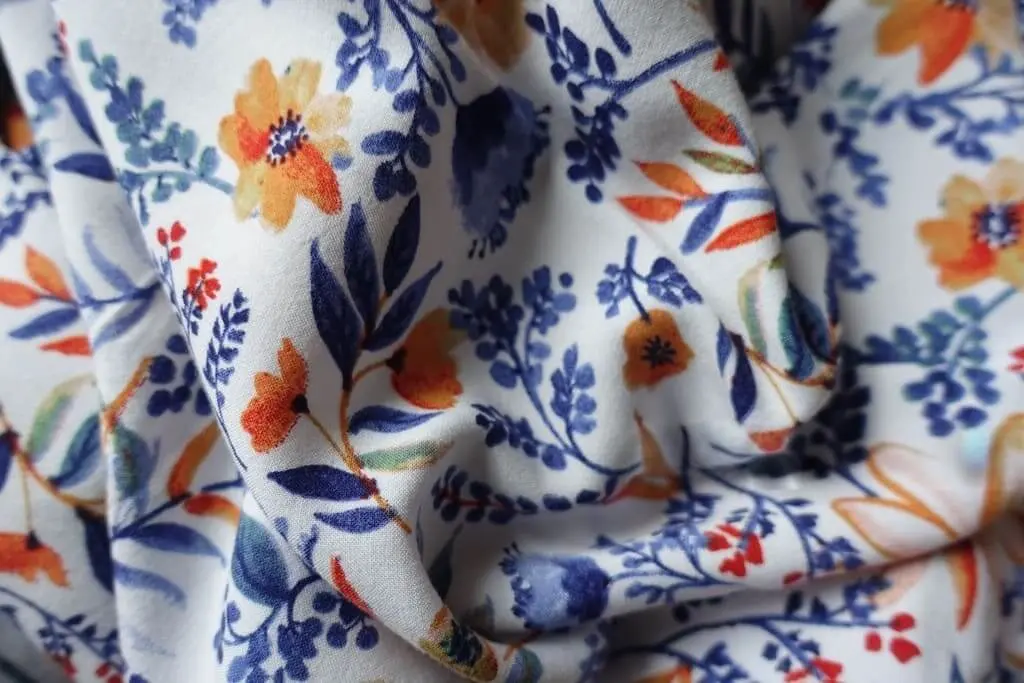
Rayon viscose fabric is widely used in fashion and textile design for its soft feel, fluid drape, and versatility. From lightweight dresses and blouses to scarves and custom-printed clothing collections, rayon and viscose fabrics offer a wide range of creative possibilities.
However, one question often causes confusion: What is the difference between rayon and viscose?
Viscose is actually a type of rayon. Although the terms are sometimes used interchangeably in the textile industry, fabric performance depends on more than the fiber name alone.
For designers and clothing brands, understanding fabric construction, weight, printing compatibility, and finishing requirements is essential when selecting materials for a new collection.
In this guide, we explain rayon and viscose fibers, compare popular fabric types, explore digital printing considerations, and provide practical advice for choosing suitable fabrics for custom printing.
1. Why Rayon and Viscose Matter in Modern Textile Design
Rayon-based fabrics are popular in apparel design because they can combine a soft hand with attractive drape and comfortable wear.
Depending on their construction and finishing, these fabrics may be suitable for:
Dresses and skirts
Blouses and shirts
Scarves and fashion accessories
Lightweight summer clothing
Boutique fashion collections
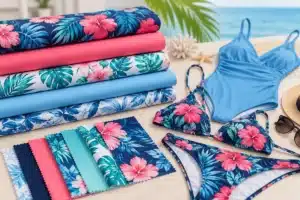
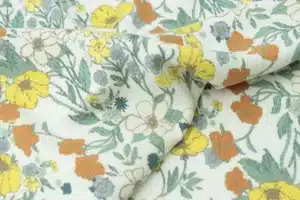
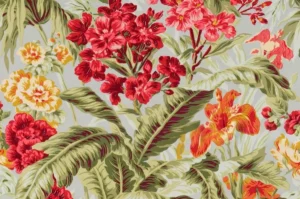
Custom printed textiles
Rayon fabrics are available in different weights, weaves, and surface finishes, making them adaptable to a variety of design requirements.
For independent designers, the ability to print original artwork on suitable rayon fabrics also creates opportunities to develop distinctive collections without relying entirely on ready-made prints.
When choosing rayon or viscose, it is important to evaluate the actual fabric rather than making decisions based only on its fiber description.
2. What Is Rayon Fabric?
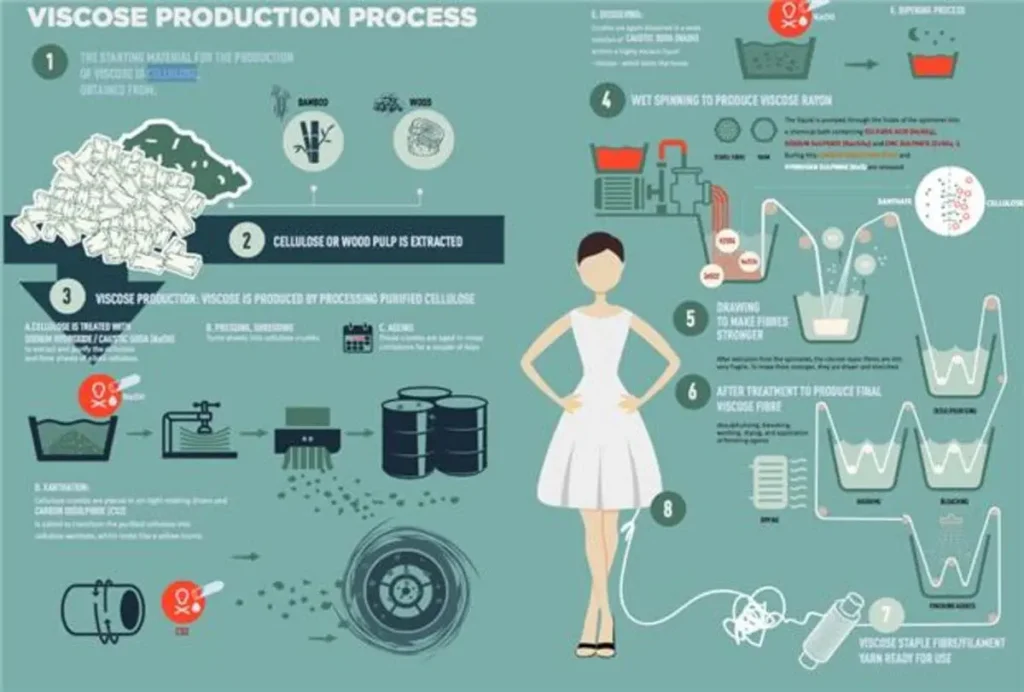
Rayon is a broad category of manufactured fibers produced from regenerated cellulose.
Cellulose is commonly obtained from plant-based materials such as wood pulp and processed into fibers that can be spun into yarns and manufactured into fabrics.
Rayon is generally classified as a manufactured cellulosic fiber rather than a natural fiber such as cotton or linen.
How Is Rayon Made?
The production process varies depending on the type of rayon.
In general, cellulose is obtained from a suitable raw material, processed into a form that can be regenerated, and converted into fibers.
Different manufacturing technologies produce different types of regenerated cellulose fibers.
For example:
Viscose rayon: Produced through the viscose manufacturing process.
Modal: A type of regenerated cellulose fiber produced under specific processing conditions.
Lyocell: A related regenerated cellulose fiber manufactured using a different solvent-based process.
Although these fibers share a cellulosic origin, they should not be assumed to have identical performance characteristics.
Key Characteristics of Rayon Fabrics
Depending on fabric construction, rayon textiles can offer:
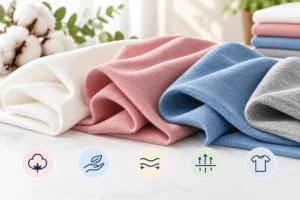
A soft and smooth hand
Fluid drape
Good moisture absorption
A variety of fabric weights
Different surface textures
Suitability for selected textile printing processes
However, rayon fabrics can also require careful handling during washing, finishing, and garment production.
Dimensional stability, wet strength, and care requirements should be evaluated for the specific fabric.
3. What Is Viscose Fabric?
Viscose is a type of rayon manufactured using the viscose process.
In many textile markets, the term viscose is used to describe fabrics made from viscose rayon fibers.
The word rayon may be used as a broader fiber classification, while viscose identifies a particular manufacturing process.
This means that viscose is not automatically a separate or superior alternative to rayon.
Common Characteristics of Viscose Fabrics
Viscose fabrics are frequently selected for garments requiring softness and drape.
Depending on their weave, weight, yarn characteristics, and finishing, they may be suitable for:
Flowing dresses
Blouses and tunics
Skirts
Lightweight shirts
Scarves
Printed fashion fabrics
Viscose can absorb moisture, but actual garment comfort depends on additional factors, including fabric thickness, construction, fit, and environmental conditions.
Is Viscose the Same as Rayon?
Viscose is a type of rayon, but not every fiber described as rayon is necessarily produced using the viscose process.
For fabric buyers, the terms may overlap in commercial descriptions.
The most reliable approach is to request the actual fiber composition and fabric specifications before making purchasing decisions.
For additional guidance on textile fiber terminology and labeling, see the FTC’s textile fiber labeling guidance, which explains the relationship between rayon and viscose terminology.
4. Rayon vs. Viscose: What's the Difference for Fabric Printing?
Is rayon the same as viscose? Viscose is a type of rayon, a broader category of regenerated cellulose fibers.
In everyday fabric descriptions, the terms rayon and viscose are sometimes used interchangeably, particularly when referring to viscose-process rayon.
However, they should not automatically be treated as two separate materials with predictable differences in softness, color vibrancy, price, or print quality.
For designers, the more useful comparison is between the specifications of actual fabrics, including rayon challis, rayon twill, rayon poplin, and other viscose-based textiles.
Rayon vs. Viscose Fabric Comparison
| Factor | What Designers Should Know |
|---|---|
| Fiber classification | Viscose is a type of rayon |
| Manufacturing process | Viscose refers to a specific regenerated cellulose production process |
| Softness | Depends on yarn, fabric construction, and finishing |
| Drape | Influenced by fabric weight, weave, and finishing |
| Print vibrancy | Depends on fabric preparation, ink chemistry, color management, and fixation |
| Print sharpness | Influenced by surface structure, artwork, and printing conditions |
| Dimensional stability | Requires evaluation of the actual fabric and production process |
| Price | Depends on fabric specifications, sourcing, and order quantity |
Which Prints Better: Rayon or Viscose?
There is no universal winner because viscose is itself a type of rayon.
A smooth, well-prepared viscose challis may produce excellent printed results, while a rayon twill or poplin may offer different advantages in structure, surface texture, and garment construction.
For reliable comparisons, evaluate actual fabric samples using the same artwork and appropriate printing conditions.
What Should You Test Before Bulk Printing?
Before selecting a fabric for a clothing collection, consider:
Color appearance: Compare printed samples under consistent lighting.
Print definition: Check fine lines, edges, and small design details.
Dimensional stability: Evaluate changes after printing, finishing, and washing.
Fabric hand: Check softness and drape after printing.
Wash performance: Request suitable colorfastness and care testing when required.
Garment suitability: Confirm weight, usable width, construction, and intended use.
These checks provide more reliable information than assuming one fabric will perform better simply because it is labeled rayon or viscose.
For a deeper explanation of printing techniques, read our Rayon Fabric Printing Guide.
5. Types of Rayon Fabrics for Printing
Rayon fibers can be manufactured into fabrics with different constructions, weights, textures, and applications.
Understanding these differences helps designers choose a suitable base fabric for custom printing.
5.1 Rayon Challis Fabric
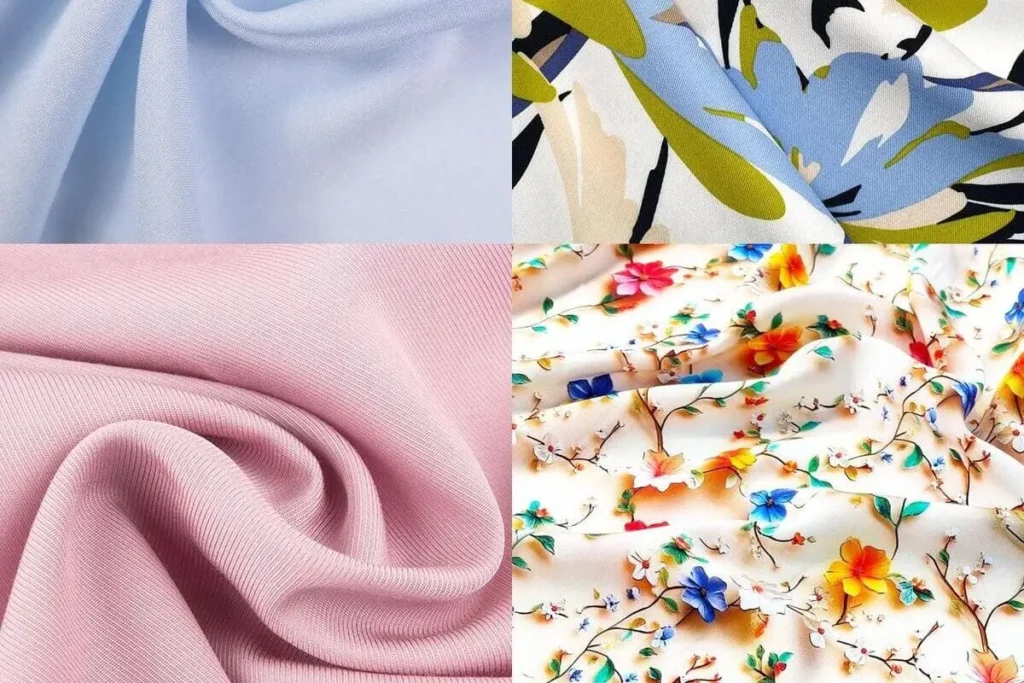
Rayon challis is a lightweight woven fabric known for its soft feel and fluid drape.
It is commonly used for:
Dresses
Blouses
Skirts
Loose-fitting shirts
Lightweight fashion garments
Rayon challis is particularly suitable for designs that benefit from movement and a flowing silhouette.
However, fabric weight, transparency, and dimensional stability should be checked before production.
For a detailed explanation of this material, read our What Is Rayon Challis Fabric? guide.
Designers looking to develop their own printed collections can also explore our Rayon Challis Fabric by the Yard purchasing guide.
5.2 Rayon Twill Fabric
Rayon twill is characterized by a diagonal weave structure.
Depending on its weight and finishing, rayon twill may provide a more structured appearance than lightweight challis.
Common applications include:
Dresses
Skirts
Shirts
Relaxed trousers
Fashion accessories
When evaluating rayon twill for printing, consider:
Fabric weight
Usable width
Surface texture
Drape
Dimensional stability
Intended garment construction
The diagonal weave may influence the appearance of very fine printed details, depending on the fabric surface and printing conditions.
For custom printing projects, request the current specifications and assess a sample when necessary.
5.3 Rayon Poplin Fabric
Rayon poplin is generally associated with a plain-weave construction.
Depending on its specifications, it can offer a relatively smooth surface and a more defined fabric structure than some lightweight flowing materials.
Potential applications include:
Shirts
Blouses
Dresses
Coordinated clothing sets
Printed fashion accessories
When selecting rayon poplin, check its actual weight, width, finishing, and hand.
A smooth surface can be useful for detailed prints, but final print quality depends on the complete printing process.
5.4 Other Rayon-Based Fabrics
Other rayon-based fabrics may include satin, jersey, and specialty woven or knitted constructions.
Each fabric has different characteristics.
For example, a rayon satin may have a smooth, lustrous surface, while a rayon jersey may offer stretch through its knitted construction.
These fabrics should be evaluated individually rather than treated as interchangeable.
6. Viscose Fabrics for Printing
Viscose fibers can be used to produce a wide range of woven and knitted fabrics.
The suitability of a viscose fabric for digital printing depends on its composition, construction, preparation, and the printing process used.
6.1 Choosing Viscose Fabric by Construction
Before selecting a viscose fabric, consider whether the project requires:
Lightweight drape
A smooth print surface
A structured garment silhouette
A knitted or woven construction
Specific stretch characteristics
Particular care and durability requirements
These characteristics are determined by the actual textile specifications, not simply by the word viscose.
6.2 Viscose for Digital Printing
Digital textile printing can be used on suitable viscose fabrics when the printing process is compatible with the material.
Important factors include:
Fabric preparation
Ink compatibility
Pretreatment
Color management
Fixation
Washing and finishing
Dimensional stability
Reactive and pigment printing are among the processes that may be considered for suitable cellulosic fabrics, depending on the equipment and production requirements.
Not every process is appropriate for every viscose fabric.
For consistent results, the printing method should be selected according to the actual substrate and the intended end use.
7. Printing on Rayon & Viscose: What You Need to Know
Successful digital printing requires more than selecting an attractive base fabric.
Artwork preparation, fabric condition, ink chemistry, and finishing can all influence the final result.
7.1 Preparing Artwork for Rayon Printing
Before submitting artwork, check:
Image resolution
Print dimensions
Pattern repeat
Color requirements
Fine design details
Intended garment layout
For detailed artwork, 300 PPI at the intended print size is a common starting reference, although the optimal resolution depends on the design and printing process.
A repeat pattern should be checked for visible seams or unexpected scale changes.
7.2 Color Appearance and Print Sharpness
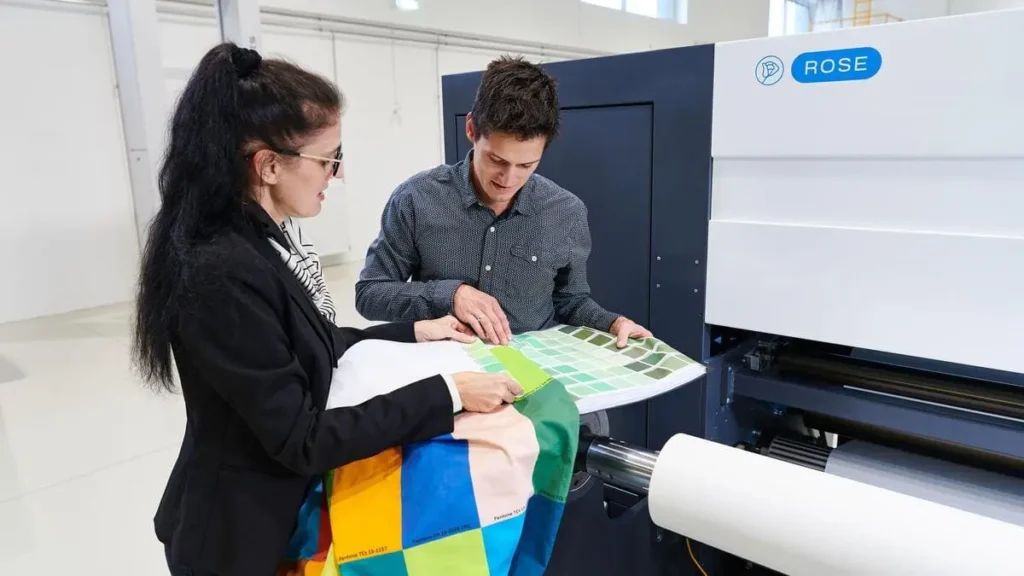
Printed colors may appear different on different fabrics.
Factors affecting color appearance include:
Fabric color and surface
Ink formulation
Pretreatment
Printing settings
Fixation and finishing
Lighting conditions
A sample print can help designers evaluate whether the colors and details match their expectations.
7.3 Dimensional Stability and Fabric Hand
Some rayon fabrics can change dimensions during wet processing or washing.
Before bulk production, consider testing the fabric for:
Shrinkage
Distortion
Changes in softness
Surface appearance
Colorfastness
Care performance
The appropriate testing program depends on the intended product and customer requirements.
For projects requiring formal dimensional stability evaluation, AATCC TM135 provides a standardized method for measuring fabric dimensional changes after home laundering.
7.4 Selecting the Right Printing Process
There is no single printing process that is automatically best for every rayon or viscose fabric.
For a more detailed comparison of techniques, visit our Rayon Fabric Printing Guide.
8. Sustainability: Is Rayon/Viscose Eco-Friendly?
Rayon and viscose are manufactured from regenerated cellulose, often sourced from wood pulp.
However, their environmental impact depends on forest management, pulp sourcing, chemical processing, emissions, wastewater treatment, and manufacturing practices.
Traditional viscose production should not automatically be described as a closed-loop process.
Different regenerated cellulose production technologies have different chemical recovery systems and environmental profiles.
Responsible Cellulose Sourcing
Responsible sourcing begins with understanding where the cellulose comes from and how it is produced.
Buyers may wish to request documentation about:
Wood pulp sourcing
Forest management
Supply chain traceability
Applicable certifications
Manufacturing processes
Chemical management
A certification covering one part of the supply chain does not automatically verify every environmental claim about the finished fabric.
For further insight into responsible viscose sourcing, Canopy’s Hot Button initiative provides information about forest-sourcing risks and the evaluation of man-made cellulosic fiber producers.
Evaluating Sustainability Claims
When comparing rayon or viscose suppliers, ask for evidence supporting specific claims.
For example, a claim about responsibly sourced wood pulp should be supported by appropriate sourcing documentation.
A claim about reduced chemical emissions should be supported by information about the relevant production process.
For broader industry information about responsible materials and sourcing, visit Textile Exchange.
9. How JCWTextile Supports Rayon & Viscose Printing Projects
JCWTextile provides custom digital fabric printing services for independent designers, clothing brands, and businesses developing original textile patterns.
Our service supports projects ranging from small test orders to larger production quantities.
Custom Printing with No MOQ
JCWTextile offers custom fabric printing without a minimum order quantity.
This allows designers to test new artwork and evaluate suitable fabrics before committing to larger orders.
Upload Your Own Artwork
Customers can upload their original designs through our online ordering service.
For artwork uploads:
Each individual file must not exceed 20 MB.
The combined size of all uploaded files must not exceed 256 MB.
Customers should also review the supported file formats and artwork requirements on the ordering page.
Fabric Selection and Sample Evaluation
Selecting a suitable base fabric is an important part of the production process.
For rayon and viscose projects, confirm the available fabric specifications before ordering.
Sample evaluation can help assess print appearance, drape, hand, and garment suitability.
Production and International Shipping
JCWTextile supports international custom fabric orders.
Customers pay the fabric order amount through the website.
International shipping is quoted and charged separately based on shipment weight and destination.
A remote-area surcharge may apply when the shipping carrier classifies the delivery address as a remote location.
10. How to Choose the Right Rayon or Viscose Fabric for Your Project
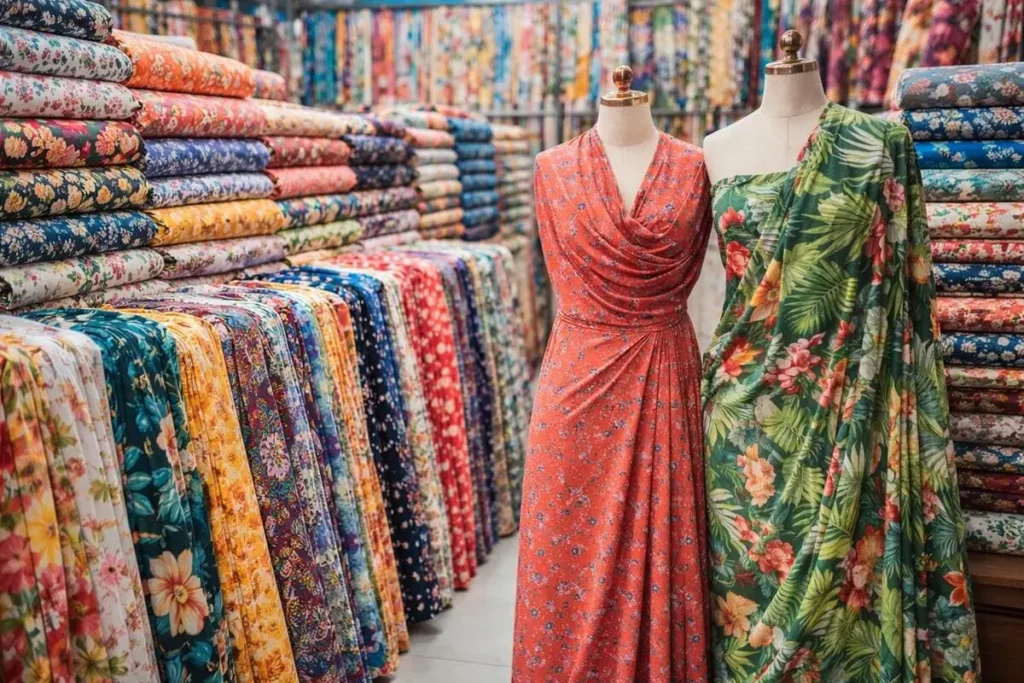
The best fabric depends on the garment, artwork, required performance, and production specifications.
Step 1: Identify the End Use
Start with the intended product.
For example:
Flowing dresses may benefit from lightweight rayon challis.
Shirts may require a more structured woven fabric.
Scarves may benefit from a lightweight fabric with attractive drape.
Certain skirts or trousers may require a heavier construction.
These are general design considerations rather than fixed rules.
Step 2: Compare Fabric Specifications
Review:
Fiber composition
Fabric weight
Usable width
Weave or knit construction
Surface texture
Drape
Stretch characteristics
Care requirements
Do not rely on the fiber name alone.
Step 3: Evaluate Printing Requirements
Consider whether the artwork contains:
Fine lines
Large color areas
Small repeated motifs
Directional patterns
Complex color gradients
The selected fabric and printing process should be appropriate for the artwork.
Step 4: Test Before Larger Production
When color accuracy, dimensional stability, or performance is important, evaluate a printed sample before approving a larger production run.
This is especially useful for clothing brands planning repeat orders.
Step 5: Choose a Suitable Ordering Route
For a specific lightweight woven option, explore our Rayon Challis Fabric by the Yard guide.
If you are comparing lightweight rayon fabrics for fashion applications, read our Lightweight Rayon Fabric for Fashion Designers guide.
When ready to proceed, visit Design Your Fabric to select an available fabric and upload your design.
11. Final Thoughts: Choosing Rayon & Viscose for Custom Printing
Rayon and viscose fabrics offer designers a wide range of possibilities for fashion and custom textile printing.
The key distinction is that viscose is a type of rayon, not a separate fiber category that is automatically softer, more durable, or better for printing.
For successful projects, focus on the actual fabric specifications, suitable printing methods, sample evaluation, and intended garment use.
Whether you are developing a flowing dress collection, printed blouses, or a new textile pattern, choosing the right base fabric is an important step toward a consistent finished product.
Ready to create your own printed fabric?
📚 Frequently Asked Questions (FAQs)
1. What is the difference between rayon and viscose?
Rayon is a broad category of regenerated cellulose fibers, while viscose is a specific type of rayon produced using the viscose process. The terms are sometimes used interchangeably in commercial fabric descriptions.
2. Which prints better: rayon or viscose?
Neither is universally better because viscose is a type of rayon. Printing performance depends on the actual fabric, ink system, pretreatment, fixation, and finishing conditions.
3. What is rayon challis fabric?
Rayon challis is a lightweight woven fabric known for its soft hand and fluid drape. It is commonly used for dresses, blouses, skirts, and other flowing garments.
4. What is rayon twill fabric used for?
Rayon twill is a diagonally woven fabric that may be suitable for dresses, skirts, shirts, relaxed trousers, and accessories, depending on its weight and finishing.
5. What is rayon poplin fabric?
Rayon poplin is a plain-weave fabric that can provide a relatively smooth surface and defined structure. Its suitability for garments and printing depends on the actual specifications.
6. Can rayon and viscose fabrics be digitally printed?
Yes, suitable rayon and viscose fabrics can be digitally printed using compatible processes. The printing method must be selected according to the substrate, artwork, and production requirements.
7. How should printed rayon fabric be cared for?
Follow the care instructions provided for the specific fabric and print. Washing temperature, agitation, drying, and ironing requirements can vary depending on construction and finishing.
8. How do I choose rayon fabric for custom printing?
Compare fabric composition, weight, width, construction, drape, printing compatibility, and intended use. When performance or color accuracy is important, evaluate a sample before larger production.
JCWTextile provides custom digital fabric printing for independent designers, clothing brands, and businesses, with no minimum order quantity and international shipping options.