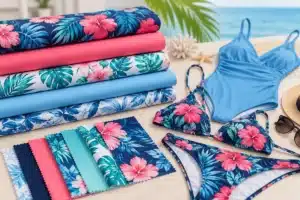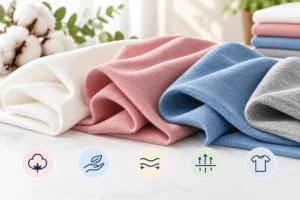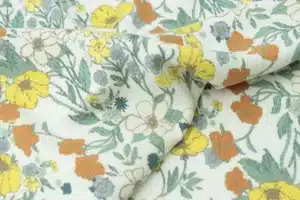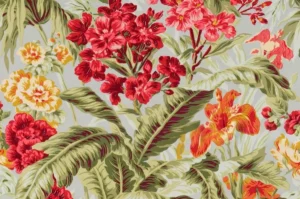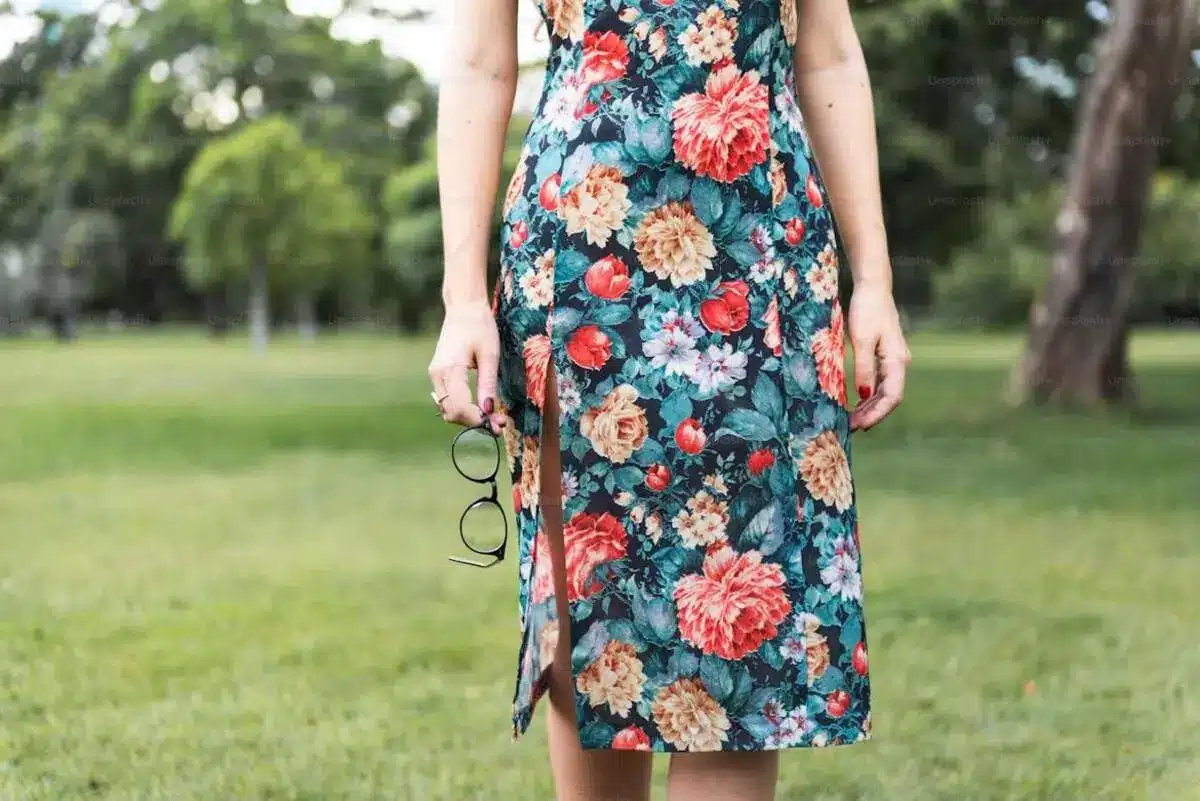
Choosing the right fabric is one of the most important decisions when developing a fashion collection. A beautiful print can attract attention, but the fabric’s weight, drape, texture, and movement determine how the finished garment looks and feels.
Lightweight rayon fabric is a popular option for designers creating flowing dresses, relaxed blouses, skirts, scarves, and resort-inspired clothing. Its soft hand feel and fluid drape make it particularly useful for garments that need movement rather than a rigid silhouette.
Custom printing adds another level of creative freedom. Instead of relying only on ready-made patterns, designers can develop original floral prints, abstract artwork, geometric motifs, and coordinated designs for their collections.
However, not every rayon fabric performs the same way. Fabric construction, weight, opacity, shrinkage, and print compatibility should all be considered before production.
This practical guide explains how to choose lightweight rayon for clothing, match fabric characteristics to garment styles, prepare artwork, evaluate samples, and plan small-batch custom printing.
Table of Contents: Lightweight Rayon Fabric
Why Fashion Designers Choose Lightweight Rayon Fabric
Rayon is a regenerated cellulosic fiber, commonly made from wood-derived cellulose. Viscose is one of the most widely used forms of rayon in apparel.
For a broader explanation of regenerated cellulose fibers, Textile Exchange’s manmade cellulosic fiber guidance identifies viscose rayon, modal, and lyocell as related fiber categories and discusses material sourcing considerations.
For fashion designers, its main attraction is the combination of softness and fluid movement.
Soft Texture and Fluid Drape
Lightweight woven rayon can fall close to the body and create flowing silhouettes.
This makes it suitable for designs such as:
Relaxed summer dresses.
Maxi skirts and wrap skirts.
Loose-fitting blouses.
Flowing tunics.
Lightweight scarves and wraps.
Unlike a stiff fabric that holds its shape, a fluid rayon fabric can move naturally as the wearer walks.
The exact effect depends on fabric weight, weave, yarn characteristics, and finishing.
Comfort for Lightweight Apparel
Rayon generally absorbs moisture well and can feel comfortable against the skin.
However, comfort is not determined by fiber content alone. Fabric density, construction, garment fit, and environmental conditions also matter.
Designers developing warm-weather collections should evaluate both the material and the finished garment design.
Creative Flexibility with Custom Prints
Custom printed rayon allows designers to create fabric patterns specifically for their collections.
A single artwork concept can be adapted for different garments by changing the motif size, layout, or color palette.
For example, a botanical print might use large motifs for a flowing dress and a smaller repeat for a coordinating blouse.
The printed fabric should be evaluated at its actual garment scale before production.
Understanding Fabric Weight, Drape, and Opacity
Lightweight rayon is not a single fabric specification.
Two fabrics with similar fiber content can behave differently because of differences in construction, weight, and finishing.
Fabric Weight: Why GSM Matters
Fabric weight is commonly expressed in grams per square meter (GSM).
GSM is useful when comparing materials, but it does not determine drape or opacity by itself.
A lighter fabric may be suitable for a flowing blouse, while a heavier fabric may provide more coverage or structure for a skirt.
Designers should evaluate the actual fabric sample rather than choosing solely by a GSM number.
Drape: How the Fabric Falls
Drape describes how a fabric hangs and forms folds under its own weight.
For flowing garments, a soft drape may help create the intended silhouette.
For structured garments, however, excessive drape may make it difficult to maintain the desired shape.
Before selecting rayon, consider whether the garment needs to flow, hold its shape, or combine both characteristics.
Opacity: Will the Garment Need a Lining?
Lightweight fabrics may be partially transparent, particularly in pale colors or loose constructions.
Opacity should be checked under realistic lighting conditions.
A fabric that appears sufficiently opaque on a small sample may look different when stretched, layered, or worn.
For dresses and skirts, consider whether a lining or additional garment layer will be required.
Rayon Challis vs. Rayon Poplin for Fashion Collections
Rayon challis and rayon poplin are useful fabric categories to compare when choosing materials for clothing.
Their characteristics depend on the actual product specifications, so the names should not be treated as guarantees of a particular weight or performance.| Feature | Rayon Challis | Rayon Poplin |
|---|---|---|
| Typical Character | Soft, fluid woven fabric | Woven fabric with a more defined construction |
| Drape | Often flowing | Depends on weight and finishing; may feel more structured |
| Common Uses | Dresses, blouses, skirts | Shirts, dresses, and selected apparel |
| Design Consideration | Movement and softness | Balance of shape, drape, and surface appearance |
| What to Test | Shrinkage, opacity, drape | Hand feel, opacity, structure, shrinkage |
When to Consider Rayon Challis
Rayon challis is often considered for garments that benefit from softness and movement.
Examples include relaxed dresses, flowing skirts, and lightweight blouses.
A printed sample can help determine whether the fabric has the right balance of drape, opacity, and comfort.
When to Consider Rayon Poplin
Rayon poplin may be considered when a designer wants a woven fabric with a different balance of drape and structure.
However, actual properties vary between products.
Compare fabric specifications and physical samples rather than relying on the word “poplin” alone.
Designer tip: If you are choosing between challis and poplin, evaluate both fabrics using the same artwork and intended garment style whenever possible.
Choosing Lightweight Rayon for Different Garments
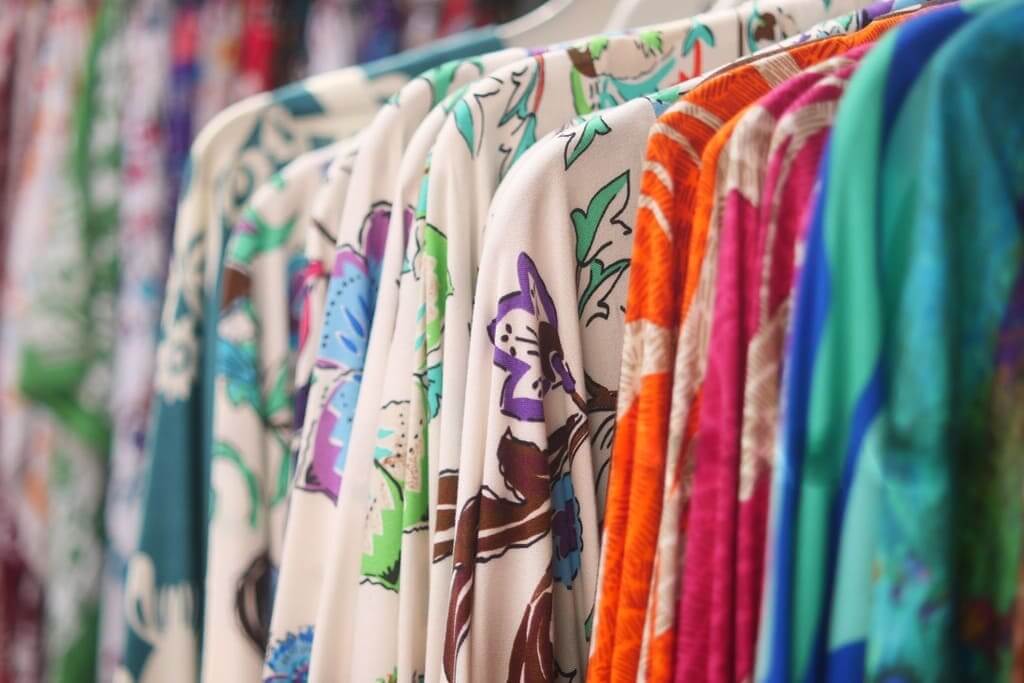
The most appropriate fabric depends on how the finished garment will be constructed and worn.
Rayon Fabric for Dresses
For flowing dresses, consider drape, opacity, weight, and dimensional stability.
A soft woven rayon may work well for relaxed silhouettes, while a more structured design may require a different fabric construction.
For garments with multiple panels, check whether the fabric moves consistently and whether the print placement will remain visually balanced.
Rayon Fabric for Blouses and Shirts
For blouses, consider softness, comfort, print scale, and the amount of structure required around collars, cuffs, and seams.
A fabric that works well for a loose blouse may not be suitable for a tailored shirt.
Test the material with the intended sewing details before finalizing the collection.
Rayon Fabric for Skirts
Flowing skirts often benefit from fabrics that form soft folds.
However, garment length, lining requirements, and the weight of the fabric can influence the finished appearance.
For printed skirts, consider how the pattern will appear across curved seams, gathers, and pleats.
Rayon for Resort Wear and Scarves
Lightweight rayon can be suitable for relaxed resort-inspired garments, wraps, and scarves.
For these products, consider the relationship between fabric movement, print size, opacity, and finishing.
For scarves, also evaluate whether the reverse side of the printed fabric meets the design requirements.
How Print Scale Affects Lightweight Rayon Garments
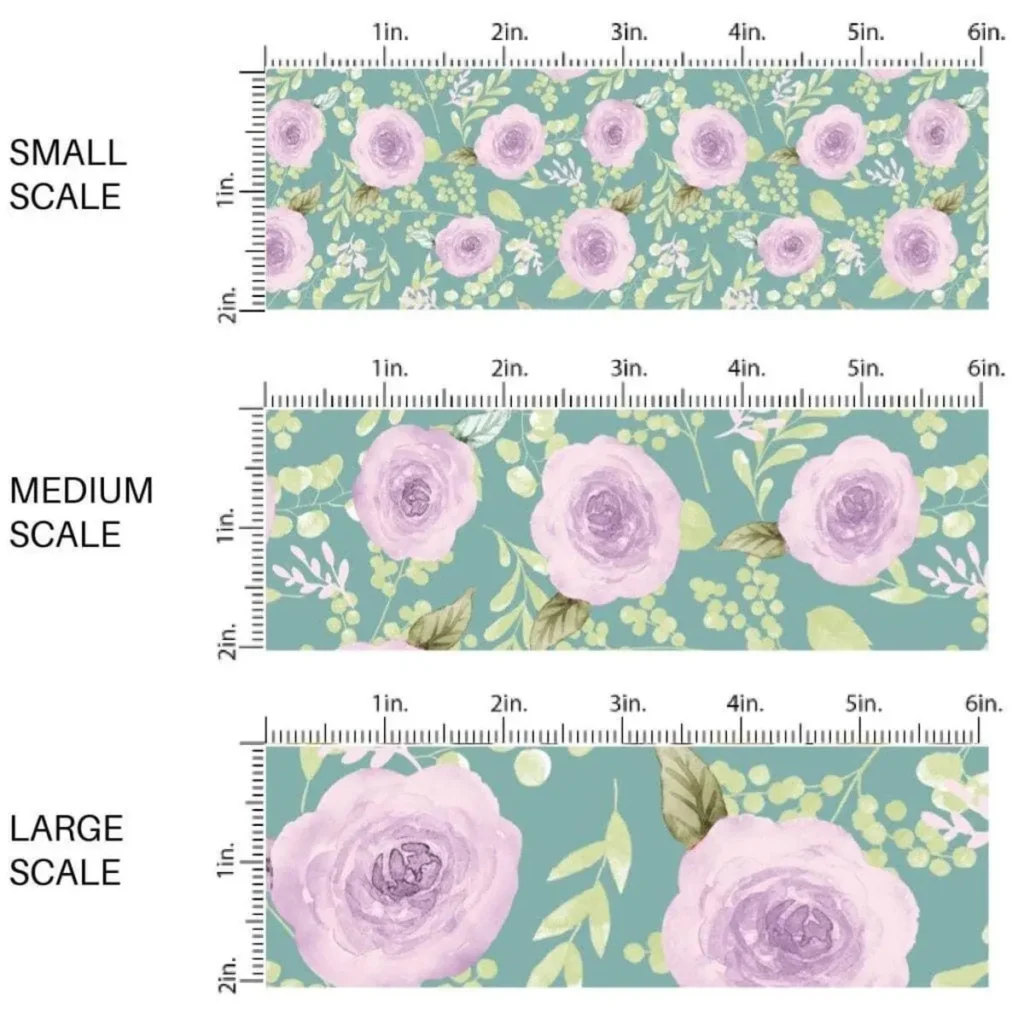
One of the most overlooked aspects of custom fabric printing is the relationship between artwork scale and garment construction.
A design that looks attractive on a computer screen may appear too large, too small, or visually unbalanced when printed on fabric.
Small-Scale Prints
Small motifs and repeating patterns can work well for blouses, gathered garments, and designs with many seams.
They may also make pattern interruptions at seam lines less noticeable.
However, very fine details should be tested to confirm that they reproduce clearly on the chosen fabric.
Large-Scale Prints
Large floral, botanical, and abstract motifs can create strong visual impact on flowing dresses and skirts.
The challenge is placement.
A large motif may be cut off at a seam or appear in an unintended position after the garment is assembled.
Designers should review the cutting layout before committing to the print scale.
Directional Patterns
Directional prints have a clear top and bottom.
These patterns require additional attention during cutting because garment pieces may need to follow the same direction.
This can affect fabric consumption and pattern placement.
Seamless Repeating Patterns
Seamless repeats are useful when printing fabric by the yard.
Before uploading artwork, verify that the pattern joins correctly on every side and does not produce visible gaps or unwanted lines.
For technical artwork preparation, see our Guide to Preparing Artwork for Fabric Printing.
How to Prepare Custom Prints for Rayon Fabric
Preparing artwork correctly helps reduce production revisions and improves consistency.
Design at the Intended Print Size
Set the artwork dimensions according to the intended fabric print.
For detailed raster designs, 300 DPI at final size is a common starting point, but the appropriate resolution depends on the artwork and printer specifications.
Check Colors on Actual Fabric
A digital screen cannot perfectly predict the appearance of printed fabric.
Fiber composition, printing chemistry, surface texture, and finishing can influence color reproduction.
For collections with important brand colors, evaluate a physical sample before larger production.
Consider Garment Construction
Think about where the pattern will appear on the final garment.
For example:
A large floral motif may need careful positioning on a dress.
A stripe may require alignment across seams.
A directional print may increase fabric consumption.
A small repeat may be easier to use across multiple garment sizes.
These decisions are easier to make before printing than after fabric has been cut.
Sampling, Shrinkage, and Color Testing Before Production
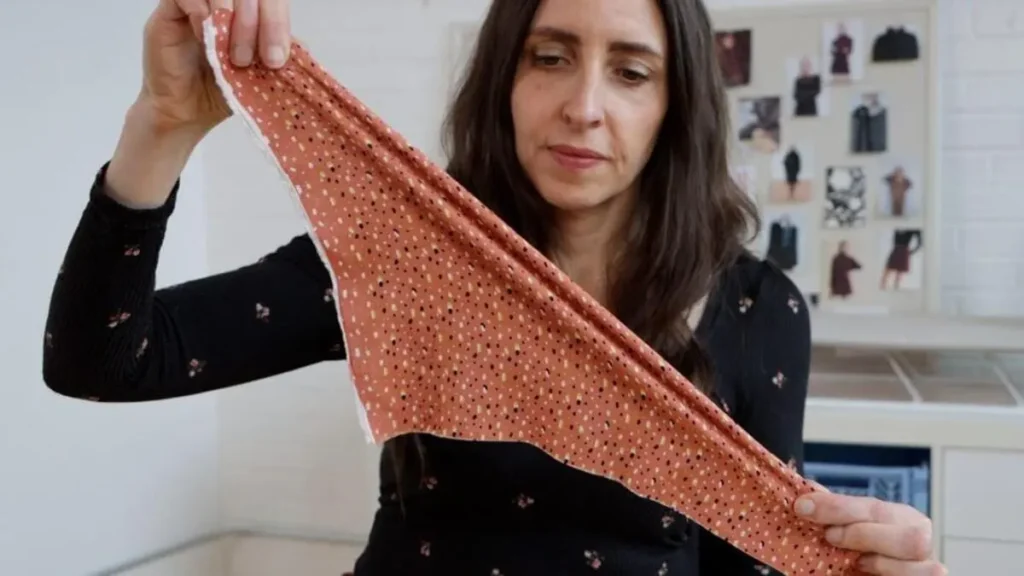
Sampling is especially important when developing clothing with lightweight rayon.
A successful printed sample should be evaluated not only for appearance but also for its suitability for garment production.
1. Check Printed Color and Detail
Compare the printed fabric with the intended artwork.
Look at motif clarity, color appearance, and the consistency of large printed areas.
2. Evaluate Drape and Hand Feel
Handle the printed sample and observe how it folds.
Compare its texture and movement with the original fabric, particularly if the printing and finishing process may affect the hand feel.
3. Check Dimensional Stability
Some rayon fabrics may shrink or change dimensions during washing or wet processing.
For commercial garments, test the fabric according to the intended care method and relevant quality requirements.
For standardized shrinkage evaluation, AATCC Test Method 135 provides a method for measuring dimensional changes in fabrics after home laundering. Designers developing commercial collections can use this reference when discussing fabric testing requirements with their suppliers.
4. Review Opacity
Examine the fabric under lighting conditions similar to those in which the garment will be worn.
For pale colors and lightweight garments, check whether lining is necessary.
5. Make a Garment Prototype
When possible, construct a prototype using the selected fabric.
This helps evaluate drape, sewing behavior, pattern placement, fit, and the finished silhouette.
A garment prototype may reveal issues that are not obvious from a small printed swatch.
Can Independent Designers Order Custom Printed Rayon in Small Quantities?
Small-batch fabric printing can help independent fashion brands develop original collections without committing to large initial inventories.
JCWTextile offers custom fabric printing without a standard minimum order quantity.
For designers, smaller orders can support:
Initial fabric testing.
New pattern development.
Limited-edition collections.
Product photography samples.
Early-stage market testing.
Before placing an order, confirm that the selected rayon fabric and printing process are available for the project.
For more information, explore our Low MOQ Custom Fabric Printing Guide.
Caring for Custom Printed Lightweight Rayon
Care requirements depend on the specific fabric, printing process, and finishing.
Rayon fabrics can be sensitive to moisture, heat, and mechanical handling, so care instructions should be confirmed for the actual product.
General considerations include:
Follow the supplier’s washing and drying instructions.
Use suitable washing conditions for the specific fabric.
Avoid unnecessary high heat.
Check for shrinkage before cutting production garments.
Test the intended care method when developing a commercial collection.
Do not assume that every printed rayon fabric is machine washable or suitable for tumble drying.
For clothing brands selling in the United States, the Federal Trade Commission’s Care Labeling Rule guidance explains important requirements for providing accurate garment care instructions supported by a reasonable basis.
How to Order Custom Printed Rayon Fabric from JCWTextile
Developing a custom printed rayon collection begins with choosing the right fabric and preparing the artwork.
Step 1: Choose a Suitable Fabric
Review the available rayon or viscose fabric options.
Consider the intended garment, required drape, weight, opacity, and care requirements.
Step 2: Prepare Your Artwork
Prepare the design at the required print dimensions and check the pattern repeat.
If the project requires particular colors or print placement, arrange appropriate testing before larger production.
Step 3: Select the Required Yardage
Choose the quantity needed for samples, prototypes, or your planned collection.
JCWTextile does not impose a standard minimum order quantity for custom fabric printing.
Step 4: Place Your Fabric Order
The fabric amount is calculated from the selected fabric price and ordered quantity, with applicable quantity discounts where offered.
Standard artwork setup and finishing are not charged separately.
Step 5: Confirm International Shipping
International shipping is quoted and collected separately after the fabric order.
The quotation depends on order weight, quantity, destination, and carrier requirements. Remote-area surcharges may apply.
Production lead time and international transit time are separate considerations and should be confirmed for the order.
For available fabrics and project assistance, visit JCWTextile or Contact Our Team.
Lightweight Rayon vs. Other Fabrics: Making the Final Choice
Rayon is not automatically the best material for every fashion project.
Cotton, linen, polyester, and other fabrics may be more appropriate depending on the intended structure, care requirements, and performance.
| Material | General Character | Important Design Consideration |
|---|---|---|
| Lightweight Rayon | Soft, fluid, absorbent | Check shrinkage, drape, and care |
| Cotton | Wide range of structures and weights | Choose construction according to garment requirements |
| Linen | Often crisp with characteristic texture | Consider wrinkling and desired silhouette |
| Polyester | Wide range of constructions and finishes | Evaluate comfort, drape, and end-use performance |
Rather than choosing a fabric based only on its fiber name, compare actual samples against the requirements of the garment.
For a technical overview of rayon printing methods, fiber compatibility, and production steps, read our Rayon Fabric Printing Guide.
Conclusion
Lightweight rayon fabric offers fashion designers a useful combination of softness, fluid drape, and creative flexibility.
However, successful garment development depends on more than choosing an attractive textile.
Fabric weight, construction, opacity, print scale, dimensional stability, and care requirements all influence the finished result.
For independent designers and small fashion brands, evaluating samples and developing garment prototypes before larger production can help reduce costly mistakes.
With suitable fabric selection and custom printing, designers can transform original artwork into distinctive dresses, blouses, skirts, scarves, and coordinated fashion collections.
Ready to develop your next custom fabric collection?
Explore JCWTextile’s fabric options and contact our team to discuss your design and printing requirements.
📚 Frequently Asked Questions (FAQs)
1. Is lightweight rayon fabric suitable for dresses?
Yes. Suitable lightweight rayon fabrics can be used for flowing dresses, skirts, and relaxed garments. Designers should check drape, opacity, shrinkage, and fabric construction before production.
2. What is the difference between rayon challis and rayon poplin?
Rayon challis is often associated with a soft, fluid drape, while rayon poplin may offer a different balance of structure and movement. Actual characteristics depend on fabric specifications and finishing.
3. What fabric weight is best for a rayon dress?
There is no single ideal GSM for every rayon dress. The appropriate weight depends on the silhouette, opacity, lining, and required structure. Physical samples are recommended.
4. Can I print my own designs on lightweight rayon fabric?
Yes. Suitable rayon fabrics can be custom printed using compatible printing systems. Artwork dimensions, pattern repeats, colors, and fabric compatibility should be confirmed before production.
5. Does lightweight rayon shrink after washing?
Some rayon fabrics may shrink or change dimensions during washing. Shrinkage depends on construction, finishing, and care conditions. Testing before garment production is recommended.
6. How should I choose print scale for rayon garments?
Consider the garment size, seams, gathers, and cutting layout. Small repeats may be easier to use across multiple garment sizes, while large motifs require more attention to placement.
7. Can small fashion brands order custom printed rayon fabric without an MOQ?
JCWTextile offers custom fabric printing without a standard minimum order quantity. Availability of specific rayon fabrics and printing methods should be confirmed before ordering.
8. How is international shipping charged for custom rayon orders?
JCWTextile quotes and collects international shipping separately after the fabric order. Charges depend on factors such as weight, quantity, destination, and possible remote-area surcharges.