Choosing the right bamboo fabric wholesale option involves more than finding a soft textile at an attractive price. For clothing brands, baby product businesses, textile designers, and wholesale buyers, fiber composition, fabric construction, print compatibility, and quality requirements all influence the finished product.
Bamboo-based fabrics are often considered for their smooth hand feel and comfortable drape. Cotton offers a broad range of constructions, while bamboo-cotton blends provide additional possibilities for apparel, accessories, and home textiles.
However, not all bamboo fabrics are manufactured in the same way. Many products marketed as bamboo fabric are actually made from regenerated cellulose fibers, such as viscose derived from bamboo. Understanding this distinction is essential when comparing suppliers, reviewing product labels, or making sustainability claims.
At JCWTextile, we support custom fabric printing projects for small businesses and wholesale buyers, with no minimum order requirement for our custom printing service. This guide explains how to evaluate bamboo-based fabrics, compare them with cotton, prepare artwork, and make informed sourcing decisions.
Table of Contents:Bamboo Fabric Wholesale
What Is Bamboo Fabric? Understanding the Fiber Types
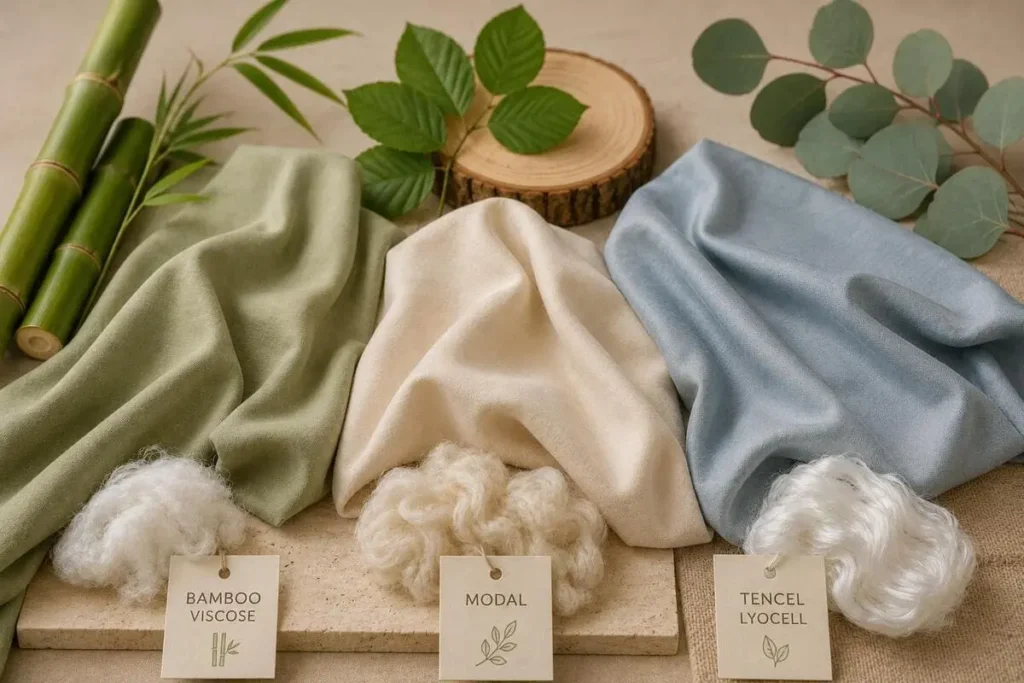
Before requesting bamboo fabric wholesale pricing, buyers should identify the actual fiber content.
The term bamboo fabric is commonly used in textile marketing, but it can describe materials made through different manufacturing processes.
Bamboo Viscose
Bamboo viscose is a regenerated cellulose fiber produced using cellulose sourced from bamboo.
The bamboo material undergoes chemical processing before being converted into textile fiber. As a result, bamboo viscose should not be described as an unprocessed natural bamboo fiber.
Depending on fabric construction, viscose fabrics can provide a smooth surface, soft drape, and comfortable hand feel.
For sourcing purposes, buyers should request the precise fiber description rather than relying only on the word bamboo.
Bamboo Lyocell
Some bamboo-derived cellulose can be processed using lyocell technology.
Lyocell production differs from conventional viscose manufacturing, but the environmental characteristics of the finished fabric still depend on the production system, sourcing, chemical management, and other factors.
Buyers should confirm whether a supplier’s fabric is genuinely bamboo-derived lyocell and request appropriate supporting documentation when necessary.
Mechanically Processed Bamboo Fiber
Mechanically processed bamboo fiber is different from regenerated bamboo viscose.
It is less common in many conventional soft apparel fabrics. Buyers should not assume that every product labeled natural bamboo fabric uses this process.
Why Fiber Identification Matters
Accurate fiber identification affects:
Product labeling and regulatory compliance
Fabric hand feel and performance expectations
Printing and finishing requirements
Certification and sustainability claims
Customer communication and product descriptions
For additional background on responsible fiber sourcing, consult Textile Exchange and the FTC’s guidance on bamboo textiles.
Bamboo Fabric vs Cotton Fabric: Key Differences
Bamboo-based regenerated cellulose and cotton can both be suitable for custom textile products, but they should not be treated as interchangeable.
Cotton is a natural seed fiber. Bamboo viscose is a manufactured regenerated cellulose fiber, even when its cellulose originates from bamboo.The following comparison provides a practical starting point for wholesale buyers.| Feature | Bamboo Viscose Fabric | Cotton Fabric |
|---|---|---|
| Fiber category | Regenerated cellulose | Natural plant fiber |
| Typical hand feel | Often smooth and fluid | Varies from soft to crisp |
| Drape | Often flowing, depending on construction | Varies by weave and knit |
| Surface appearance | Can be smooth and even | Depends on yarn and fabric structure |
| Fabric construction | Available in selected knit and woven forms | Wide range of knits and wovens |
| Printing suitability | Depends on fabric and printing process | Depends on fabric and printing process |
| Care requirements | Must be confirmed for the specific fabric | Must be confirmed for the specific fabric |
| Typical applications | Loungewear, selected baby textiles, relaxed apparel | Shirts, dresses, quilting, bags, home textiles |
When to Consider Bamboo Viscose
Bamboo viscose may be worth considering when a collection requires a soft, fluid fabric with a smooth appearance.
Potential applications include relaxed clothing, sleepwear, scarves, and selected soft textile products.
However, buyers should evaluate dimensional stability, colorfastness, fabric strength, and care requirements for the specific construction.
When to Consider Cotton
Cotton may be preferable when a project requires a particular woven or knitted structure, such as cotton poplin, jersey, canvas, or quilting cotton.
Different cotton fabrics provide different weights, textures, and performance characteristics.
For example, cotton canvas is more suitable for structured bags than a lightweight drapey viscose knit.
Which Fabric Is Better for Custom Printing?
There is no universally superior choice.
The most appropriate fabric depends on the artwork, print method, intended use, desired texture, performance requirements, and budget.
Explore JCWTextile’s fabric collection to compare available textile options before requesting a quotation.
Bamboo-Cotton Blends for Wholesale Buyers
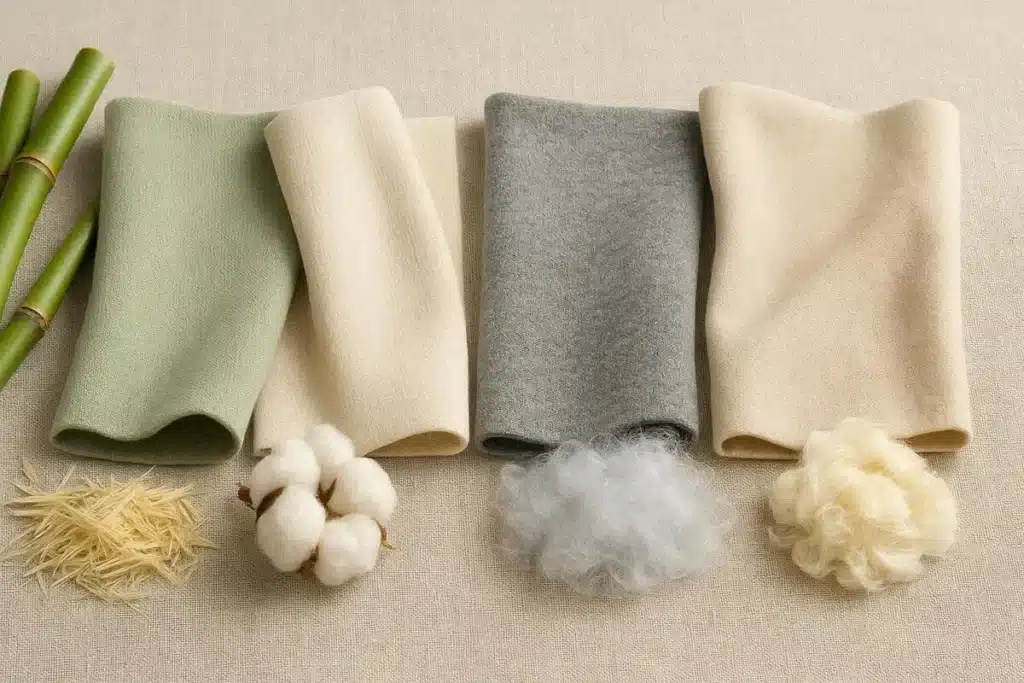
Bamboo-cotton blends combine bamboo-derived fibers with cotton in a single fabric.
The exact properties depend on the fiber ratio, yarn, knit or weave, fabric weight, and finishing process.
For example, a lightweight bamboo-cotton knit may feel very different from a heavier woven bamboo-cotton blend.
Why Brands Consider Bamboo-Cotton Fabric
Bamboo-cotton fabrics may offer a combination of characteristics that appeal to clothing brands and textile buyers:
Softness: Certain blends can provide a smooth, comfortable hand feel.
Fabric versatility: Different constructions can support apparel, accessories, and selected home textile applications.
Design flexibility: Suitable fabrics may be considered for custom printed patterns, depending on the production process.
Material differentiation: A bamboo-cotton blend can help brands develop products with a different texture and drape from conventional cotton options.
However, blending fibers does not automatically guarantee reduced shrinkage, better durability, or improved colorfastness. These characteristics should be confirmed through appropriate testing.
What Blend Ratio Should You Choose?
There is no single best bamboo-to-cotton ratio for every product.
Buyers should compare actual fabric samples and request specifications for:
Fiber percentages
Fabric weight in GSM
Knit or weave construction
Width and usable width
Stretch and recovery, if relevant
Dimensional stability after washing
Colorfastness and care instructions
A swatch evaluation can reveal differences that are difficult to judge from product descriptions alone.
Choosing Bamboo Fabric Weight and Construction
Fabric weight is especially important when purchasing bamboo fabric wholesale.
GSM, or grams per square meter, measures fabric mass per unit area. It is useful for comparing fabrics, but it does not describe softness, stretch, or durability by itself.
Lightweight Fabrics
Lightweight constructions may be appropriate for flowing garments, scarves, and selected warm-weather products.
Buyers should examine transparency, drape, and stability before choosing a fabric for production.
Medium-Weight Fabrics
Medium-weight knits may be considered for T-shirts, casual dresses, loungewear, and comfortable everyday clothing.
Stretch, recovery, and shrinkage performance depend on the exact composition and construction.
Heavier Fabrics
Heavier constructions may be considered for selected sweatshirts, blankets, or other products that require more substance.
However, the suitability of a fabric for these uses cannot be determined by GSM alone.
Fabric Selection Checklist
Before ordering, confirm the following:
| Specification | Why It Matters |
|---|---|
| Fiber composition | Supports accurate labeling and performance expectations |
| GSM | Helps compare fabric weight |
| Fabric width | Influences pattern layout and material usage |
| Knit or weave | Affects stretch, structure, and appearance |
| Shrinkage | Important for garment sizing |
| Colorfastness | Relevant to washing and use |
| Surface texture | Influences print appearance |
| Care instructions | Helps define finished-product requirements |
Custom Printing on Bamboo and Bamboo-Cotton Fabrics
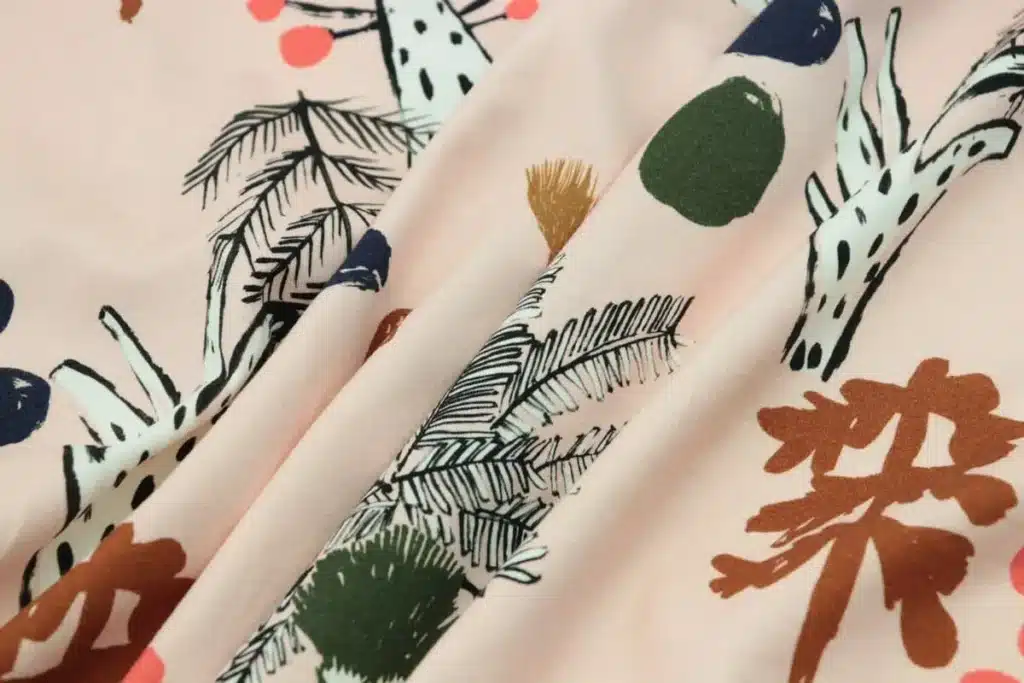
Custom printed bamboo fabric can be used to create original patterns for clothing collections, accessories, and selected home textiles.
However, printing compatibility must be confirmed for the actual fiber composition and fabric construction.
Selecting a Suitable Printing Method
Regenerated cellulose and cotton-containing fabrics may be compatible with certain digital textile printing systems.
Reactive dye printing is one possible method for suitable cellulose-based fabrics, but the final process depends on the material, pretreatment, dye or ink system, fixation, and finishing requirements.
Pigment printing may also be considered for certain fabrics and applications.
The supplier should confirm the appropriate method rather than assuming every bamboo-based fabric uses the same process.
Read our fabric printing methods guide for an overview of different textile printing approaches.
How Fabric Texture Affects Printed Designs
A smooth surface can help certain printed details appear clearly, while a textured surface may change how a design looks.
The visual result also depends on:
Artwork resolution
Pattern scale
Fabric color
Ink or dye compatibility
Pretreatment and finishing
Printing equipment and settings
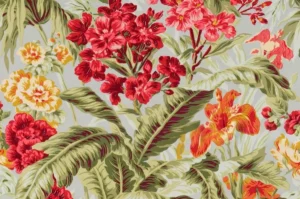
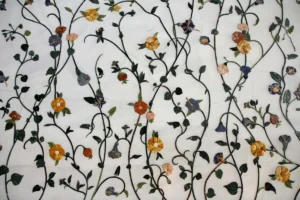
Detailed floral artwork, geometric patterns, and brand-specific designs should be reviewed at their intended print dimensions.
Color Accuracy and Sampling
Colors displayed on a monitor may differ from colors printed on fabric.
Fiber composition, printing chemistry, surface texture, and finishing conditions can all affect the appearance of the final result.
For color-sensitive projects, buyers should discuss sampling and approval requirements before placing a substantial order.
You can review our artwork preparation guide before submitting your design.
Applications for Custom Printed Bamboo Fabrics
Different bamboo-based and bamboo-cotton fabrics may suit different product categories.
The following examples are starting points for product development rather than guaranteed applications for every fabric.
Clothing and Loungewear
Soft knitted constructions may be considered for T-shirts, relaxed dresses, pajamas, and loungewear.
Brands should evaluate opacity, stretch, recovery, and washing performance before finalizing garment patterns.
Baby and Children's Textiles
Certain soft fabrics may be considered for baby blankets, swaddles, and children’s apparel.
These products require additional attention to relevant safety, care, labeling, and performance requirements.
A fabric’s soft hand feel alone does not establish suitability for infant products.
Scarves and Accessories
Lightweight woven fabrics with fluid drape may work well for printed scarves and fashion accessories.
Artwork scale and fabric transparency should be considered during product development.
Home Textiles
Depending on construction and performance, bamboo-containing fabrics may be considered for selected bedding and soft home textile products.
Buyers should confirm durability, laundering requirements, and suitability for the intended end use.
Sustainability and Certification: What Wholesale Buyers Should Verify
Bamboo is a fast-growing plant, but the sustainability of a bamboo-derived textile cannot be established from the raw material alone.
For regenerated cellulose fibers, environmental considerations can include forest or plantation sourcing, chemical processing, wastewater management, energy use, and manufacturing practices.
Similarly, cotton’s environmental profile varies according to agricultural methods, irrigation, processing, and other factors.
Avoid Unsupported Environmental Claims
Buyers should be cautious about statements such as:
All bamboo fabrics are naturally antibacterial.
Bamboo viscose is always more sustainable than cotton.
Every bamboo textile is chemical-free.
Water-based inks automatically make a finished textile environmentally certified.
Such claims require appropriate evidence and may not apply to a particular product.
Understand Certification Scope
Certification and testing programs may apply to particular materials, finished products, facilities, or production processes.
For example, OEKO-TEX provides information about textile testing and certification systems.
If your brand requires certification, ask for documentation that applies to the exact product and verify its validity and scope.
Do not assume that a supplier’s general use of a certification logo means every fabric is certified.
How to Source Bamboo Fabric Wholesale
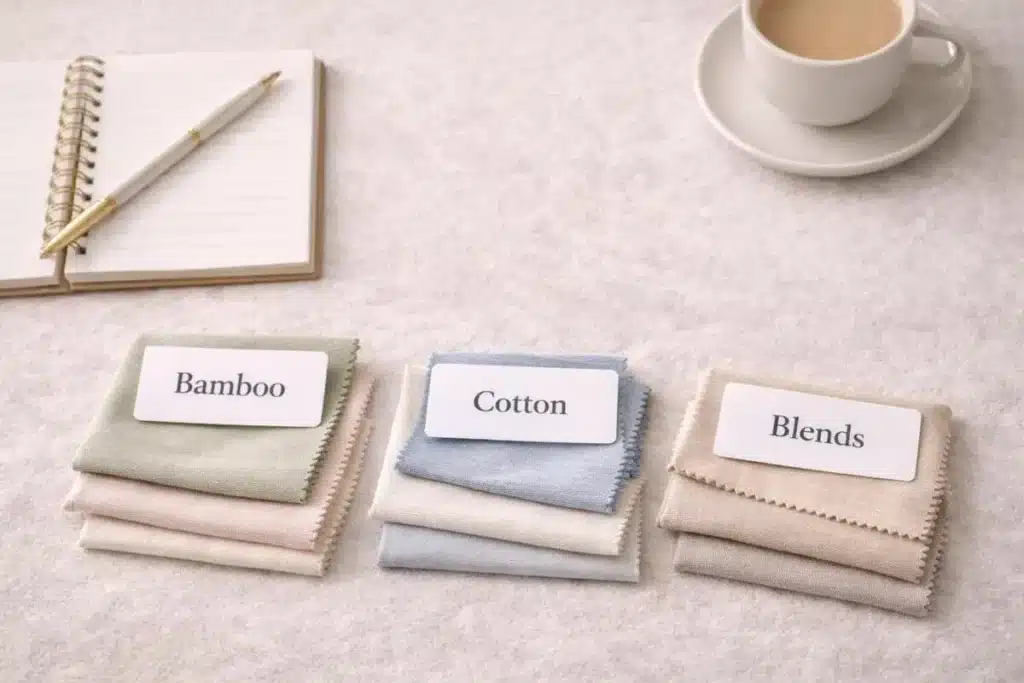
When comparing bamboo fabric suppliers, focus on documented specifications and production suitability rather than marketing descriptions alone.
Questions to Ask Before Ordering
What is the exact fiber composition?
Is the bamboo-derived fiber viscose, lyocell, or another type?
What are the fabric’s GSM, width, and construction?
Is the fabric suitable for the intended printing method?
What testing information is available?
Can fabric swatches or print samples be reviewed?
What are the production and shipping requirements?
Are specific certification documents available if required?
Start Small, Then Scale
For brands developing a new product, evaluating a smaller quantity first can help identify material and printing requirements before a larger order.
JCWTextile offers custom fabric printing without a minimum order requirement, making it possible to begin with smaller projects.
For customers planning larger quantities, JCWTextile also offers volume discounts according to its published pricing tiers.
For details on bulk order quantities, discounts, quality control, and international shipping, read our wholesale custom fabric printing guide.
Request a Custom Fabric Quote
When contacting JCWTextile, provide the fabric type, approximate quantity, design files, intended product, delivery destination, and any special testing or documentation requirements.
We can help you review available fabric options and discuss printing suitability for your project.
Conclusion
Successful bamboo fabric wholesale sourcing starts with understanding the material.
Bamboo viscose, bamboo-derived lyocell, cotton, and bamboo-cotton blends are not identical, and each should be evaluated according to its actual composition, construction, printing compatibility, and intended use.
For clothing brands, textile designers, and wholesale buyers, accurate specifications and appropriate sampling are more valuable than broad claims about softness, sustainability, or performance.
JCWTextile supports custom fabric printing projects with flexible order quantities, fabric selection options, and worldwide shipping.
Ready to explore custom printed fabrics for your next collection? Request a quote from JCWTextile and share your project requirements.
📚 Frequently Asked Questions About Bamboo Fabric Wholesale
1. What is bamboo fabric made from?
Many commercially available bamboo fabrics are made from regenerated cellulose fibers, such as viscose derived from bamboo. The exact composition should be confirmed from the supplier’s specifications.
2. Is bamboo viscose the same as natural bamboo fiber?
No. Bamboo viscose is a manufactured regenerated cellulose fiber. It is different from mechanically processed bamboo fiber.
3. Is bamboo fabric suitable for digital printing?
Some bamboo-based fabrics are suitable for digital textile printing. The appropriate method depends on fiber composition, fabric construction, and production requirements.
4. What is the difference between bamboo fabric and cotton fabric?
Bamboo viscose is a regenerated cellulose fiber, while cotton is a natural plant fiber. Their hand feel, drape, durability, and printing behavior vary according to fabric construction and finishing.
5. Is bamboo-cotton fabric better than pure bamboo viscose?
Neither is automatically better. The right choice depends on the intended product, blend ratio, fabric construction, and required performance.
6. Can I order small quantities of custom printed bamboo fabric?
JCWTextile offers custom fabric printing without a minimum order requirement. Availability of a particular bamboo-based fabric and its printing suitability should be confirmed before ordering.
7. Are bamboo fabrics automatically sustainable or certified?
No. Environmental characteristics and certification status depend on the actual fiber, manufacturing process, product, and supporting documentation.
8. What should I check before placing a bamboo fabric wholesale order?
Confirm fiber composition, GSM, width, fabric construction, printing suitability, testing requirements, quantity, and shipping details. Reviewing swatches or samples is also advisable.