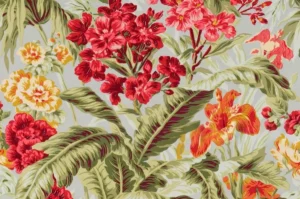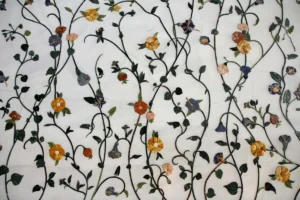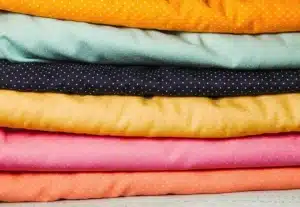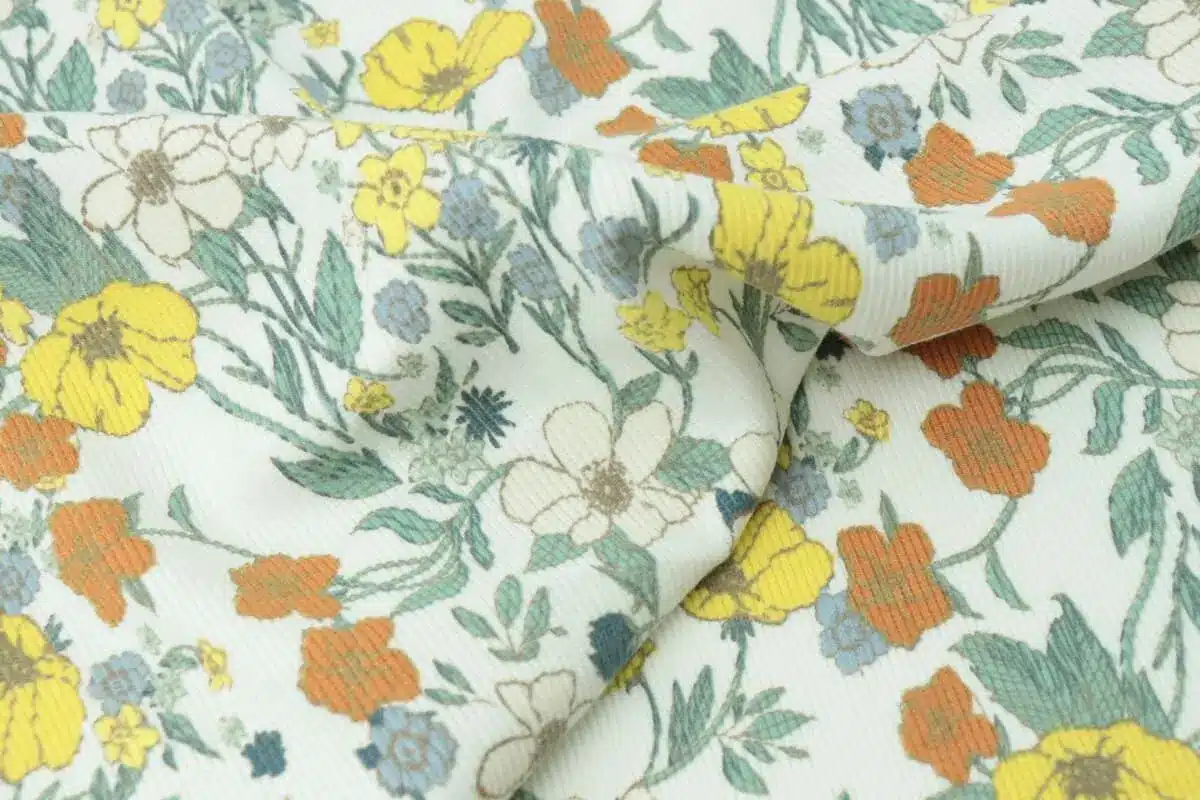
Cotton lawn fabric by the yard is a popular choice for sewing lightweight dresses, breathable blouses, summer shirts, scarves, and delicate accessories. Known for its fine weave, smooth surface, and soft drape, cotton lawn offers an appealing balance of comfort and elegance.
For fashion designers, sewing enthusiasts, and clothing brands, choosing the right cotton lawn involves more than finding an attractive print. Fabric weight, opacity, width, shrinkage, and printing compatibility all affect the finished result.
Whether you want plain cotton lawn for a sewing project or custom printed cotton lawn fabric for a clothing collection, this guide explains what to look for before ordering.
Table of Contents: Cotton Lawn Fabric
What Is Cotton Lawn Fabric?
Cotton lawn is a lightweight woven fabric traditionally made with fine cotton yarns in a closely constructed plain weave.
Unlike knitted fabrics, woven cotton lawn generally has little mechanical stretch. Its fine yarns and smooth construction create a relatively even surface with a soft, sometimes slightly crisp feel.
Most conventional cotton lawn is made from 100% cotton, although buyers should always confirm the composition of a particular product.
Cotton lawn is commonly associated with:
A lightweight, fine woven structure
A smooth surface suitable for detailed patterns
A soft or gently crisp hand feel, depending on finishing
Comfortable warm-weather apparel
Draping suitable for blouses, dresses, and gathered details
Opacity that varies with construction, color, and fabric weight
Cotton lawn is often selected when a designer wants a lighter, finer alternative to many conventional cotton shirting or quilting fabrics.
What Makes Cotton Lawn Different?
The defining characteristic of cotton lawn is its combination of fine yarns and a lightweight woven construction.
However, not every fabric sold as cotton lawn has the same GSM, width, thread count, or finish.
A premium lawn intended for delicate blouses may feel different from a slightly more substantial lawn used for dresses or shirts.
For that reason, fabric specifications and physical samples are more useful than the product name alone.
Cotton Lawn Fabric Weight: Understanding GSM
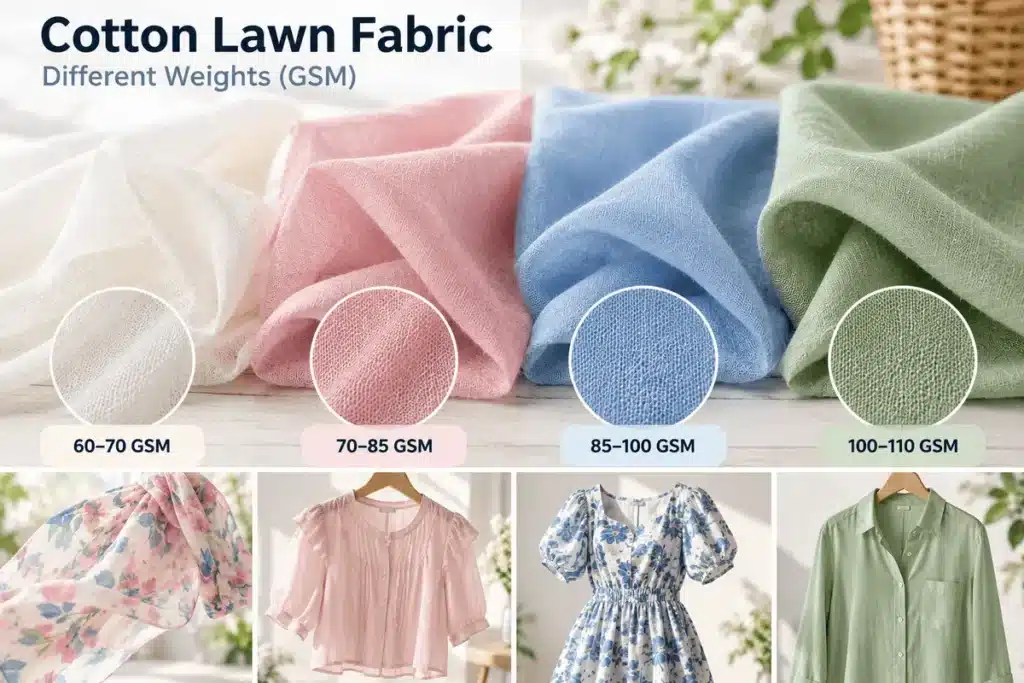
GSM stands for grams per square meter. It measures the weight of fabric over a defined area.
Many lightweight cotton lawn fabrics fall around 70–110 GSM, although actual products can be lighter or heavier depending on construction and finishing.
For example, an 80 GSM cotton lawn is lighter than a 100 GSM lawn by mass per square meter. That does not automatically mean the lighter fabric has better drape or the heavier fabric is completely opaque.
Cotton Lawn GSM Comparison
| Approximate Weight | General Characteristics | Potential Uses |
|---|---|---|
| Below 70 GSM | Very lightweight; may be noticeably translucent | Scarves, overlays, delicate garments |
| 70–85 GSM | Fine, airy, lightweight | Summer blouses, gathered tops |
| 85–100 GSM | Lightweight with potentially more body | Dresses, shirts, children’s apparel |
| 100–110+ GSM | More substantial for the lawn category | Selected dresses and tailored lightweight tops |
How to Choose the Right GSM
Start with the finished garment.
For a flowing blouse, a lightweight lawn with a soft drape may be appropriate.
For a summer dress, a somewhat more substantial construction may help provide coverage, although a lining can still be necessary.
For scarves or decorative overlays, a lighter and more translucent material may be desirable.
Always review the fabric under the lighting and layering conditions in which the finished garment will be worn.
GSM vs Fabric Width
GSM describes weight per unit area, while fabric width determines how much usable material is available across the roll.
A wider fabric can sometimes reduce the total yardage required for a sewing project.
However, the actual cutting yield also depends on pattern-piece dimensions, print direction, shrinkage, and the usable width after finishing.
Cotton Lawn Fabric Properties
1. Lightweight Comfort
Cotton lawn is valued for its light construction and suitability for many warm-weather garments.
Its fine weave can create a comfortable, airy feel, although actual air permeability depends on yarn density and finishing.
2. Smooth Texture
The relatively even surface of cotton lawn makes it attractive for delicate floral prints, botanical patterns, small geometric motifs, and other detailed designs.
A smooth surface can help preserve the visual clarity of printed artwork when the printing process is suitable.
3. Soft Drape
Cotton lawn can drape gracefully around the body, making it useful for gathered skirts, loose-fitting blouses, flutter sleeves, and relaxed dresses.
The amount of drape depends on fabric weight, yarn characteristics, and finishing.
4. Moisture Absorption
Cotton fibers absorb moisture, making cotton lawn a common choice for everyday summer clothing.
However, moisture absorption should not be confused with rapid drying or technical moisture-wicking performance.
5. Limited Stretch
Traditional woven cotton lawn generally has little stretch compared with jersey or other knitted fabrics.
Garments made from cotton lawn usually require appropriate ease, closures, or shaping rather than relying on fabric elasticity.
If your project requires a fitted stretch garment, explore our cotton spandex fabric guide for a different material option.
Cotton Lawn vs Cotton Poplin vs Cotton Voile
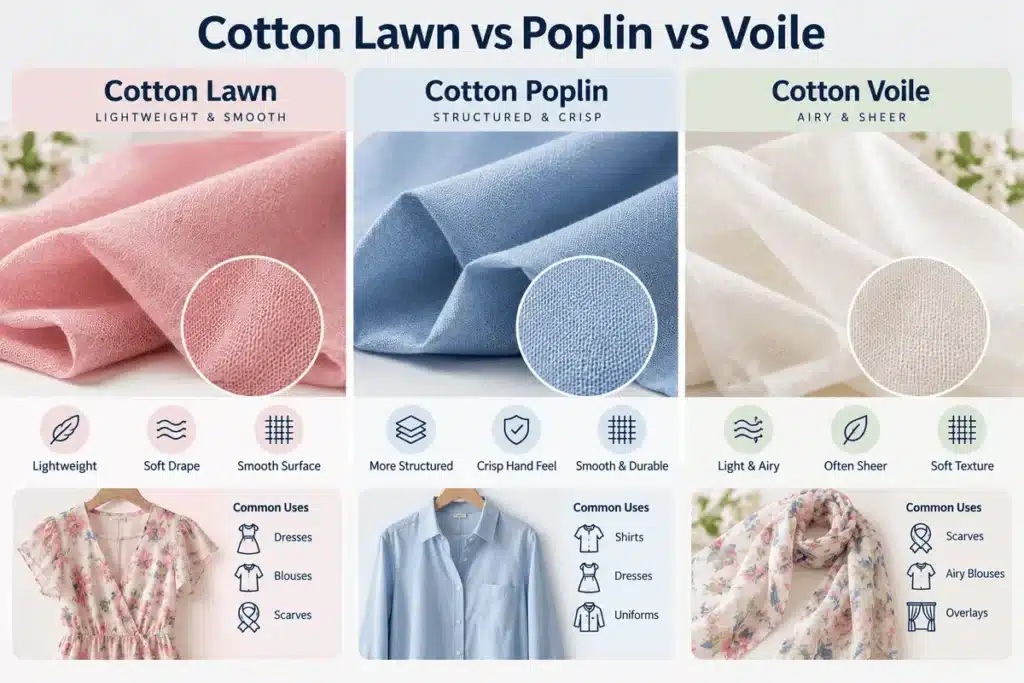
Cotton lawn is often compared with poplin and voile because all three may be used for shirts, blouses, and warm-weather garments.
However, their construction and hand feel can differ significantly.| Feature | Cotton Lawn | Cotton Poplin | Cotton Voile |
|---|---|---|---|
| Typical character | Fine, lightweight, smooth | Often firmer and more structured | Light, airy, often sheer |
| Weave | Fine plain weave | Closely woven, often with subtle crosswise rib | Fine plain weave, often with higher-twist yarns |
| Drape | Soft to gently crisp | More structured in many qualities | Light and flowing |
| Opacity | Varies; may be semi-sheer | Often greater in comparable apparel qualities | Frequently translucent |
| Common uses | Dresses, blouses, scarves | Shirts, dresses, uniforms | Overlays, scarves, airy blouses |
| Printing | Depends on the specific base and process | Depends on the specific base and process | Depends on the specific base and process |
When Should You Choose Cotton Lawn?
Choose cotton lawn when your project needs a fine, lightweight woven cotton with an attractive surface and gentle drape.
Consider poplin when a more structured appearance is important.
Consider voile when translucency and airy layering are desirable.
For fabric selection across different textile families, visit our fabric collection.
Best Uses for Cotton Lawn Fabric by the Yard
One of the advantages of buying cotton lawn fabric by the yard is the flexibility to order material for different sewing and design projects.
Summer Dresses
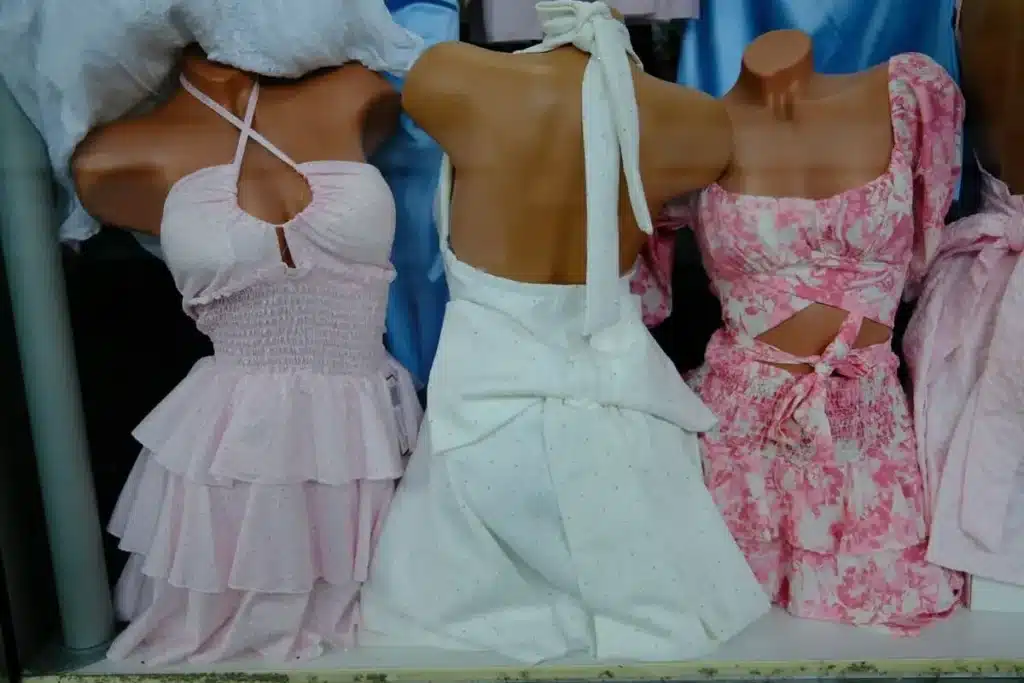
Cotton lawn is a useful choice for summer dresses, particularly relaxed silhouettes, gathered skirts, and designs with soft movement.
Floral prints, small botanical patterns, and delicate geometric designs are often well suited to this type of fabric.
For light-colored dresses, check whether a lining is needed.
Blouses and Shirts
Lightweight cotton lawn fabric is commonly used for blouses, casual shirts, and feminine tops.
Its fine texture can work well with details such as gathers, pintucks, ruffles, and delicate collars.
For a structured button-down shirt, compare lawn with poplin before choosing.
Children's Clothing
Cotton lawn may be considered for lightweight children’s dresses, shirts, and similar garments.
Fabric comfort, construction, durability, care performance, and applicable product safety requirements should be evaluated before production.
Scarves and Accessories
The light weight and smooth texture of cotton lawn make it an option for scarves, handkerchiefs, hair accessories, and other small textile projects.
Custom prints can add a distinctive design element.
Lightweight Home Textiles
Cotton lawn may be used for selected decorative textiles, lightweight curtains, and fabric accents.
For upholstery, heavy curtains, or other demanding applications, a more substantial fabric may be preferable.
Quilting and Sewing Projects
Cotton lawn can also be incorporated into some quilting projects, particularly when a soft, lightweight result is desired.
Because it may behave differently from standard quilting cotton, test cutting, seams, and pressing before combining it with heavier materials.
Can Cotton Lawn Fabric Be Digitally Printed?
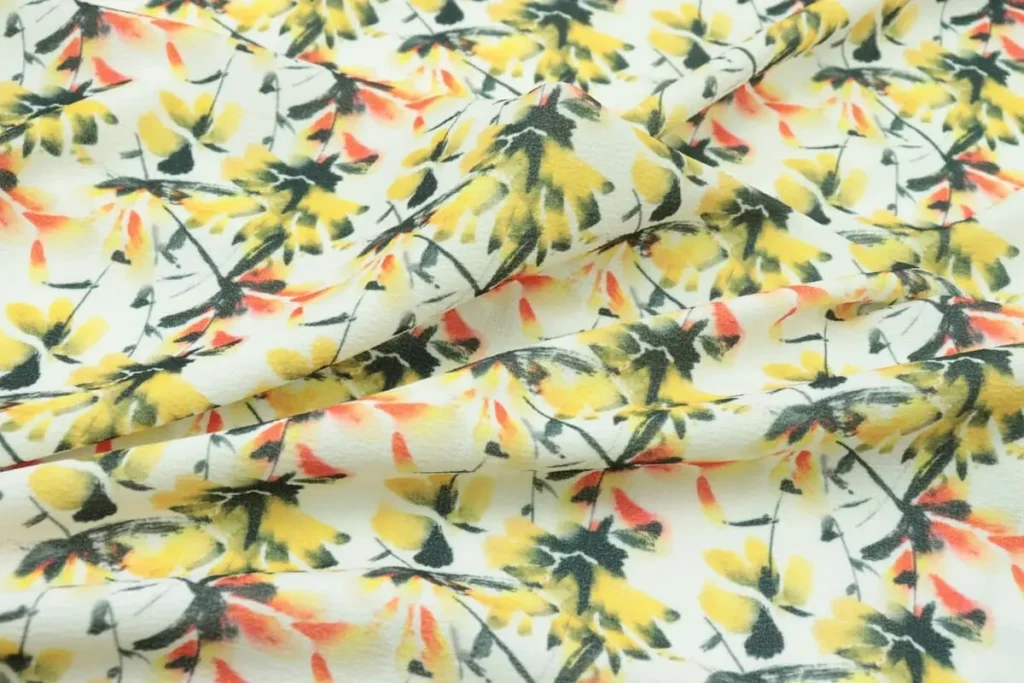
Yes. Cotton lawn can be suitable for digital textile printing when the fabric and printing process are compatible.
Its fine, relatively smooth surface can make it attractive for detailed artwork, including floral, botanical, abstract, and small-scale repeating patterns.
However, successful printing depends on more than the fabric name.
Printing Methods for Cotton Lawn
Cotton-rich fabrics may be printed using compatible reactive dye or pigment printing systems.
Reactive dye printing may be used for suitable cotton fabrics when the required pretreatment, fixation, washing, and finishing processes are available.
Pigment printing may also be an option, depending on the equipment, ink system, binder, and desired hand feel.
Neither method should be described as universally superior. Colorfastness, softness, cost, and environmental performance depend on the complete production process.
Read our fabric printing methods guide for a broader comparison.
Choosing Designs for Printed Cotton Lawn
Cotton lawn is particularly appealing for designs that benefit from a fine surface.
Popular design directions include:
Small floral repeats
Watercolor botanical illustrations
Vintage-inspired patterns
Minimalist geometric prints
Delicate stripes and dots
Personalized motifs for clothing collections
For precision patterns, review scale, repeat alignment, and expected dimensional changes.
Preparing Artwork for Printing
Before submitting a design:
Confirm the intended print dimensions.
Use suitable image resolution for the final print size.
Prepare a seamless repeat if continuous printing is required.
Discuss color expectations and the selected printing process.
Review a sample where color accuracy or pattern placement is critical.
Our artwork preparation guide explains file preparation in more detail.
Will Printed Cotton Lawn Feel Different?
It may.
Printing, pretreatment, washing, and finishing can affect fabric hand feel.
The outcome depends on the chosen printing process and the original fabric construction.
For apparel collections, evaluate both visual quality and the feel of the finished printed sample.
How to Buy Cotton Lawn Fabric by the Yard
Before ordering cotton lawn fabric by the yard, compare the specifications that influence sewing, printing, and garment production.
Cotton Lawn Buying Checklist
| Specification | What to Check |
|---|---|
| Fiber composition | Confirm whether the fabric is 100% cotton or a blend |
| GSM | Check finished fabric weight |
| Fabric width | Confirm usable width, not just nominal width |
| Weave | Review the actual plain-weave construction |
| Opacity | Examine the fabric against light |
| Hand feel | Compare softness, crispness, and drape |
| Shrinkage | Request dimensional stability information |
| Colorfastness | Check relevant wash and rubbing results |
| Printing compatibility | Confirm suitability for the selected method |
| Quantity | Check ordering increments and available lengths |
How Much Is One Yard of Fabric?
One linear yard equals 36 inches (91.44 cm) in length.
The width depends on the fabric.
For example, one yard of fabric with a usable width of 54 inches measures approximately 54 × 36 inches.
A fabric with a 44-inch width provides less area per linear yard than a 54-inch-wide fabric.
Therefore, the number of yards required for a garment cannot be calculated accurately from length alone.
How Much Cotton Lawn Do You Need?
Yardage depends on the pattern, garment size, fabric width, design repeat, and cutting layout.
For an accurate estimate:
Check the sewing pattern’s fabric requirements.
Confirm the usable fabric width.
Account for directional prints and pattern matching.
Allow for potential shrinkage where appropriate.
Include extra material for sampling or cutting errors.
For commercial production, a marker layout or sample cutting plan provides a more reliable estimate than a generic yardage rule.
Sewing Tips for Lightweight Cotton Lawn
Cotton lawn is relatively stable compared with many slippery lightweight fabrics, but its fine construction still deserves careful handling.
Prewash When Appropriate
If the finished garment will be laundered, prewashing may help reveal dimensional changes before cutting.
Follow the supplier’s instructions and use care conditions relevant to the final product.
For commercial orders, review shrinkage test results and sample performance.
Use a Suitable Needle
A fine, sharp needle may help produce clean stitches in lightweight woven cotton.
Test the needle and thread combination on a fabric offcut before sewing the final garment.
Choose Seam Finishes Carefully
French seams, narrow overlocked seams, and other neat finishes may be suitable for cotton lawn.
The best finish depends on garment design, seam allowance, and fabric behavior.
Handle Delicate Edges
Fine woven fabrics may fray at cut edges.
Avoid excessive handling and consider finishing seams promptly.
Press with Care
Use a temperature suitable for the actual fabric and any printing or finishing treatments.
Test pressing on a sample, particularly for custom printed materials.
How to Wash and Care for Cotton Lawn Fabric
Cotton lawn care requirements depend on the material, dyes, prints, and finishing processes.
As a general approach:
Follow the supplier’s care label.
Use washing conditions appropriate for the fabric.
Avoid unnecessary high heat.
Test printed fabric before commercial garment production.
Check for shrinkage, color changes, and distortion after laundering.
Some cotton lawn fabrics may be machine washable, while delicate or specially finished versions may require gentler care.
Avoid assuming that every cotton lawn product has the same shrinkage rate or wash durability.
For textile testing resources, see AATCC.
Cotton Lawn Fabric for Clothing Brands and Small Businesses
For independent clothing brands, cotton lawn can be an appealing material for warm-weather collections, limited-edition prints, and lightweight fashion pieces.
A typical development process includes:
Define the garment and desired fabric characteristics.
Select a suitable lawn construction and weight.
Review fabric swatches.
Prepare the artwork and confirm print scale.
Approve a printed sample when required.
Check dimensional stability and garment performance.
Confirm production quantity, lead time, and shipping requirements.
Custom Cotton Lawn Printing with JCWTextile
JCWTextile offers custom digital fabric printing for designers, small businesses, and wholesale customers, including no-minimum-order printing services.
The availability of cotton lawn as a specific printable base fabric must be confirmed before ordering. Not every cotton fabric in a supplier’s collection is necessarily cotton lawn.
For projects requiring cotton lawn, contact our team to confirm available constructions, GSM, width, printing compatibility, and sampling options.
Explore Our Fabrics, Design Your Fabric, or Get a Quote.
Conclusion
Cotton lawn fabric by the yard is a versatile option for lightweight dresses, blouses, scarves, and detailed printed designs.
Its fine woven construction, smooth texture, and soft drape make it especially appealing for warm-weather apparel and creative sewing projects.
When selecting cotton lawn, compare GSM, opacity, usable width, shrinkage, and printing compatibility rather than relying on the fabric name alone.
For designers and clothing brands interested in custom printing, sampling is an important step toward achieving the desired fabric feel and print quality.
Ready to develop a custom printed fabric collection?
Explore Our Fabrics, Design Your Fabric, or Get a Quote.
📚 FAQs About Cotton Lawn Fabric
1. What is cotton lawn fabric?
Cotton lawn is a lightweight, finely woven fabric traditionally made from cotton. It is known for its smooth surface and suitability for blouses, dresses, scarves, and other lightweight garments.
2. Is cotton lawn fabric 100% cotton?
Many conventional cotton lawn fabrics are 100% cotton, but composition should always be verified using the supplier’s product specification.
3. What is the typical GSM of cotton lawn fabric?
Many lightweight cotton lawn fabrics fall around 70–110 GSM, although actual weights vary by product and construction.
4. Is cotton lawn fabric see-through?
It can be semi-sheer, particularly in lighter weights or pale colors. Opacity should be checked on the actual fabric.
5. Is cotton lawn good for summer dresses?
Yes. Cotton lawn is commonly used for lightweight summer dresses because of its fine texture and drape. Some designs may require a lining.
6. What is the difference between cotton lawn and cotton poplin?
Cotton lawn is generally finer and lighter, while many cotton poplins are more structured. Actual specifications vary, so samples should be compared.
7. Can cotton lawn fabric be digitally printed?
Yes, suitable cotton lawn fabrics can be digitally printed using compatible processes. Printing conditions and finished performance should be confirmed through sampling.
8. Can I buy custom printed cotton lawn fabric by the yard?
Some suppliers offer cotton lawn printing by the yard. At JCWTextile, custom fabric printing is available without a minimum order requirement, but the availability of cotton lawn as a specific base fabric must be confirmed.
9. Does cotton lawn fabric shrink?
It can shrink or change dimensions during laundering. The amount depends on construction, finishing, and care conditions.
10. Is cotton lawn suitable for quilting?
It can be used in selected quilting projects, although its lighter weight and handling characteristics differ from standard quilting cotton.