Introduction
Have you ever wanted to transform a favorite photograph, artwork, or personal design into a unique textile product?
With modern photo fabric printing technology, it is now possible to print high-resolution images directly onto fabric and create personalized textiles for fashion, home décor, crafts, and branded products.
Unlike traditional textile printing methods that require large production quantities and complicated preparation, digital textile printing allows designers, artists, and businesses to print detailed images with flexible order quantities.
Whether you want to create a custom photo blanket, personalized clothing, printed fabric panels, decorative cushions, or unique handmade products, printing photos on fabric provides unlimited creative possibilities.
Today, digital printing technology makes it easier than ever to convert digital images into high-quality textile designs.
In this guide, you will learn:
- What photo fabric printing is
- How to print photos on fabric
- The best fabrics for photo printing
- Digital printing methods used for textile images
- How to prepare your image for fabric printing
- Common applications of custom photo printed fabric
- Tips for achieving the best print quality
For a complete overview of custom textile production, explore our Custom Fabric Printing Guide.
What Is Photo Fabric Printing?
Photo fabric printing is the process of transferring digital images, photographs, or artwork onto textile materials using advanced printing technology.
Instead of applying pre-made patterns, digital textile printers reproduce images directly onto fabric surfaces with high precision.
This allows manufacturers and designers to create:
- Personalized printed fabrics
- Custom photo textiles
- Artwork-based fabrics
- Branded textile products
- Small-batch custom designs
Traditional textile printing methods often require screens, plates, or minimum order quantities. Digital printing removes many of these limitations by allowing each fabric piece to have a different image or design.
For businesses, this means greater flexibility when developing custom collections, testing new products, or producing limited-edition designs.
For individuals, it means personal memories and creative ideas can become real textile products.
How Does Photo Fabric Printing Work?
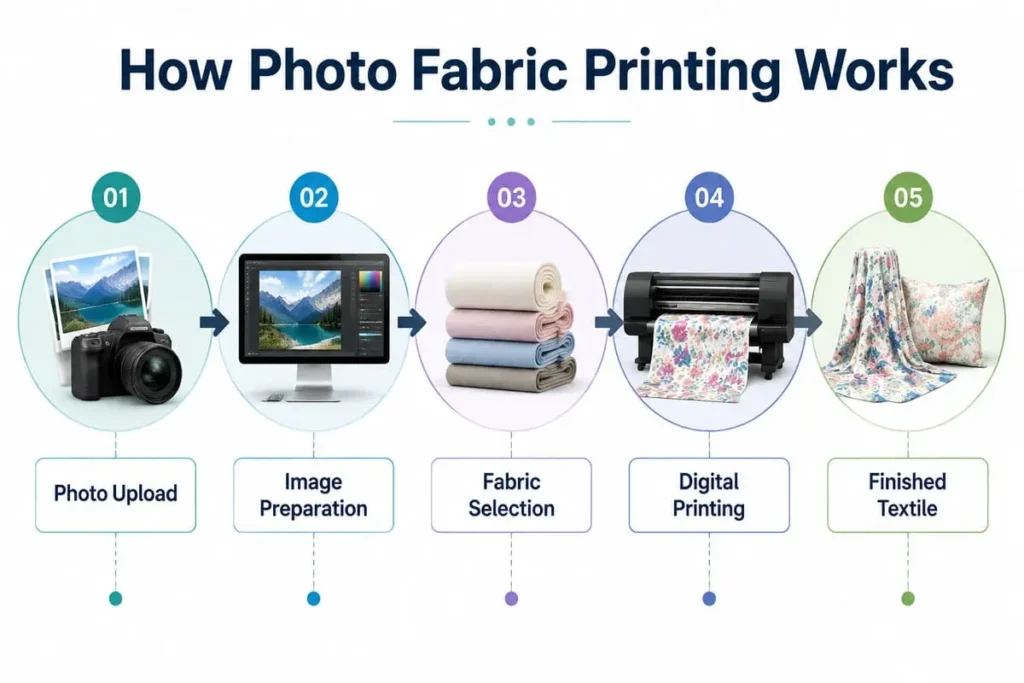
The process of printing photos on fabric usually includes several important steps.
1. Image Preparation
The first step is preparing the digital image.
A high-quality image should have:
- High resolution
- Accurate colors
- Proper file format
- Suitable dimensions for printing
Common file formats include:
- PNG
- JPG
- TIFF
- PSD
Large, clear images usually produce sharper textile prints.
For professional projects, designers often adjust:
- Color balance
- Brightness
- Contrast
- Image size
before sending artwork for printing.
2. Fabric Selection
Choosing the correct fabric is one of the most important factors in photo fabric printing.
Different fabrics create different visual effects.
For example:
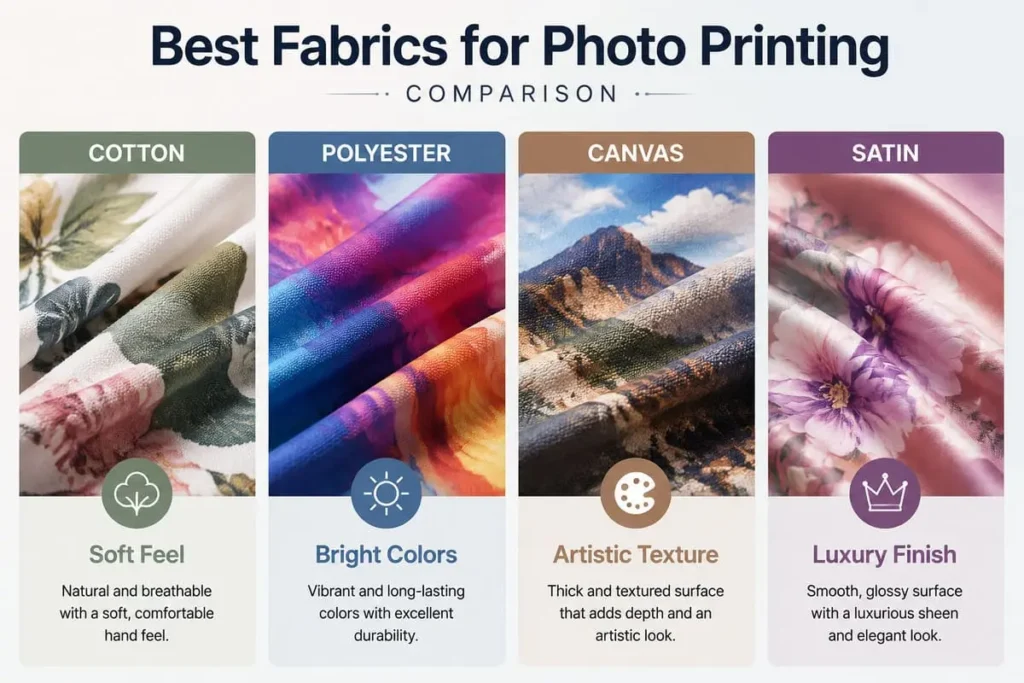
- Cotton provides a soft natural appearance
- Polyester creates bright and durable colors
- Canvas gives artwork a premium texture
- Satin creates a smooth and elegant finish
The best fabric depends on the final application.
For more information about fabric selection, read our guide:
3. Digital Textile Printing
After selecting the fabric, the image is printed using professional textile printers.
Digital printing machines spray tiny ink droplets directly onto the fabric surface.
This technology allows:
- Detailed photo reproduction
- Smooth color gradients
- Complex patterns
- Multiple colors
- Custom designs without minimum quantities
Unlike traditional printing, each piece can contain a completely different image.
4. Color Fixing and Finishing
After printing, the fabric usually requires color fixation.
This process improves:
- Color durability
- Wash resistance
- Print stability
For professional textile production, printed fabrics are often evaluated through standardized testing methods, including colorfastness, washing durability, and performance testing. Organizations such as AATCC provide internationally recognized textile testing standards for evaluating dyed and printed textile materials.
Depending on the fabric and ink type, finishing processes may include:
- Heat treatment
- Steam fixation
- Washing
- Drying
The final result is a durable printed textile ready for manufacturing.
Best Fabrics for Photo Printing
Different fabrics produce different results when printing photographs.
Choosing the right material helps achieve better color accuracy, texture, and durability.
Cotton Fabric for Photo Printing
Cotton is one of the most popular fabrics for photo fabric printing because of its softness, breathability, and natural appearance.
Understanding cotton fiber characteristics helps designers select suitable materials for different textile applications. CottonWorks provides educational resources about cotton fibers, fabric properties, and textile performance.
It is widely used because of:
- Soft hand feel
- Excellent breathability
- Natural appearance
- Comfortable texture
Cotton photo printing is commonly used for:
- Quilting fabric
- Apparel
- Baby products
- Home textiles
- Handmade crafts
Reactive printing and pigment printing are often used for cotton because they provide excellent color performance and a soft fabric feel.
Cotton is especially suitable when a natural textile appearance is more important than extremely bright colors.
Polyester Fabric for Photo Printing
Polyester is another excellent option for printing photos on fabric.
It is known for:
- Bright colors
- Sharp details
- Excellent durability
- Good color retention
Polyester fabrics are commonly used for:
- Sportswear
- Flags
- Backdrops
- Promotional textiles
- Performance clothing
Sublimation printing is especially popular for polyester because the ink bonds directly with the fibers, creating vibrant and long-lasting images.
Canvas Fabric for Photo Printing
Canvas fabric provides a thicker and more artistic surface.
It is often chosen for:
- Art reproductions
- Wall decorations
- Designer products
- Creative textile projects
Canvas creates a premium visual effect because the fabric texture adds depth to printed images.
Satin Fabric for Photo Printing
Satin has a smooth surface and elegant appearance.
It is suitable for:
- Fashion accessories
- Scarves
- Decorative textiles
- Luxury products
Photos printed on satin can have a beautiful color shine because of the fabric’s smooth texture.
Chiffon and Lightweight Fabrics
Chiffon and other lightweight fabrics can also be digitally printed.
They are commonly used for:
- Fashion garments
- Scarves
- Decorative layers
Because these fabrics are thin and delicate, printing quality depends on proper ink selection and production techniques.
Digital Printing Methods for Photo Fabric Printing
Different printing technologies are used depending on the fabric type and final application.
Reactive Printing
Reactive printing is commonly used for natural fibers such as:
- Cotton
- Linen
- Bamboo fabrics
Advantages:
- Excellent color penetration
- Soft fabric feel
- High wash durability
It is ideal for apparel and premium textile products.
Pigment Printing
Pigment printing works with a wide range of fabrics.
Benefits include:
- Flexible fabric compatibility
- Simple production process
- Suitable for many applications
It is commonly used for:
- Cotton
- Blended fabrics
- Decorative textiles
Sublimation Printing
Sublimation printing is mainly used for polyester fabrics.
Advantages:
- Bright colors
- Sharp image details
- Excellent durability
It is popular for:
- Sportswear
- Custom uniforms
- Polyester textiles
How to Prepare Your Photo for Fabric Printing
A good image preparation process improves the final printing result.
Use a High-Resolution Image
Low-resolution images may appear:
- Blurry
- Pixelated
- Less detailed
For fabric printing, high-quality images are recommended.
Choose the Correct Color Mode
Professional printing workflows often use:
- RGB for digital artwork
- CMYK for production preparation
Color differences may occur between screens and printed fabrics, so professional color management is important.
Consider Fabric Texture
Fabric texture affects image appearance.
For example:
Cotton:
- Soft
- Natural look
Satin:
- Smooth
- More vibrant appearance
Canvas:
- Artistic texture
The same image may look different on different fabrics.
Applications of Custom Photo Printed Fabric
Photo fabric printing is used in many industries.
Fashion and Apparel
Designers use custom photo fabrics for:
- Dresses
- Shirts
- Scarves
- Accessories
Unique image-based textiles help brands create exclusive collections.
Home Décor
Printed photo fabrics are popular for:
- Curtains
- Cushions
- Blankets
- Table textiles
Personalized home products can combine emotional value with creative design.
Baby Products
Custom printed fabrics are widely used for:
- Baby blankets
- Baby clothing
- Nursery decorations
Parents and brands can create personalized textile products with unique images.
Creative and Handmade Projects
Artists and makers use photo printed fabrics for:
- Quilting
- Craft projects
- DIY products
- Limited collections
Digital printing makes small-batch creative production easier.
Benefits of Photo Fabric Printing
Unlimited Design Possibilities
Digital printing allows almost any image to become a textile design.
You can print:
- Photos
- Logos
- Illustrations
- Patterns
- Artwork
No Minimum Order Requirements
Traditional printing often requires large production runs.
Digital printing allows:
- Sample production
- Small quantities
- Custom projects
This is especially useful for designers and small businesses.
Faster Product Development
Businesses can quickly test new designs without investing in large inventories.
This helps brands:
- Reduce production risks
- Launch new collections faster
- Create limited editions
Why Choose JCWTextile for Photo Fabric Printing?
JCWTextile provides custom textile printing solutions for designers, brands, and businesses worldwide.
Our services include:
- Custom photo fabric printing
- Digital textile printing
- Multiple fabric choices
- Small-batch production
- Worldwide shipping
Customers can upload their own designs and create personalized fabrics for different applications.
Whether you need custom fabrics for fashion, home décor, crafts, or branded products, JCWTextile helps turn creative ideas into finished textiles.
Start your project through our Design Your Fabric service.
Conclusion
Photo fabric printing has changed the way designers and businesses create custom textiles.
With advanced digital printing technology, photographs, artwork, and personal designs can be transformed into high-quality fabrics for countless applications.
The best results come from choosing the right combination of:
- Image quality
- Fabric type
- Printing method
- Finishing process
Cotton provides a natural and comfortable feel, polyester delivers bright and durable colors, and specialty fabrics such as satin and canvas create unique visual effects.
Whether you are creating personalized products, launching a fashion collection, or developing custom textile projects, digital photo printing provides the flexibility and creativity needed for modern textile production.
📚 Frequently Asked Questions (FAQs)
1. Can I print my own photo on fabric?
Yes. With digital photo fabric printing, you can print your own photos, artwork, or designs onto different fabrics. High-resolution images usually provide the best printing results.
2. What fabric is best for printing photos?
Cotton, polyester, canvas, and satin are popular choices for printing photos on fabric. The best fabric depends on the desired texture, color performance, and final product application.
3. Can photos be printed on cotton fabric?
Yes. Cotton is widely used for photo fabric printing because it provides a soft feel, natural appearance, and comfortable texture.
4. Is digital fabric printing suitable for small quantities?
Yes. Digital printing is ideal for small-batch production because it does not require traditional printing setup processes or large minimum orders.
5. How long does printed fabric last?
The durability of printed fabric depends on the fabric type, ink technology, and finishing process. Professional digital textile printing can provide excellent color durability when properly produced.
6. Can I print a logo or artwork on fabric?
Yes. Digital textile printing allows customers to print logos, illustrations, patterns, and custom artwork onto many types of fabrics.