Introduction
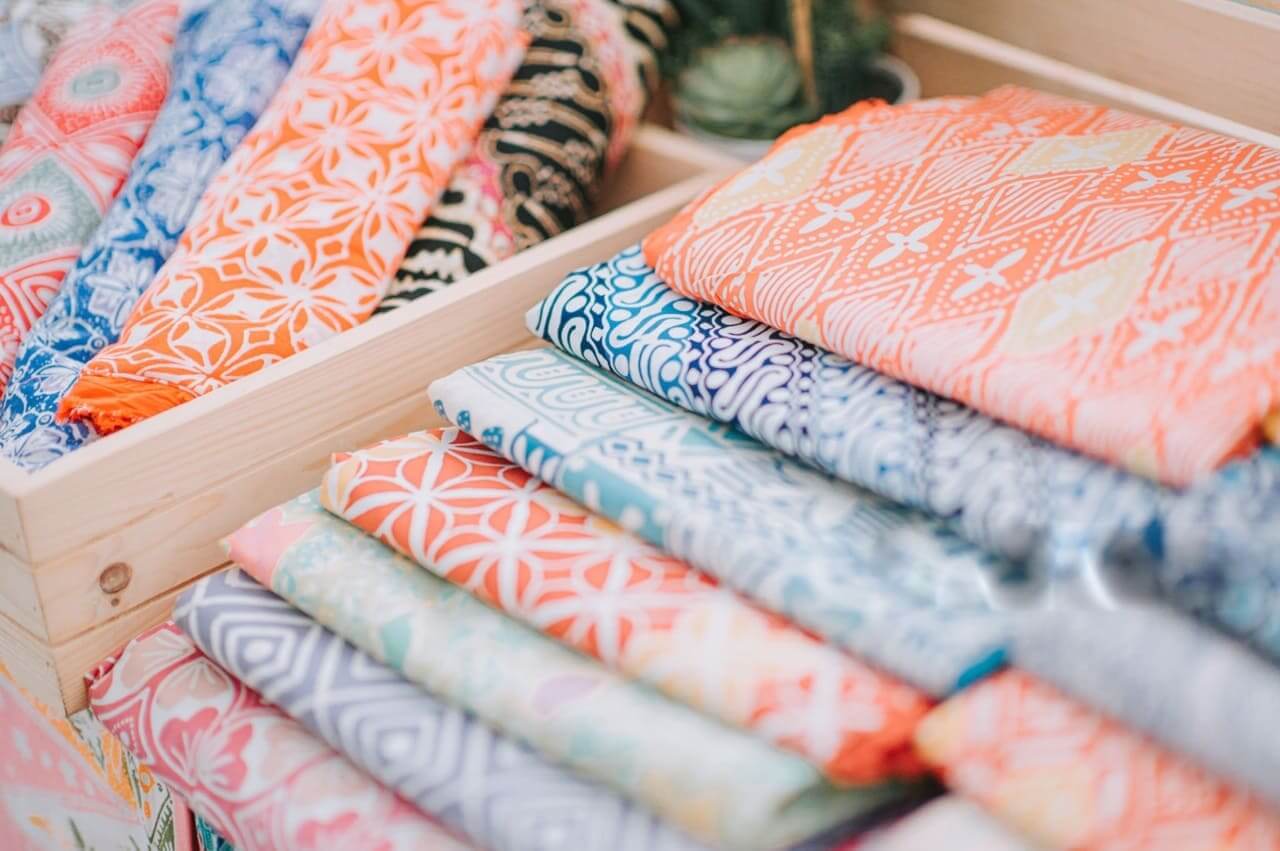
Sustainability has become an important consideration for fashion brands, textile designers, and businesses looking for environmentally responsible materials.
Organic cotton fabric printing provides a way to create customized textiles while using cotton grown without conventional agricultural chemicals and produced with more sustainable practices.
From clothing and baby products to home textiles and lifestyle accessories, organic cotton offers a natural, comfortable, and versatile solution for brands developing eco-conscious products.
With modern digital textile printing technology, businesses can transform organic cotton fabrics into unique printed materials featuring:
- Custom patterns
- Brand artwork
- Illustrations
- Logos
- Creative textile designs
Unlike traditional textile production methods that often require large quantities, digital printing allows designers and small businesses to develop flexible collections with reduced waste.
This guide explains what organic cotton fabric printing is, how it works, its benefits, suitable applications, and why it is becoming an important choice for sustainable textile production.
For a complete overview of fabric printing methods and production processes, explore our Custom Fabric Printing Guide.
Table of Contents:organic cotton fabric printing
What Is Organic Cotton Fabric Printing?
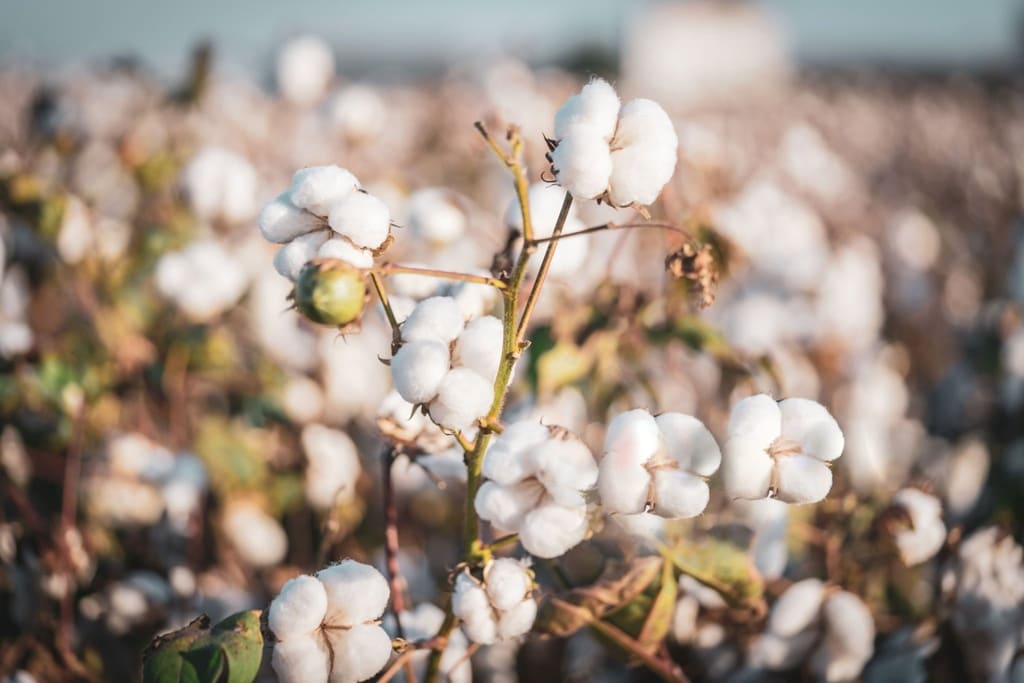
Organic cotton fabric printing is the process of applying custom designs, patterns, or artwork onto organic cotton textiles.
The process combines:
- Certified organic cotton materials
- Digital textile printing technology
- Eco-conscious production methods
to create customized fabrics for different applications.
Instead of purchasing standard cotton materials, brands can develop their own printed organic cotton fabrics based on their specific requirements.
Common customization options include:
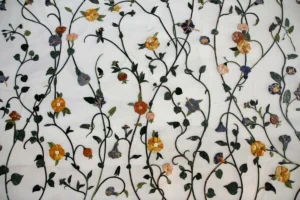
- Floral patterns
- Geometric designs
- Children’s prints
- Fashion artwork
- Brand logos
- Personalized illustrations
Organic cotton fabric printing is especially suitable for businesses that want to create products with both visual appeal and sustainable value.
What Makes Organic Cotton Different?
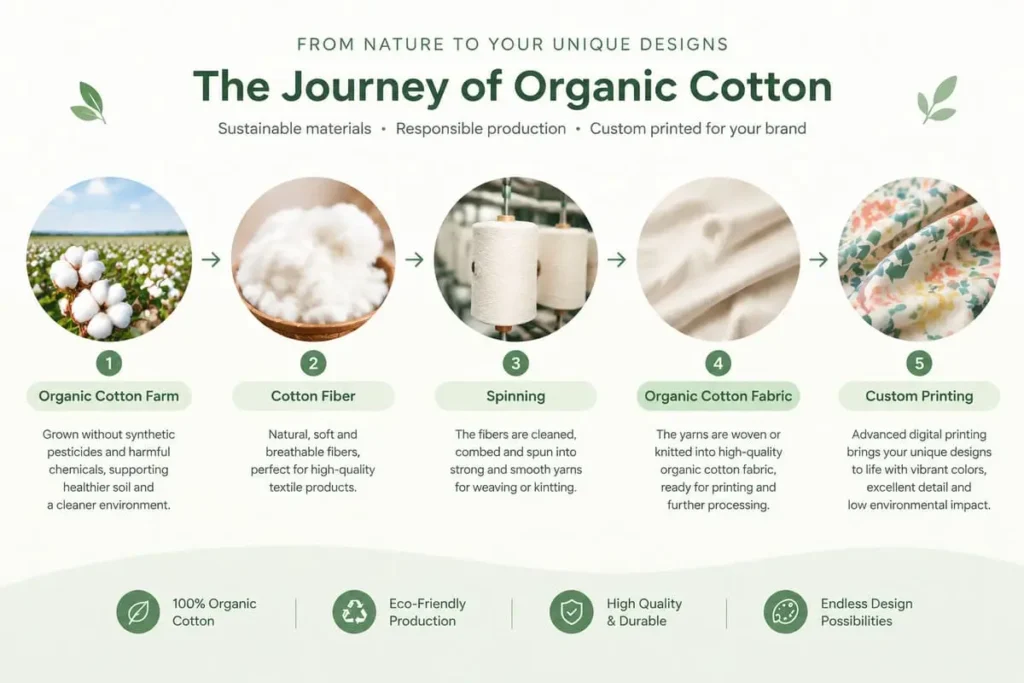
Organic cotton is produced using farming methods designed to reduce environmental impact. Industry organizations such as Textile Exchange provide resources and standards that support responsible fiber production and sustainable textile development.
Compared with conventional cotton production, organic cotton focuses on:
- Avoiding synthetic pesticides
- Supporting healthier soil
- Reducing chemical input
- Encouraging responsible farming practices
For textile brands, organic cotton provides a natural material choice with benefits such as:
Soft and Comfortable Texture
Organic cotton is known for its soft hand feel, making it suitable for products that come into direct contact with skin.
Common applications include:
- Baby textiles
- Clothing
- Bedding
- Home accessories
Natural Fiber Performance
As a natural fiber, organic cotton provides:
- Breathability
- Comfort
- Moisture absorption
- Versatile textile applications
Sustainable Brand Positioning
Many consumers now consider sustainability when choosing products.
Using organic cotton fabrics can help brands communicate:
- Environmental responsibility
- Natural material choices
- Ethical product development
For brands looking for certified organic textiles, the Global Organic Textile Standard (GOTS) is one of the most recognized standards covering organic fibers and responsible textile processing.
How Organic Cotton Fabric Printing Works
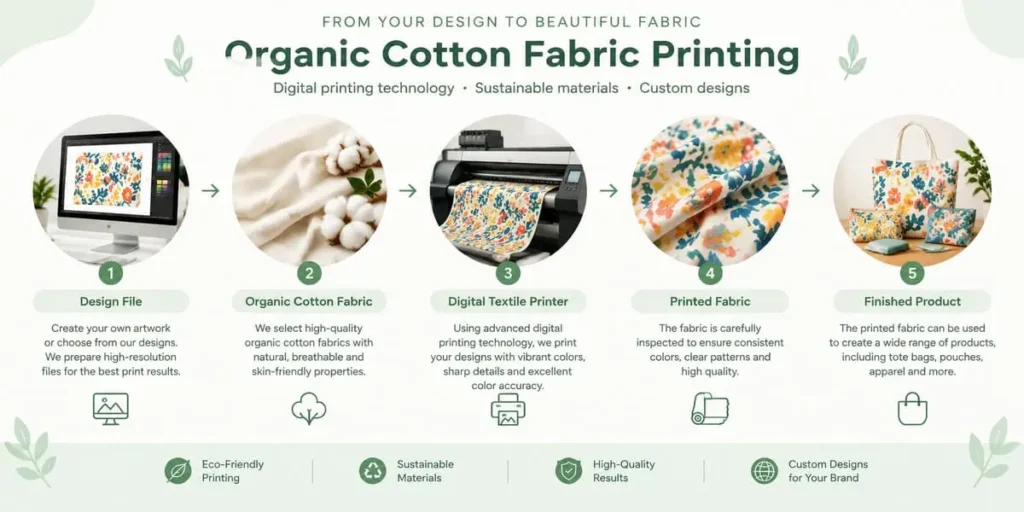
Modern digital printing technology makes it possible to create detailed designs on organic cotton fabrics.
The typical process includes:
1. Artwork Preparation
Designers prepare digital artwork including:
- Patterns
- Illustrations
- Logos
- Repeat designs
High-quality files help ensure accurate printing results.
2. Fabric Selection
The appropriate organic cotton fabric is selected based on:
- Product application
- Fabric weight
- Texture requirements
- Final product purpose
3. Digital Textile Printing
Digital printers apply designs directly onto the fabric surface.
Advantages include:
- Detailed patterns
- Multiple colors
- Flexible production
- Reduced material waste
4. Finishing and Quality Inspection
After printing, fabrics are checked for:
- Color accuracy
- Print quality
- Fabric performance
before shipment or further manufacturing.
Benefits of Custom Organic Cotton Fabric
Sustainable Material Choice
One of the biggest advantages of organic cotton printing is combining customized design with sustainable material selection.
Brands can create unique textiles while meeting growing demand for environmentally responsible products.
Suitable for Sensitive Products
Because organic cotton has a soft and natural feel, it is often selected for products such as:
- Baby blankets
- Children’s clothing
- Nursery textiles
- Skin-friendly garments
For more information about printed baby textiles, explore our guide on Custom Fabric Printing for Baby Products.
Flexible Design Options
Digital printing allows businesses to create:
- Small collections
- Limited edition products
- Seasonal designs
- Personalized fabrics
This flexibility is especially valuable for independent designers and emerging brands.
Reduced Production Waste
Traditional textile printing methods may require large production runs.
Digital organic cotton printing allows more efficient production by supporting:
- On-demand manufacturing
- Small batch orders
- Design testing
For businesses looking for flexible quantities, explore our Low MOQ Custom Fabric Printing solutions.
Many textile brands also consider safety certifications such as OEKO-TEX® when selecting fabrics for consumer products.
Best Applications for Organic Cotton Printed Fabrics
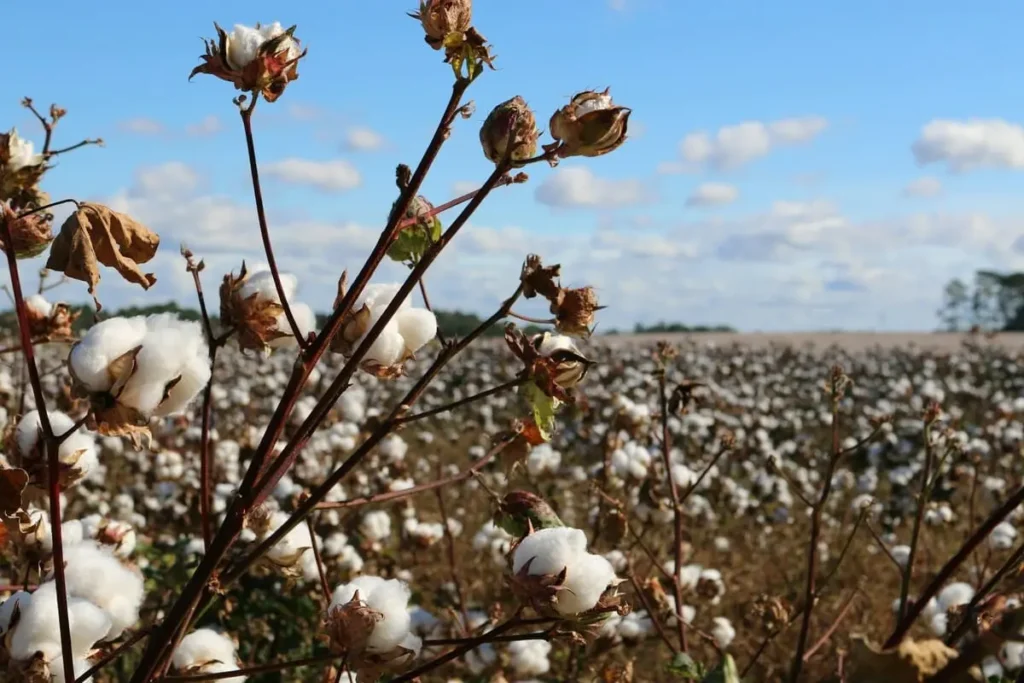
Organic cotton fabrics are used across many printed fabric applications, including fashion, baby products, home textiles, and lifestyle accessories.
Organic Cotton Clothing
Fashion brands use organic cotton printing for:
- Dresses
- Shirts
- Children’s clothing
- Casual apparel
Designers can create exclusive fabrics that match their brand identity.
Baby Products and Nursery Textiles
Organic cotton is especially popular for baby-related products.
Applications include:
- Baby blankets
- Swaddles
- Nursery accessories
- Baby clothing
Its soft texture makes it suitable for products designed for sensitive skin.
Home Textile Products
Organic cotton printed fabrics can also be used for:
- Pillow covers
- Curtains
- Bedding
- Decorative textiles
Brands can combine sustainable materials with personalized interior designs.
Lifestyle Accessories
Organic cotton is suitable for:
- Tote bags
- Pouches
- Fabric accessories
- Handmade products
Small brands can use custom printed organic cotton to create unique lifestyle collections.
Organic Cotton vs Conventional Cotton Printing
| Feature | Organic Cotton Printing | Conventional Cotton Printing |
|---|---|---|
| Material Source | Organic cotton fibers | Standard cotton fibers |
| Sustainability Focus | Higher focus on responsible production | Depends on farming methods |
| Consumer Appeal | Strong eco-friendly positioning | Traditional textile choice |
| Applications | Fashion, baby, home textiles | Wide textile applications |
| Branding Value | Supports sustainable product stories | General textile positioning |
Digital Printing for Sustainable Textiles
Organic cotton printing is an important application of sustainable digital fabric printing, combining responsible materials with efficient production methods.
Compared with some traditional printing methods, digital printing provides:
Design Flexibility
Brands can print:
- Complex artwork
- Detailed patterns
- Multiple colors
without creating separate screens.
Small Batch Production
Digital printing supports:
- Prototype development
- Limited collections
- Custom orders
making it suitable for small and medium-sized brands.
Efficient Material Usage
Because designs are printed digitally, businesses can reduce unnecessary production caused by large minimum quantities.
To learn more about digital printing technology, see:
Design Tips for Organic Cotton Fabric Printing
Choose Suitable Patterns
Organic cotton works well with:
- Floral designs
- Botanical patterns
- Children’s illustrations
- Minimalist artwork
Consider Fabric Weight
Different applications require different fabric weights.
Examples:
| Application | Recommended Fabric Weight |
|---|---|
| Baby Products | Lightweight Cotton |
| Clothing | Medium Weight Cotton |
| Bags | Heavy Cotton Canvas |
| Home Textiles | Medium to Heavy Cotton |
Test Samples Before Production
Before larger production, samples help evaluate:
- Color appearance
- Fabric texture
- Print quality
- Final product suitability
Why Choose JCW Textile for Organic Cotton Fabric Printing?
JCW Textile provides custom fabric printing solutions for businesses seeking sustainable textile options.
Our services support:
- Fashion brands
- Baby product companies
- Home textile businesses
- Creative designers
- Small businesses
We help customers transform ideas into custom printed fabrics using:
- Digital textile printing
- Flexible production options
- Custom artwork printing
- Sustainable fabric choices
Organic cotton printing allows brands to create products that combine:
- Unique designs
- Natural materials
- Sustainable positioning
Whether you need samples, small quantities, or larger production runs, JCW Textile provides customized textile solutions.
📚 Frequently Asked Questions (FAQs)
1. What is organic cotton fabric printing?
Organic cotton fabric printing is the process of applying custom designs, patterns, or artwork onto organic cotton textiles using textile printing technology.
2. Is organic cotton suitable for digital printing?
Yes. Organic cotton fabrics can be printed using digital textile printing methods to create detailed and customized designs.
3. What products can use printed organic cotton fabric?
Printed organic cotton fabrics are commonly used for clothing, baby products, bedding, home textiles, tote bags, and lifestyle accessories.
4. Is organic cotton better than regular cotton?
Organic cotton is often chosen by brands seeking more sustainable material options and stronger environmental positioning.
5. Can I order small quantities of organic cotton printed fabric?
Yes. Digital printing supports flexible production options, making organic cotton printing suitable for small brands and limited collections.
Conclusion
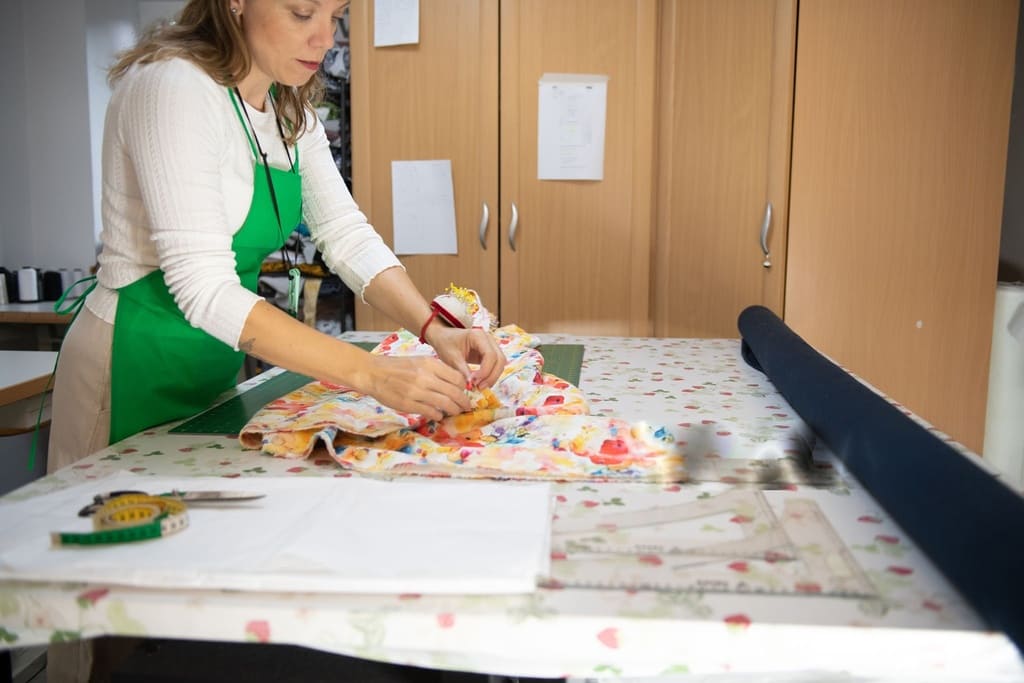
Organic cotton fabric printing allows brands to create customized textiles while supporting the growing demand for sustainable materials.
From fashion and baby products to home textiles and lifestyle accessories, printed organic cotton fabrics provide a combination of comfort, creativity, and responsible textile choices.
With digital printing technology, businesses can develop unique collections without requiring large production quantities.
JCW Textile helps designers and brands create custom organic cotton fabrics that bring sustainable textile ideas to life.