Introduction
Choosing the right fabric is one of the most important decisions when creating custom printed textiles. Many designers, fashion brands, and businesses ask the same question:
Table of Contents:What fabric is best for digital printing?
What fabric is best for digital printing?
The answer depends on several factors, including the fabric composition, printing technology, desired appearance, durability requirements, and final application.
Digital fabric printing has changed the textile industry by allowing businesses to create unique patterns, photographs, logos, and artwork without traditional printing limitations. Compared with conventional printing methods, digital printing provides more flexibility, faster sampling, and the ability to produce small quantities of customized fabric.
However, not every fabric performs the same way during digital printing.
For example:
- Cotton fabrics are popular for their softness and natural feel.
- Polyester fabrics are ideal for vibrant sublimation printing.
- Linen offers a premium natural texture.
- Fleece works well for blankets and cozy textile products.
- Satin and chiffon create elegant fashion fabrics.
In this guide, we will explain:
- What makes a fabric suitable for digital printing
- The best fabrics for different printing methods
- Cotton, polyester, linen, fleece, satin, chiffon, and spandex printing options
- How to choose the right fabric for your project
- Common applications of digitally printed fabrics
For a complete overview of custom textile production, including printing methods, fabric selection, and ordering steps, explore our Custom Fabric Printing Guide.
How to Choose the Best Fabric for Digital Printing
The best fabric for digital printing depends on the relationship between the fiber, ink, and printing technology.
Choosing the correct printing method ensures better color accuracy, durability, and fabric performance. Textile testing organizations such as AATCC provide industry standards and testing methods for evaluating textile colorfastness and performance.
Before selecting a material, consider the following factors:
1. Fiber Composition
Fabric fibers determine how well ink can bond with the material.
Natural fibers:
- Cotton
- Linen
- Bamboo
- Rayon
Usually work well with reactive or pigment printing.
Synthetic fibers:
- Polyester
- Nylon
- Spandex blends
are often suitable for sublimation or pigment printing.
To learn more about fabrics, please visit our fabrics page.
2. Printing Method Compatibility
Different fabrics require different digital printing technologies.
| Fabric Type | Common Printing Method | Advantages |
|---|---|---|
| Cotton | Reactive Printing | Soft feel and excellent color absorption |
| Polyester | Sublimation Printing | Bright colors and high durability |
| Linen | Reactive / Pigment Printing | Natural texture and premium appearance |
| Fleece | Pigment Printing | Suitable for blankets and plush products |
| Satin | Reactive / Acid Printing | Smooth and elegant finish |
| Spandex | Sublimation / Pigment Printing | Stretch performance |
Choosing the correct printing method ensures better color accuracy, durability, and fabric performance.
3. Final Application
The best fabric also depends on how the printed textile will be used.
For example:
| Application | Recommended Fabrics |
|---|---|
| Fashion clothing | Cotton, Satin, Chiffon, Spandex |
| Sportswear | Polyester, Polyester-Spandex |
| Baby products | Cotton, Bamboo, Muslin |
| Blankets | Fleece, Sherpa, Minky |
| Home décor | Linen, Canvas, Cotton |
| Accessories | Satin, Twill, Polyester |
Cotton Fabric for Digital Printing
Why Cotton Is One of the Best Fabrics for Digital Printing
Cotton is one of the most widely used fabrics for custom printing because it provides:
- Soft hand feel
- Excellent breathability
- Natural appearance
- Comfortable wear
Understanding cotton fiber properties is important when selecting the right material for digital printing projects. Additional information about cotton characteristics, textile performance, and fiber applications can be found through Cotton Incorporated’s textile resources.
Digital printing on cotton fabric is especially popular for:
- Apparel
- Quilting fabrics
- Baby products
- Home textiles
Best Printing Methods for Cotton Fabric
Cotton is commonly printed using:
Reactive Printing
Reactive printing creates a chemical bond between the dye and cotton fiber.
Benefits include:
- Excellent color depth
- Soft fabric surface
- Good wash durability
Pigment Printing
Pigment printing sits on the fabric surface and works with various textile materials.
Benefits:
- Flexible production
- Lower processing requirements
- Suitable for many applications
Popular Cotton Fabrics for Custom Printing
JCWTextile cotton options include:
- Cotton Poplin
- Cotton Twill
- Cotton Sateen
- Quilting Cotton
Cotton is an excellent choice for customers looking for comfortable, natural, and versatile custom printed fabric.
Polyester Fabric for Digital Printing
Is Polyester Good for Digital Printing?
Yes.
Polyester is one of the best fabrics for digital printing, especially when using sublimation technology.
Digital printing on polyester fabric is widely used for:
- Sportswear
- Activewear
- Flags
- Promotional textiles
- Performance clothing
Advantages of Polyester Printing
Polyester provides:
- Bright colors
- Excellent print sharpness
- Fast drying performance
- Strong durability
During sublimation printing, ink becomes part of the polyester fiber structure, creating long-lasting designs.
Polyester Fabric Applications
Common polyester printed products include:
- Athletic uniforms
- Swimwear
- Outdoor textiles
- Custom fashion products
For projects requiring vibrant colors and high durability, polyester is often the preferred choice.
Linen Fabric for Digital Printing
Is Linen Suitable for Digital Printing?
Yes.
Linen is a premium natural fiber with a unique texture and elegant appearance.
Digital printing on linen fabric is popular for:
- Home décor
- Curtains
- Cushion covers
- Premium fashion products
Benefits of Printed Linen Fabric
Linen provides:
- Natural texture
- Breathability
- Premium appearance
- Eco-friendly appeal
Because linen has a textured surface, printed designs often have a more artistic and handcrafted look.
Fleece Fabric for Digital Printing
Can Fleece Fabric Be Digitally Printed?
Yes.
Fleece is commonly used for:
- Blankets
- Baby products
- Plush textiles
- Winter accessories
Why Choose Printed Fleece?
Fleece offers:
- Soft surface
- Warmth
- Comfortable touch
- Excellent suitability for cozy products
Pigment printing is often used for fleece because it allows detailed patterns while maintaining softness.
Popular fleece materials include:
- Polyester fleece
- Blizzard fleece
- Plush fleece
Satin Fabric for Digital Printing
Is Satin Good for Custom Printing?
Satin is an excellent choice for elegant and decorative textiles.
It is commonly used for:
- Scarves
- Dresses
- Fashion accessories
- Luxury home textiles
Benefits of Printed Satin Fabric
Satin provides:
- Smooth surface
- Glossy appearance
- Elegant drape
- High-end fashion feeling
Digital printing allows satin fabrics to display detailed patterns, floral designs, and photographic images.
Chiffon Fabric for Digital Printing
Can Chiffon Be Digitally Printed?
Yes.
Chiffon is a lightweight and semi-transparent fabric commonly used in fashion.
Applications include:
- Dresses
- Scarves
- Blouses
- Fashion accessories
Advantages of Printed Chiffon
Chiffon offers:
- Lightweight structure
- Flowing appearance
- Soft texture
Digital printing is ideal for creating delicate floral, abstract, and artistic patterns on chiffon.
Spandex and Stretch Fabric Printing
Is Spandex Suitable for Digital Printing?
Yes.
Stretch fabrics containing spandex or Lycra are commonly used for:
- Activewear
- Swimwear
- Yoga clothing
- Performance apparel
Benefits of Printed Spandex Fabric
Advantages include:
- Stretch performance
- Comfortable fit
- Vibrant colors
- Flexible movement
For stretch applications, fabric composition and printing technology must be carefully selected to maintain print quality after stretching.
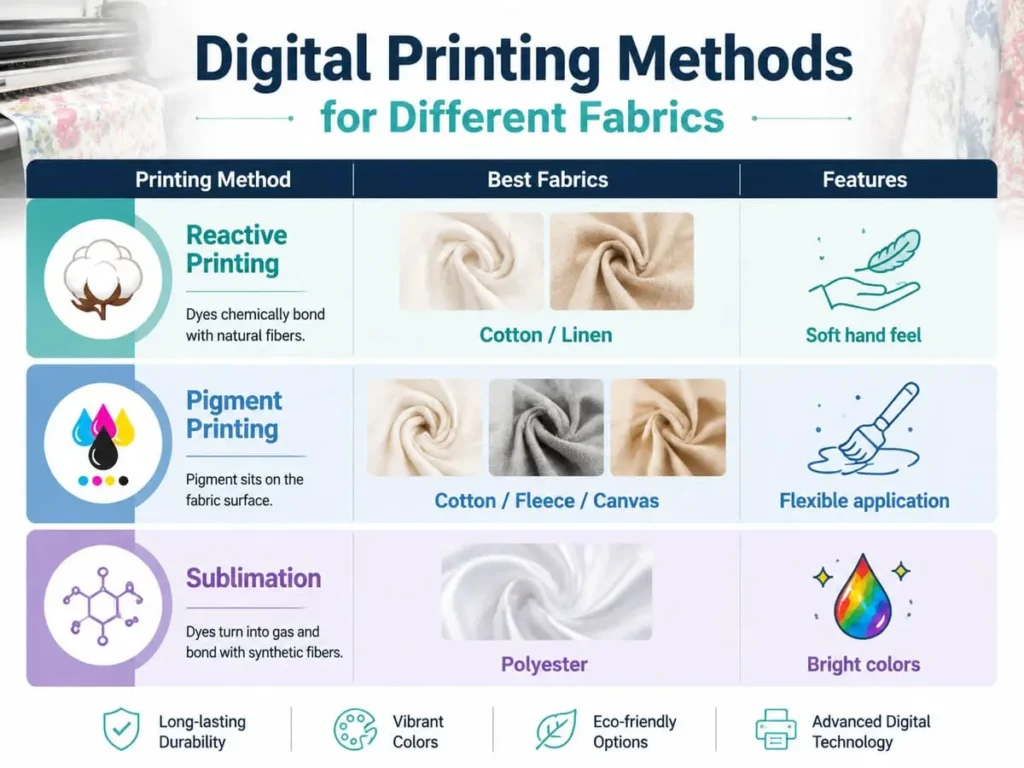
Digital Printing Methods for Different Fabrics
Understanding printing technology helps you choose the right material.
Reactive Printing
Best for:
- Cotton
- Linen
- Bamboo
Advantages:
- Soft hand feel
- Excellent color performance
- High-quality textile appearance
Sublimation Printing
Best for:
- Polyester
Advantages:
- Bright colors
- Durable prints
- Excellent sportswear performance
Pigment Printing
Best for:
- Cotton
- Fleece
- Canvas
- Mixed fabrics
Advantages:
- Flexible application
- Suitable for various materials
Fabric Comparison Chart: Which Fabric Is Best for Digital Printing?
| Fabric | Best Printing Method | Best Applications |
|---|---|---|
| Cotton | Reactive Printing | Clothing, quilting, baby products |
| Polyester | Sublimation | Sportswear, activewear |
| Linen | Reactive/Pigment | Home décor, premium textiles |
| Fleece | Pigment | Blankets, plush products |
| Satin | Reactive/Acid | Fashion accessories |
| Chiffon | Reactive/Acid | Scarves and dresses |
| Spandex | Sublimation/Pigment | Swimwear and activewear |
How to Select the Right Fabric for Your Custom Printing Project
Before ordering custom printed fabric, consider:
1. Product Purpose
Ask:
- Is it clothing?
- Home décor?
- Baby products?
- Accessories?
The application determines the best material.
2. Desired Fabric Feel
Different fabrics create different experiences:
Soft:
- Cotton
- Bamboo
- Fleece
Luxury:
- Satin
- Linen
Stretch:
- Spandex blends
3. Print Appearance
For:
Bright photographic designs:
Choose:
- Polyester
Natural artistic patterns:
Choose:
- Cotton
- Linen
4. Order Quantity
Digital fabric printing is ideal for:
- Small businesses
- Independent designers
- Custom projects
Because it does not require large minimum quantities like traditional printing.
Why Choose JCWTextile for Custom Printed Fabric?
JCWTextile provides custom fabric printing solutions for designers, brands, and businesses worldwide.
Our advantages include:
No Minimum Order Requirement
Create custom fabrics without committing to large production quantities.
Wide Fabric Selection
Choose from various materials including:
- Cotton
- Polyester
- Linen
- Fleece
- Satin
- Spandex
Custom Design Support
Upload your own:
- Patterns
- Photos
- Logos
- Artwork
and transform them into unique textiles.
Global Shipping
We support customers worldwide with custom textile production services.
Start your project through our Design Your Fabric service.
Conclusion
So, what fabric is best for digital printing?
There is no single answer because the best fabric depends on your design, application, and printing method.
- Cotton is best for natural apparel and home textiles.
- Polyester is ideal for vibrant and durable prints.
- Linen provides a premium natural appearance.
- Fleece is perfect for blankets and cozy products.
- Satin and chiffon create elegant fashion textiles.
- Spandex works well for stretch applications.
Choosing the right fabric is the first step toward creating high-quality custom printed textiles.
With the right combination of fabric and digital printing technology, designers and businesses can create unique products with unlimited possibilities.
📚 Frequently Asked Questions (FAQs)
1. What fabric is best for digital printing?
The best fabric for digital printing depends on the application. Cotton is excellent for natural textiles, polyester is ideal for vibrant sublimation printing, and linen provides a premium natural texture.
2. Can cotton fabric be digitally printed?
Yes. Digital printing on cotton fabric is widely used for apparel, quilting, baby products, and home textiles. Reactive printing is commonly used because it provides excellent color performance.
3. Is polyester good for digital printing?
Yes. Polyester is one of the best fabrics for digital printing because sublimation printing creates bright, durable, and long-lasting designs.
4. What fabrics can be digitally printed?
Many fabrics can be digitally printed, including cotton, linen, polyester, fleece, satin, chiffon, canvas, and spandex blends.
5. Can I order custom printed fabric by the yard?
Yes. Digital fabric printing allows designers and businesses to order custom printed fabric in flexible quantities, including small-batch production.
6. What is the best fabric for custom printing?
The best fabric depends on the final product. Cotton works well for clothing, polyester for sportswear, fleece for blankets, and satin for fashion accessories.