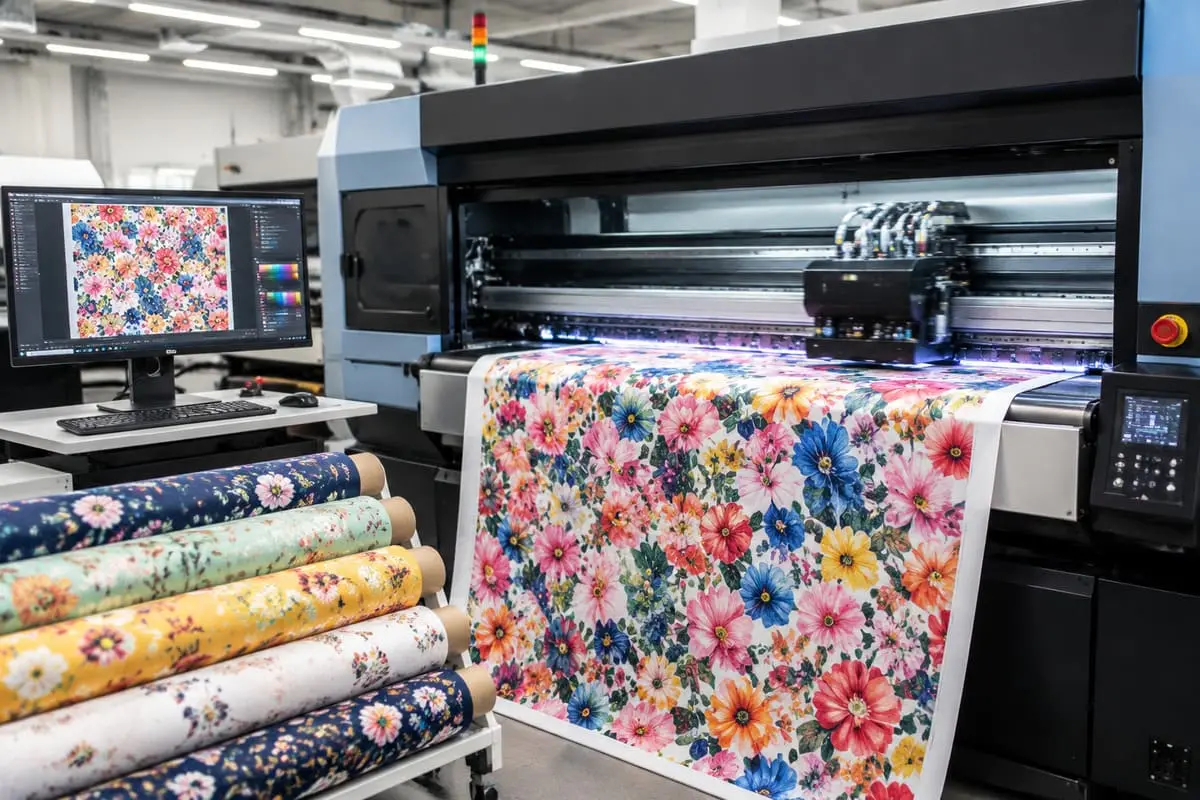
Introduction
Digital fabric printing has transformed the textile industry by making customized textile production faster, more flexible, and more accessible.
Unlike traditional printing methods that require complex setup processes and large production quantities, digital fabric printing allows designers, brands, and businesses to print detailed artwork directly onto fabric using advanced textile printers.
From fashion collections and home décor products to personalized fabrics and small-batch textile projects, digital printing provides unlimited creative possibilities.
Today, businesses no longer need to rely only on pre-designed fabrics. With digital textile printing technology, they can create unique patterns, photographs, logos, and artwork that match their specific requirements.
This guide explains:
- What digital fabric printing is
- How digital textile printing works
- Different printing technologies
- Benefits of digital printed fabric
- Best fabrics for digital printing
- Common applications
- How to choose the right printing solution
For a complete overview of custom textile production, including fabric selection, printing methods, applications, and ordering steps, explore our Custom Fabric Printing Guide.
Table of Contents: Digital Fabric Printing
What Is Digital Fabric Printing?
Digital fabric printing is a modern textile printing method that uses specialized digital printers to apply designs directly onto fabric.
The process works similarly to an inkjet printer, but instead of printing on paper, industrial textile printers apply specially formulated inks onto different types of fabrics.
A digital design file is transferred from a computer directly to the printing machine, allowing manufacturers to reproduce:
- Patterns
- Illustrations
- Logos
- Photographs
- Artwork
- Brand designs
Unlike traditional textile printing, digital printing does not require physical screens or printing plates.
This makes it especially suitable for:
- Custom fabric printing
- Small production runs
- Personalized textiles
- Complex designs
- Fast sampling
Digital Fabric Printing vs Traditional Fabric Printing
Traditional textile printing methods, such as screen printing, have been used for decades and remain valuable for large-scale production.
However, digital fabric printing provides several advantages for modern textile businesses.
| Feature | Digital Fabric Printing | Traditional Printing |
|---|---|---|
| Design Setup | No screens required | Screen preparation needed |
| Minimum Quantity | Low quantity possible | Usually higher MOQ |
| Color Options | Unlimited colors | Limited by screens |
| Detail Level | Excellent for complex designs | Suitable for simple patterns |
| Sampling Speed | Fast | Slower |
| Customization | Highly flexible | More limited |
For designers and brands creating unique products, digital printing provides greater flexibility.
How Does Digital Fabric Printing Work?
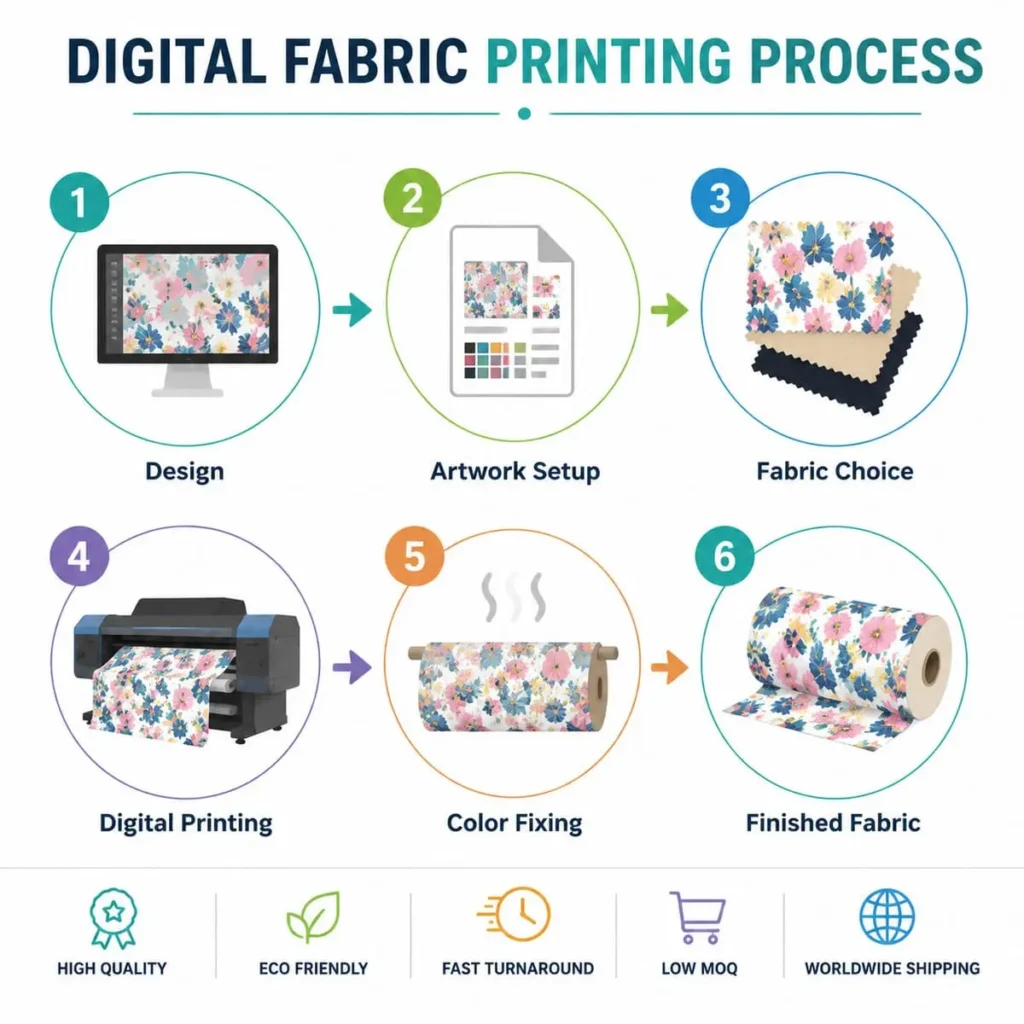
The digital fabric printing process includes several important steps.
Learn more about our complete custom fabric printing process.
Step 1: Design Preparation
The process begins with preparing the digital artwork.
Common design files include:
- JPG
- PNG
- TIFF
- AI
- PSD
For high-quality results, designers should consider:
- Image resolution
- Color accuracy
- Pattern repeat size
- Fabric dimensions
High-resolution artwork helps ensure sharp and detailed printed results.
Many designers use professional color systems such as the Pantone Color System to maintain consistent colors across different production stages.
Step 2: Fabric Selection
Choosing the correct fabric is essential because different materials interact with inks differently.
Common fabrics used for digital printing include:
Cotton Fabric
Cotton is popular because of:
- Soft texture
- Natural appearance
- Comfortable feel
Common applications:
- Apparel
- Quilting
- Baby products
- Home textiles
Polyester Fabric
Polyester is widely used because it provides:
- Excellent color performance
- Durability
- Affordable pricing
Common applications:
- Sportswear
- Outdoor textiles
- Promotional products
Linen Fabric
Linen provides:
- Natural texture
- Premium appearance
- Breathability
Often used for:
- Fashion products
- Home décor
- Luxury textiles
Fleece Fabric
Fleece is suitable for:
- Blankets
- Jackets
- Baby products
Digital printing allows fleece materials to feature:
- Floral patterns
- Animal designs
- Custom artwork
Step 3: Choosing the Printing Technology
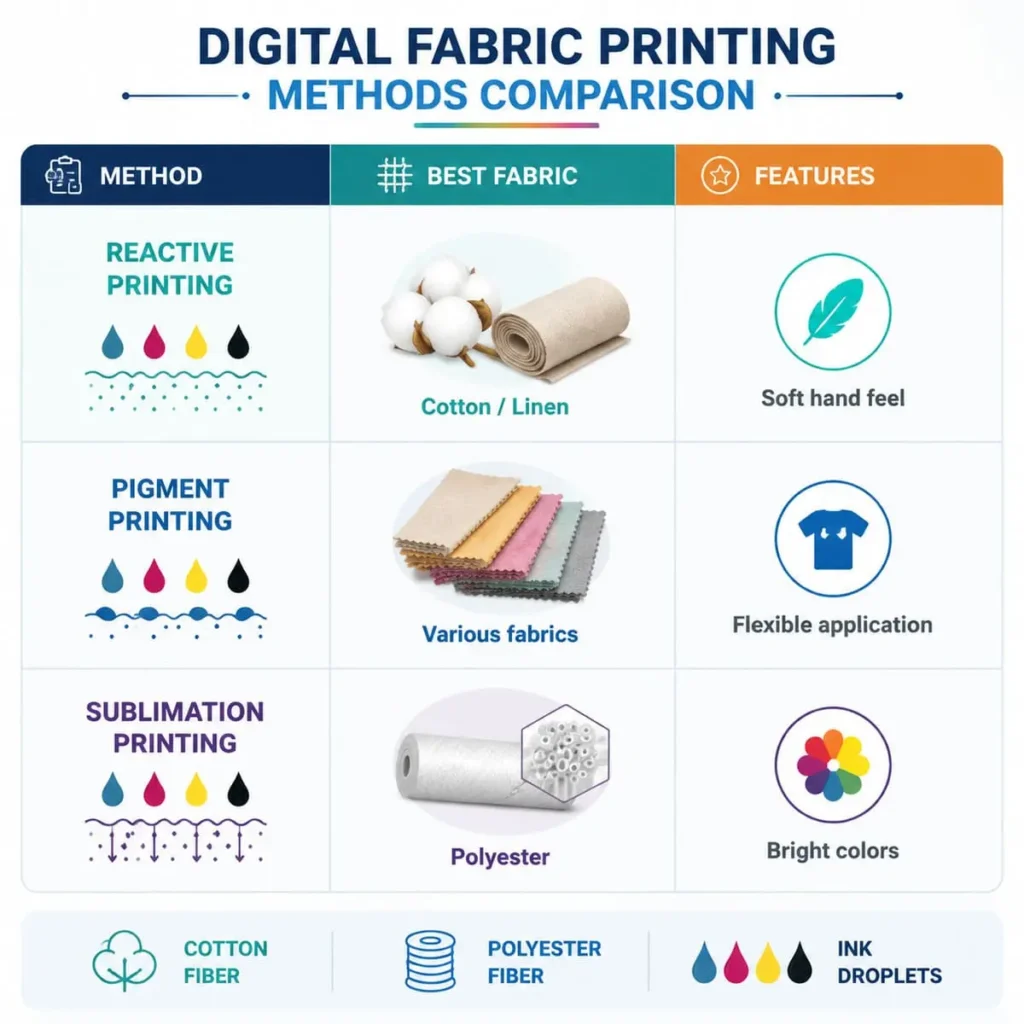
Different digital printing technologies are suitable for different fabrics.
The most common methods include:
Reactive Digital Printing
Reactive printing is commonly used for natural fibers.
Suitable fabrics:
- Cotton
- Linen
- Bamboo
- Rayon
Advantages:
- Excellent color durability
- Soft fabric hand feel
- Strong wash resistance
Applications:
- Clothing
- Bedding
- Baby textiles
Pigment Digital Printing
Pigment printing uses pigments attached to the fabric surface.
Advantages:
- Wide fabric compatibility
- Flexible production
- Suitable for various textile applications
Common uses:
- Cotton blends
- Decorative fabrics
- Fashion textiles
Sublimation Printing
Sublimation printing is mainly used for polyester fabrics.
During sublimation, ink becomes gas under heat and bonds with polyester fibers.
Advantages:
- Bright colors
- Excellent durability
- Ideal for sportswear
Applications:
- Activewear
- Flags
- Polyester fabrics
Why Choose Digital Fabric Printing?
Digital fabric printing has become increasingly popular because it solves many challenges faced by traditional textile production.
1. Unlimited Design Possibilities
One of the biggest advantages of digital printing is creative freedom.
Designers can create fabrics with:
- Detailed illustrations
- Photorealistic images
- Complex patterns
- Multiple colors
- Gradient effects
There are almost no limitations compared with traditional printing methods.
2. Perfect for Custom and Personalized Fabrics
Digital printing is ideal for businesses that need unique textile designs.
Examples include:
- Custom clothing brands
- Interior designers
- Independent artists
- Handmade product sellers
Customers can print:
- Personal artwork
- Brand logos
- Custom patterns
- Photos
This makes digital printing one of the best solutions for personalized fabric production.
3. Low Minimum Order Quantities
Traditional printing often requires expensive setup costs.
Digital printing removes many of these barriers.
Benefits include:
- Small sample production
- Limited edition collections
- Product testing
- Small business development
This makes it easier for startups and designers to launch new products.
4. Faster Product Development
Digital printing shortens the journey from design idea to finished textile.
A typical workflow:
Design Creation

↓

Fabric Selection

↓

Digital Printing

↓

Quality Inspection

↓

Finished Fabric
This allows businesses to respond quickly to fashion trends and customer demands.
5. Environmentally Friendly Production
Digital fabric printing can reduce waste compared with some traditional printing methods.
Advantages include:
- Reduced setup waste
- More accurate ink usage
- Less leftover material during sampling
For brands focusing on sustainable textile production, digital printing offers a more flexible approach.
Best Applications of Digital Printed Fabric
Digital printed fabric is used across many industries.
Fashion and Apparel
Fashion designers use digital printing for:
- Dresses
- Shirts
- Skirts
- Scarves
- Activewear
- Children’s clothing
Custom patterns help brands create unique collections.
Home Textile Products
Digital printing is widely used for:
- Curtains
- Pillow covers
- Bedding
- Table linens
- Decorative fabrics
Interior designers can create coordinated designs across different products.
Baby Products
Soft printed fabrics are commonly used for:
- Baby blankets
- Swaddles
- Rompers
- Nursery décor
Popular designs include:
- Animals
- Flowers
- Cartoon patterns
Accessories
Digital printing is suitable for:
- Tote bags
- Fabric labels
- Scarves
- Handmade products
Small businesses can create customized products without large inventory investment.
How to Choose the Right Digital Fabric Printing Solution?
Before starting a project, consider these factors:
1. Fabric Type
Different fabrics require different printing methods.
Examples:
| Fabric | Recommended Printing |
|---|---|
| Cotton | Reactive printing |
| Polyester | Sublimation |
| Blends | Pigment printing |
| Fleece | Specialized digital printing |
2. Product Application
Think about how the fabric will be used.
For example:
Clothing:
→ Cotton, linen, spandex
Sportswear:
→ Polyester blends
Blankets:
→ Fleece
Bags:
→ Canvas
3. Design Requirements
Consider:
- Image detail
- Color requirements
- Pattern repeat
- Final product appearance
Complex artwork usually benefits from digital printing.
Digital Fabric Printing at JCWTextile
At JCWTextile, we provide custom textile printing solutions for designers, brands, and businesses worldwide.
Our services support:
- Custom artwork printing
- Multiple fabric choices
- Small and bulk orders
- Fashion and home textile applications
- Worldwide shipping
Whether you are creating a new clothing collection, testing a product idea, or developing custom textile products, digital fabric printing provides the flexibility needed for modern textile production.
Explore our complete:
or start your project:
📚 Frequently Asked Questions About Digital Fabric Printing
1. What is digital fabric printing?
Digital fabric printing is a modern textile printing method that transfers designs directly from a digital file onto fabric using specialized textile inkjet printers.
Unlike traditional printing methods that require screens or printing plates, digital printing allows manufacturers to create detailed patterns, photographs, logos, and custom artwork with flexible quantities and faster design changes.
2. How does digital fabric printing work?
Digital fabric printing works by sending a digital artwork file to a textile printer, which applies tiny ink droplets directly onto the fabric surface.
The printed fabric may then go through additional processes such as drying, heat fixing, steaming, washing, and finishing depending on the fabric type and ink technology used.
The final result depends on factors including:
- Fabric composition
- Printing method
- Ink type
- Fabric preparation
- Finishing process
3. What fabrics can be used for digital printing?
Many different fabrics can be digitally printed, but the best printing method depends on the fiber composition.
Common digitally printable fabrics include:
- Cotton
- Linen
- Bamboo fabric
- Polyester
- Fleece
- Canvas
- Satin
- Chiffon
- Spandex blends
For example:
- Cotton and linen often use reactive or pigment printing.
- Polyester fabrics are commonly suitable for sublimation printing.
4. What is the difference between digital fabric printing and screen printing?
The main difference is how the design is transferred onto fabric.
Digital fabric printing:
- Uses digital files
- Requires no printing screens
- Supports unlimited colors
- Works well for complex designs and small quantities
Screen printing:
- Requires separate screens for colors
- Has higher setup requirements
- Is often more economical for very large production runs
Digital printing is especially suitable for custom fabrics, samples, personalized textiles, and limited collections.
5. Is digital fabric printing suitable for small orders?
One of the biggest advantages of digital fabric printing is its flexibility for small quantities.
It is ideal for:
- Fabric samples
- Custom projects
- Independent designers
- Small fashion brands
- Personalized products
Because digital printing does not require traditional screen setup, businesses can test new designs without committing to large production quantities.
6. Does digital printing make fabric colors permanent?
Digital printing durability depends on the fabric type, ink technology, and finishing process. Textile testing organizations such as AATCC provide industry standards for evaluating properties such as colorfastness, durability, and textile performance.
For example:
- Reactive printing creates strong bonds with natural fibers such as cotton.
- Sublimation printing bonds color into polyester fibers.
Proper fixation and finishing help improve:
- Wash resistance
- Color durability
- Print quality
7. What are the benefits of digital fabric printing?
Digital fabric printing provides several advantages:
- Unlimited design possibilities
- High-resolution patterns and images
- Fast sampling
- Lower setup requirements
- Flexible order quantities
- Personalized textile production
It is especially valuable for designers and brands that need unique fabrics rather than standard printed materials.
8. Can I print my own design on fabric?
Yes. With custom fabric printing, you can upload your own designs, including artwork, photos, logos, illustrations, and repeat patterns to create personalized printed fabric.
Digital fabric printing makes it easy to transform your ideas into unique textiles for clothing, home décor, accessories, and creative projects. This process is ideal for designers, small businesses, and anyone who wants to create custom printed fabric without traditional printing limitations.
9. Which digital printing method is best for cotton fabric?
For cotton fabrics, reactive printing is commonly preferred because the dye chemically bonds with cotton fibers and provides excellent color performance.
Other options, such as pigment printing, may also be used depending on:
- Desired appearance
- Production requirements
- Fabric application
10. Which digital printing method is best for polyester fabric?
Sublimation printing is one of the most common methods for polyester fabrics.
It is widely used for:
- Sportswear
- Activewear
- Performance fabrics
- Polyester textiles
The process allows vibrant colors and durable prints because the ink becomes part of the polyester fiber structure.
11. Is digital fabric printing environmentally friendly?
Digital fabric printing can reduce certain types of production waste compared with traditional printing methods.
Potential advantages include:
- Less setup waste
- More accurate ink usage
- Reduced need for printing screens
- Support for on-demand production
The environmental impact still depends on factors such as:
- Ink type
- Fabric sourcing
- Energy usage
- Production processes
12. How do I prepare artwork for digital fabric printing?
For the best printing results, artwork should be prepared with:
- High-resolution images
- Correct color settings
- Suitable file formats
- Proper pattern repeat design
Common file formats include:
- PNG
- JPG
- TIFF
- AI
- PSD