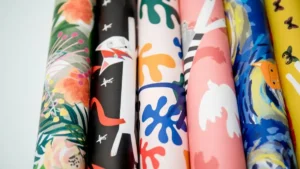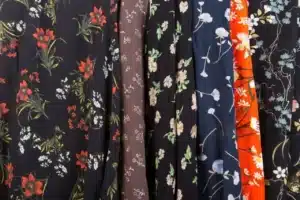
When it comes to stretchable, durable, and highly printable fabrics, few materials compare to the polyester spandex blend. Popular in activewear, athleisure, swimwear, leggings, and performance apparel, this blend combines the best functional properties of polyester and spandex. For designers, brands, and textile printing professionals, understanding how polyester and spandex blends work is essential for choosing the right fabric for your next project.
This guide explores the structure of poly spandex blend fabric, its printing performance, and the various types of polyester-spandex fabrics used in modern apparel manufacturing.
1. What Is a Polyester Spandex Blend?
A polyester spandex blend is a fabric created by combining polyester (usually 85–95%) with spandex (5–15%). Polyester contributes durability, color retention, wrinkle resistance, and moisture-wicking properties, while spandex provides stretch and flexibility.
For a deeper look into the science behind polyester fibers, Britannica offers an excellent overview:
https://www.britannica.com/technology/polyester
Common blend ratios:
95% polyester / 5% spandex
90% polyester / 10% spandex
88% polyester / 12% spandex
Common uses include:
Yoga leggings
Sportswear
Cycling suits
Swimwear
Dancewear
Fashion and athleisure
Kids clothing
2. Key Features of Polyester & Spandex Blend Fabrics
The polyester and spandex blend offers a unique mix of performance qualities:
✔ Stretch & Recovery
Spandex gives the fabric 2-way or 4-way stretch, ensuring it returns to its original shape after movement.
For an in-depth explanation of spandex technology, see Britannica’s Spandex Overview:
https://www.britannica.com/technology/spandex
✔ Vibrant Print Quality
Polyester holds color exceptionally well during sublimation, making prints vivid and fade-resistant.
✔ Durability & Shape Retention
These fabrics withstand repeated washing and intensive use, maintaining structure over time.
✔ Breathable, Moisture-Wicking, and Quick-Drying
Polyester efficiently manages moisture, making the blend ideal for athletic garments.
Learn how our full printing workflow operates on the How It Works page.
3. Why the Polyester Spandex Blend Is Ideal for Custom Printing
One reason polyester spandex fabrics dominate the custom printing world is their compatibility with sublimation printing.
According to Printful, sublimation works best on polyester-rich fabrics because the dye bonds directly with polyester molecules:
https://www.printful.com/blog/what-is-sublimation-printing
Advantages of sublimation on poly-spandex:
High-resolution detail
Deep, vibrant color
No cracking or peeling
Excellent wash durability
Maintains stretch without distortion
Besides sublimation, polyester spandex blend fabrics also support:
Digital textile printing
Heat transfer printing
Screen printing (requires stretch inks)
4. Types of Printable Polyester & Spandex Blend Fabrics
Below are common fabric variations used for different applications:
4.1 Polyester Spandex Jersey
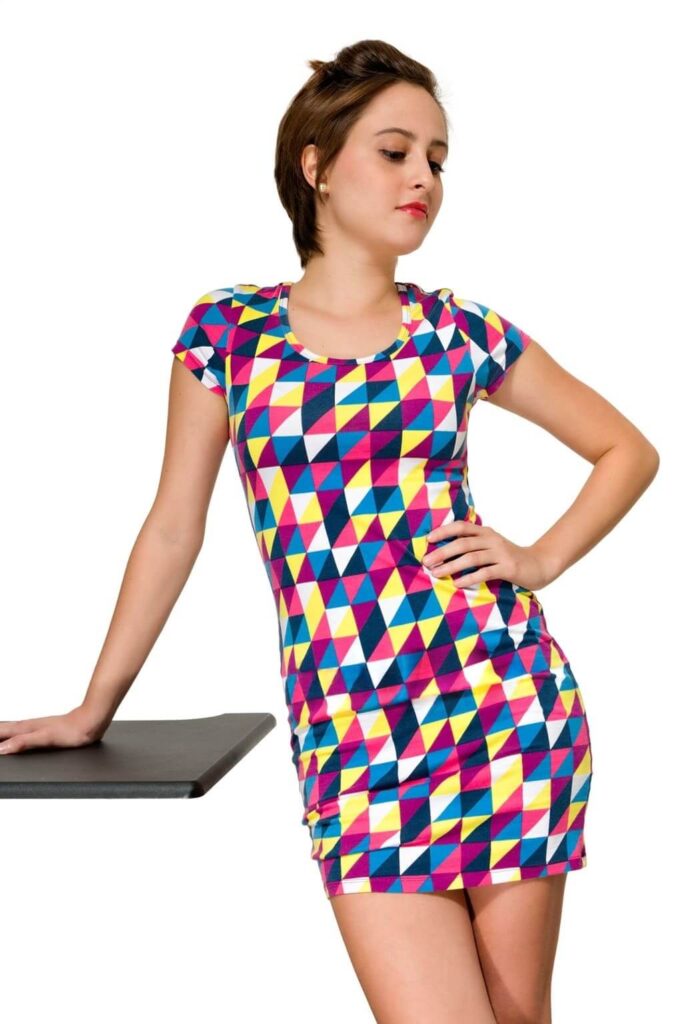
Soft, lightweight, and breathable—ideal for T-shirts, dresses, and fashionwear.
4.2 Poly Spandex Stretch Knit
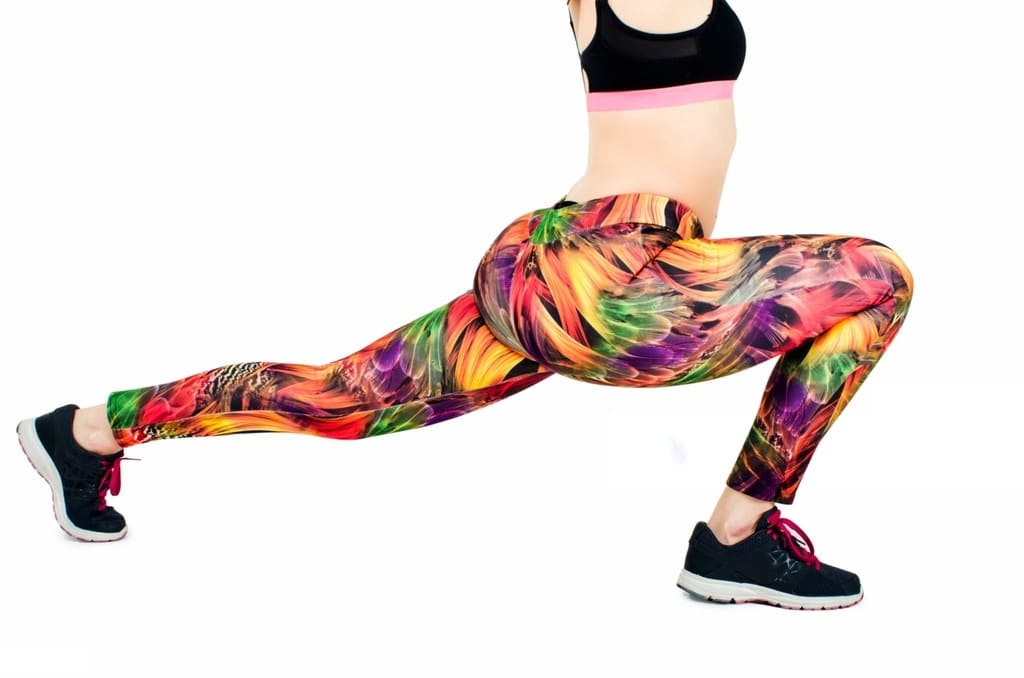
A medium-weight fabric used for leggings, sportswear, and dancewear.
4.3 DTY (Drawn Textured Yarn) Polyester Spandex
Smooth, matte, and comfortable for casualwear and kidswear.
4.4 Brushed Polyester Spandex
Has a soft, peach-skin feel—great for winter leggings and loungewear.
4.5 Heavyweight Athletic Spandex Fabric
Designed for compression gear and high-performance sportswear.
Explore our full range in the product collection.
5. Best Printing Methods for Polyester Spandex Fabrics
Although several printing techniques work with poly-spandex blends, not all methods deliver equal results.
Sublimation Printing (Best Overall)
Backed by studies on polyester dye behavior found in ScienceDirect’s materials science resources, sublimation delivers optimal colorfastness and print longevity:
https://www.sciencedirect.com/topics/materials-science/polyester
Digital / Heat Transfer Printing
Suitable for small runs and highly detailed artwork.
Screen Printing
Possible when using stretch-friendly inks to prevent cracking.
Need help choosing the right printing method? Contact our team via Contact Us.
6. Applications of Polyester & Spandex Blends
Thanks to its combination of strength, elasticity, and printability, polyester and spandex blend fabrics are used widely across apparel and performance categories:
Yoga wear
Activewear
Swimwear
Cycling gear
Athleisure
Kids clothing
Dancewear
Sports jerseys
Custom-made leggings
Industry experts at Textile World also emphasize the importance of blends like polyester-spandex in modern performance apparel:
https://www.textileworld.com/
7. How to Choose the Right Poly Spandex Blend for Your Project
Here are the key factors to consider when selecting polyester spandex fabric:
GSM (Fabric Weight)
150–180gsm for T-shirts
180–220gsm for leggings and sportswear
250gsm+ for compression pieces
Stretch Requirement
Choose between 2-way or 4-way stretch depending on your garment design.
Printing Method
High-polyester content is essential for sublimation printing.
Hand Feel & Finish
Brushed vs. smooth, matte vs. shiny.
Continue learning about our mission and experience on the About Us page.
Conclusion
The polyester spandex blend remains one of the most versatile, durable, and print-friendly fabrics available today. Whether you’re creating activewear, leggings, swimwear, or custom-printed fashion, poly spandex blend fabric offers the perfect mix of stretch, performance, and vivid print quality.
If you want help selecting the right printable fabric or need custom printing support, feel free to reach out to our team anytime.
📚 Frequently Asked Questions (FAQs)
1. What is polyester spandex blend fabric used for?
It’s commonly used for activewear, leggings, yoga pants, athletic tops, swimwear, and printable fashion textiles.
2. Is polyester spandex good for printing?
Yes—especially with sublimation printing on polyester-rich blends.
3. What percentage of spandex is best for leggings?
Fabric with 10–20% spandex offers ideal compression and stretch.
4. Is polyester spandex breathable?
Yes. Polyester manages moisture while spandex provides ventilation through a stretch structure.
5. What GSM is good for squat-proof leggings?
Most squat-proof leggings use 230–260 GSM.
6. Does poly spandex shrink?
No, polyester minimizes shrinkage and maintains shape even after repeated washing.
7. Is polyester spandex good for summer?
Yes—its quick-dry and moisture-wicking properties keep the skin cool.
8. Is polyester spandex durable?
Extremely durable, especially for movement-intensive sports.