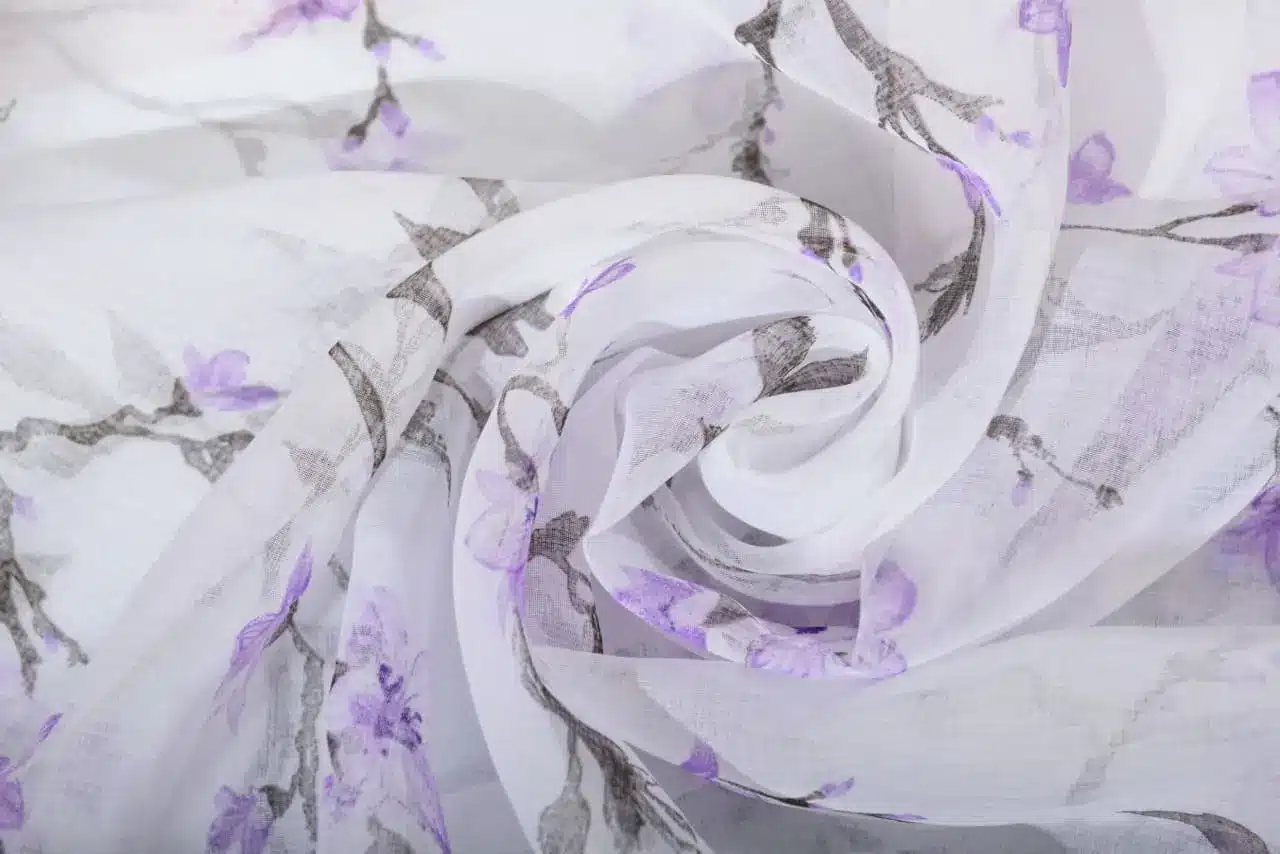
Poly organza fabric has become a popular choice in modern fashion and textile printing thanks to its lightweight structure, elegant transparency, and excellent print performance. From printed evening dresses to layered bridal designs, this sheer fabric offers designers creative freedom while maintaining durability and cost efficiency.
In this guide, we explore what poly organza fabric is, how printing on organza fabric works, and why it is widely used in fashion applications today. If you are exploring more fabric knowledge, you can also visit our fabric resource hub at the blog.
What Is Poly Organza Fabric?
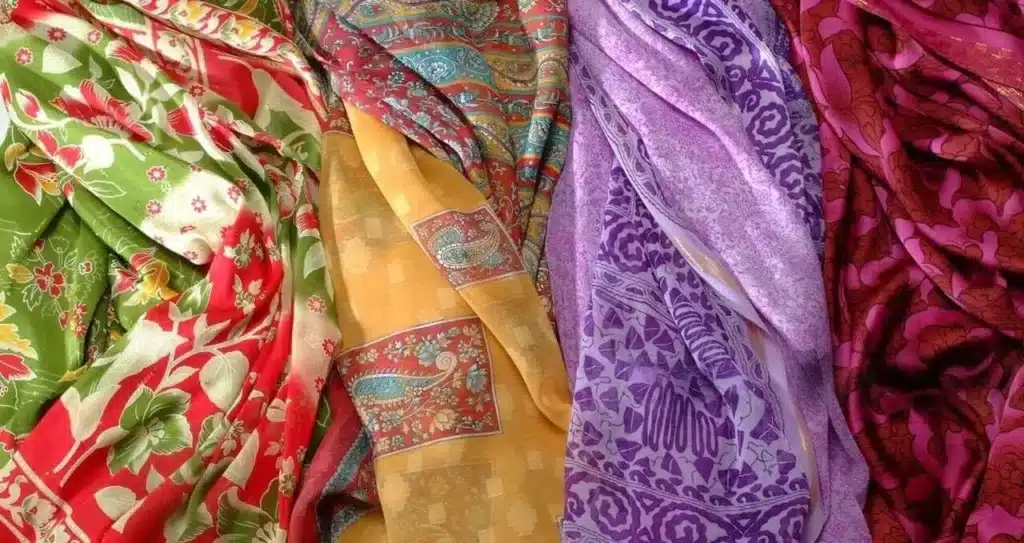
Poly organza fabric is a sheer, plain-weave textile made from polyester fibers. Unlike silk organza, polyester organza offers better dimensional stability, consistent quality, and higher suitability for modern printing techniques.
Key Characteristics of Poly Organza
Lightweight and translucent appearance
Slight stiffness that helps garments hold shape
Smooth surface suitable for digital printing
Cost-effective alternative to silk organza
Because of these features, polyester organza fabric is commonly used for both fashion garments and decorative applications. To explore similar materials, you may browse our complete material selection at our-fabric.
Organza fabric is a lightweight, sheer plain weave textile originally made from silk, now also produced with synthetic fibers such as polyester and nylon, known for its transparency and crisp texture.
Is Poly Organza Fabric Suitable for Printing?
Yes—poly organza fabric is highly suitable for printing when handled correctly. However, its transparency requires thoughtful design and printing preparation.
Advantages of Printing on Organza Fabric
Creates elegant, layered visual effects
Allows light to pass through printed designs
Works especially well with floral, gradient, and artistic patterns
Ideal for sheer fabric printing projects
When organza fabric is printed, the design often appears softer and more dimensional compared to opaque fabrics, making it popular for fashion-forward collections.
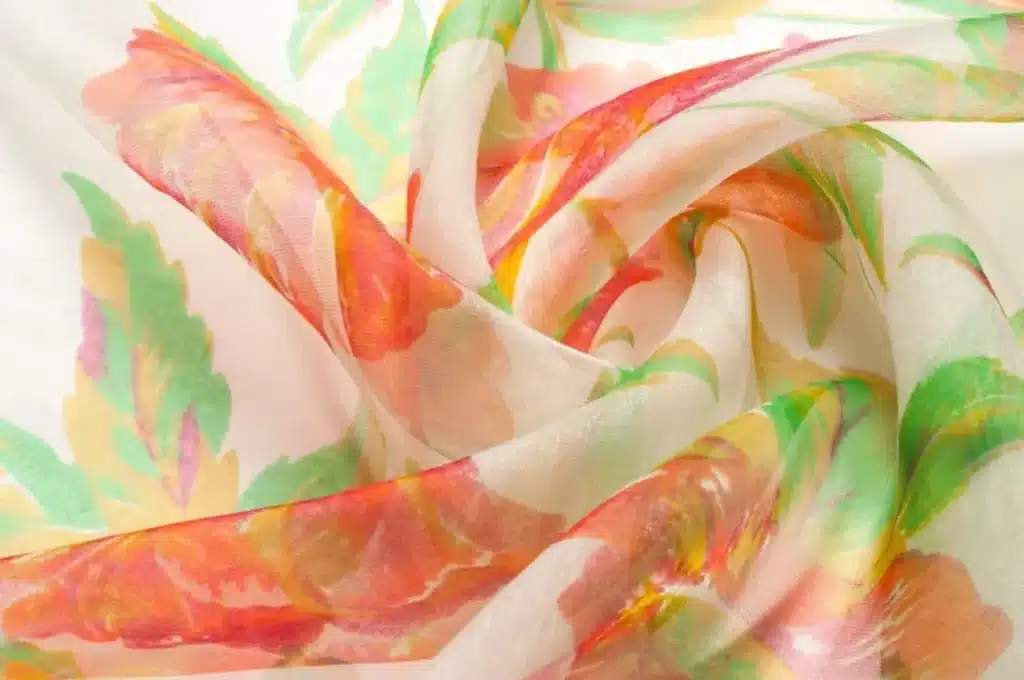
Challenges to Consider
Colors may appear lighter due to fabric transparency
High-contrast designs need careful color planning
Ink penetration must be well controlled
Designers often compensate by using layered garments or darker base colors to enhance visual impact.
If you plan to create custom designs, our online tool makes it easy to start: design-your-fabric.
Best Printing Techniques for Poly Organza Fabric
Choosing the right printing method is essential for achieving high-quality results on sheer materials.
Recommended Printing Methods
Digital Textile Printing – Ideal for detailed artwork and short production runs
Disperse Dye Printing – Ensures strong color bonding with polyester fibers
Digital printing is the most common method for custom organza printing because it offers precision, flexibility, and consistent color output.
Professional Printing Tips
Use slightly higher color saturation in artwork
Avoid large solid dark blocks
Test print before bulk production
Consider double-layer design for enhanced depth
Digital textile printing uses inkjet technology to apply colorants and complex artwork directly onto fabric, supporting disperse and pigment print methods ideal for fabrics like polyester organza.
Fashion Applications of Printed Poly Organza Fabric
Organza Fabric for Dresses
One of the most popular uses of poly organza fabric is in dressmaking. Its lightweight stiffness allows garments to maintain structure without heaviness.
Common uses include:
Evening gowns and cocktail dresses
Bridal overlays and wedding gowns
Skirts with layered volume
Printed organza fabric adds movement and elegance while allowing designers to experiment with patterns and transparency.
Other Creative Fashion Uses
Beyond dresses, organza fabric printed designs are widely used for:
Fashion blouses and tops
Scarves and accessories
Stage costumes and performance wear
Decorative fashion elements
According to Vogue’s fashion encyclopedia, organza has long been associated with luxury silhouettes and modern couture design:
https://www.vogue.com/fashion
Design Tips for Printing on Organza Fabric
Designing for sheer fabric printing requires a slightly different approach compared to opaque textiles.
Effective Design Strategies
Use repeating or flowing patterns
Incorporate gradients and watercolor effects
Leave enough negative space
Test mirrored designs for layered garments
Printed organza fabric works best when the design complements the fabric’s natural transparency rather than fighting against it.
If you need professional guidance or fabric recommendations, learn more about our team and production capabilities here: about-us.
Why Choose Poly Organza Fabric for Custom Printing Projects?
Poly organza fabric is an excellent option for designers, brands, and manufacturers looking for versatility and efficiency.
Key Benefits
Consistent quality across batches
Cost-effective for both sampling and bulk production
Suitable for fast turnaround projects
Compatible with modern digital printing workflows
For global brands and small businesses alike, polyester organza fabric offers a reliable solution for both creative and commercial needs.
To begin your next custom project, you can design and print directly through our platform: design-your-fabric.
Conclusion
Poly organza fabric combines elegance, functionality, and print versatility in a way few sheer fabrics can match. With the right printing techniques and thoughtful design, printing on organza fabric opens up endless possibilities for fashion applications—from statement dresses to refined decorative details.
Whether you are developing a new collection or experimenting with sheer fabric printing, poly organza remains a trusted and creative textile choice in modern fashion.
📚 Faqs About Poly Organza Fabric
1. What is poly organza fabric?
Poly organza fabric is a sheer, lightweight textile made from polyester fibers. It features a crisp structure, transparent appearance, and excellent stability, making it suitable for fashion garments and printed designs.
2. Is poly organza fabric suitable for printing?
Yes, poly organza fabric is suitable for digital textile printing. With proper color adjustment and design planning, printing on organza fabric can achieve elegant, layered visual effects ideal for sheer fabric applications.
3. What printing method works best for organza fabric?
Digital printing with disperse dyes is the most effective method for printing on organza fabric. It allows precise detail, consistent color bonding, and flexibility for custom organza printing projects.
4. Does printed organza fabric look transparent?
Yes, organza fabric printed designs remain semi-transparent. The final appearance depends on color saturation, pattern density, and whether the fabric is layered in the garment design.
5. What are common fashion uses of poly organza fabric?
Poly organza fabric is widely used for dresses, evening gowns, bridal overlays, blouses, scarves, and decorative fashion elements where lightness and structure are required.
6. Is poly organza fabric suitable for custom fabric printing?
Poly organza fabric is ideal for custom fabric printing, especially for small-batch or made-to-order projects. It works well with modern digital printing workflows and offers consistent quality across productions.